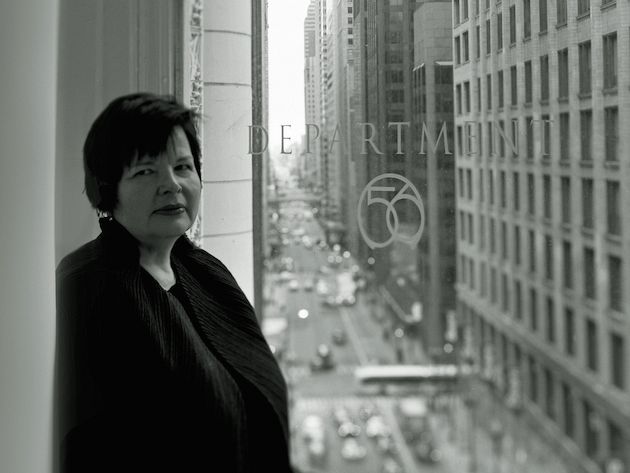
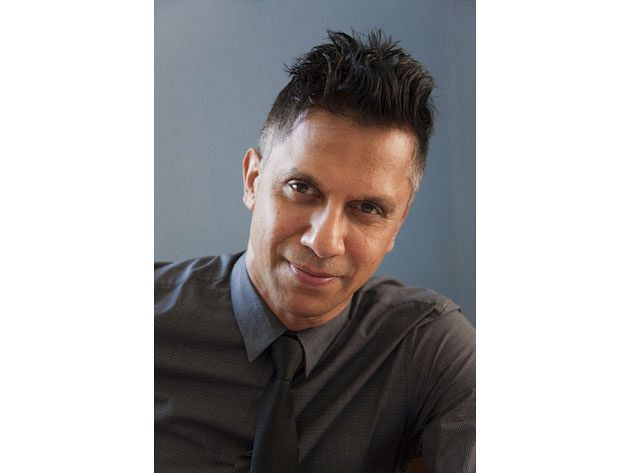
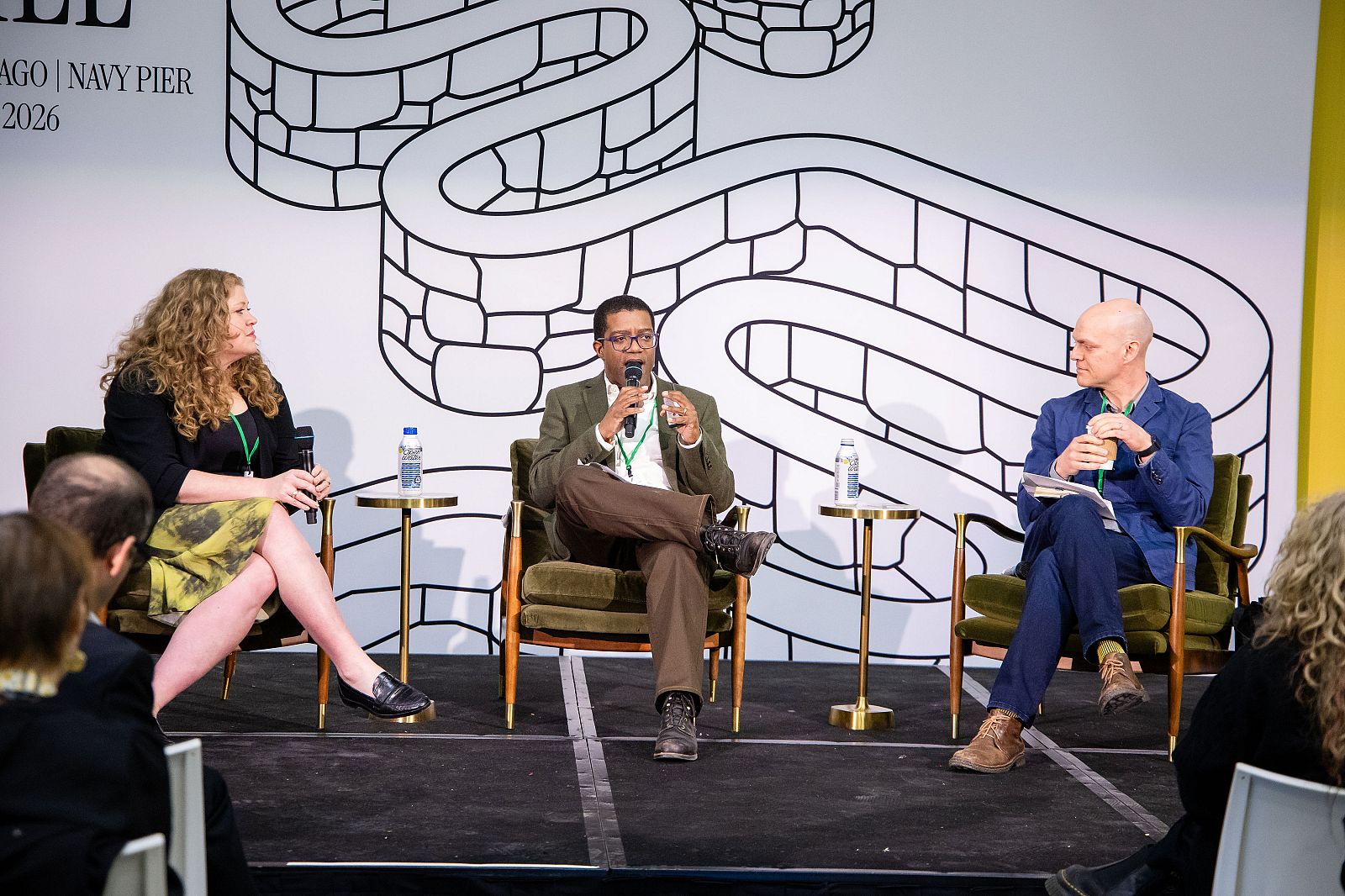
Mary Jane Jacob is a curator and writer who has championed public, site-specific, and socially engaged art, and is professor and executive director of exhibitions and exhibition studies at the School of the Art Institute of Chicago (SAIC). She has been exploring art outside the museum context since 1990, organizing groundbreaking programs that test the boundaries of public space and the relationship of contemporary art to audience. Landmark projects have included an exhibition of pioneering Polish artist Magdalena Abakanowicz for Tate Modern in London; Culture in Action in Chicago and Living Modern Chicago; Conversations at the Castle during the Atlanta Olympics; and, for the Spoleto Festival in Charleston, Places with a Past and Evoking History. As Executive Director of Exhibitions and Exhibition Studies at The School of the Art Institute of Chicago (SAIC), she opened the Sullivan Galleries in 2008 in the famed Louis Sullivan Carson Pirie and Scott Building in the city’s Loop. As the public arm of SAIC, the galleries play a central role in fostering cooperation among the wider Chicago arts community and the field. Furthering its position in fostering critical thinking and open dialogue, Jacob also launched in 2016 SAIC’s Institute for Curatorial Research and Practice, which she now directs.
In 2018, she published Dewey for Artists with the University of Chicago Press. She is the co-editor of several anthologies, including Chicago Makes Modern: How Creative Minds Changed Society (University of Chicago Press, 2012); The Studio Reader: On the Space of Artists (University of Chicago Press, 2010); Learning Mind: Experience Into Art (University of California Press, 2009); and Buddha Mind in Contemporary Art (University of California Press, 2004).
Jacob seeks to address the working processes of artists and, at the same time, the processes that audiences undergo, with a belief that the art experience can transform us in valuable ways and, in turn, the culture and society in which we live. This drives her research—manifested in her many publications, lectures, exhibitions, and other curatorial projects—and informs her teaching as a shared understanding with a stake in the future.