Independent Curators International supports the work of curators to help create stronger art communities through experimentation, collaboration, and international engagement.

Independent Curators International supports the work of curators to help create stronger art communities through experimentation, collaboration, and international engagement.

Menu Close

401 Broadway #1620
New York, NY 10013
info@curatorsintl.org
+1 212 254 8200

Menu

WILD YAMS Black Mothers Artist Residency

2025 Curatorial Forum Research Fellow report
By Wisdom Baty and A.Martinez
On Jul 1, 2026

Chicago, IL, USA

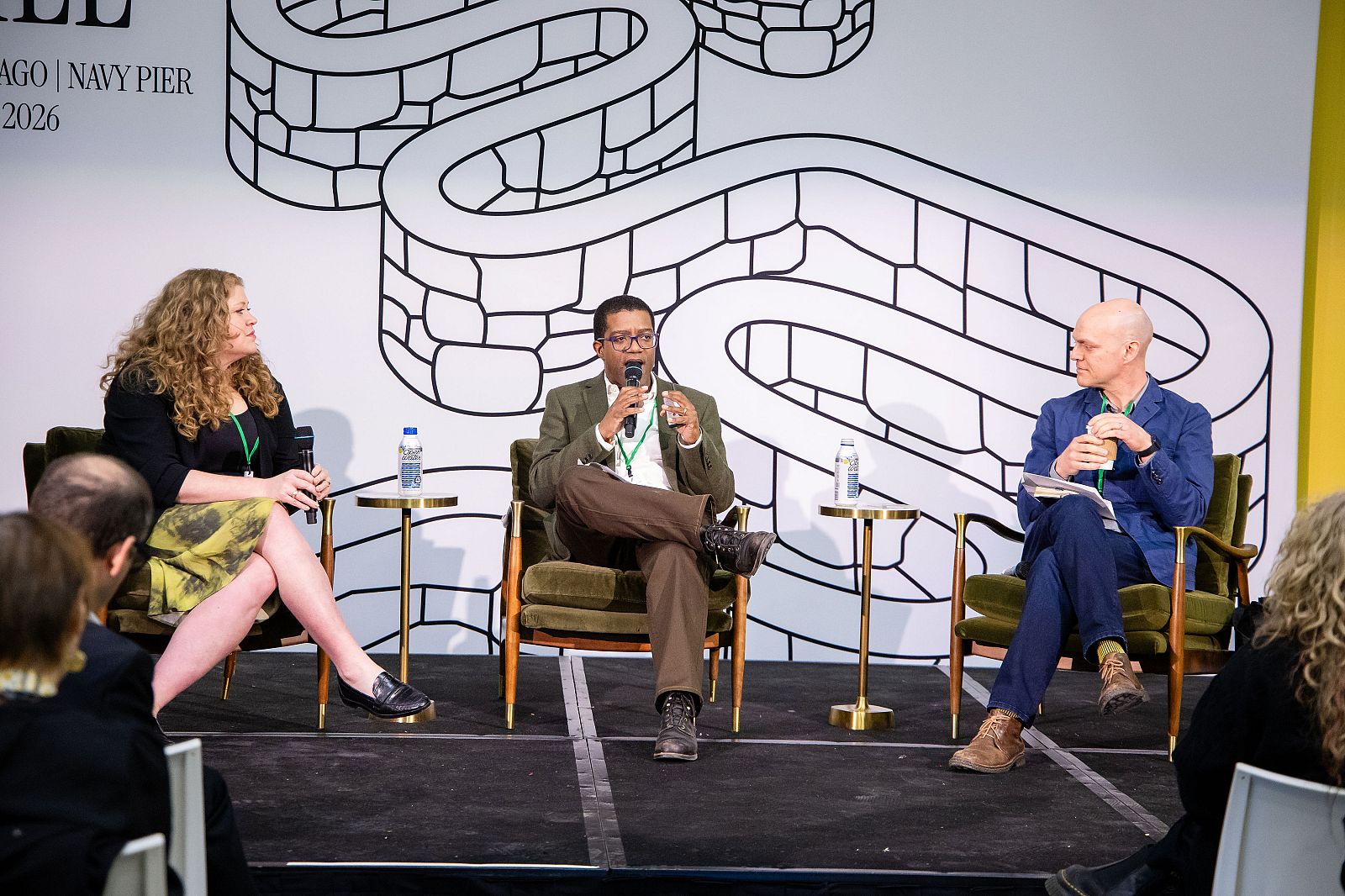
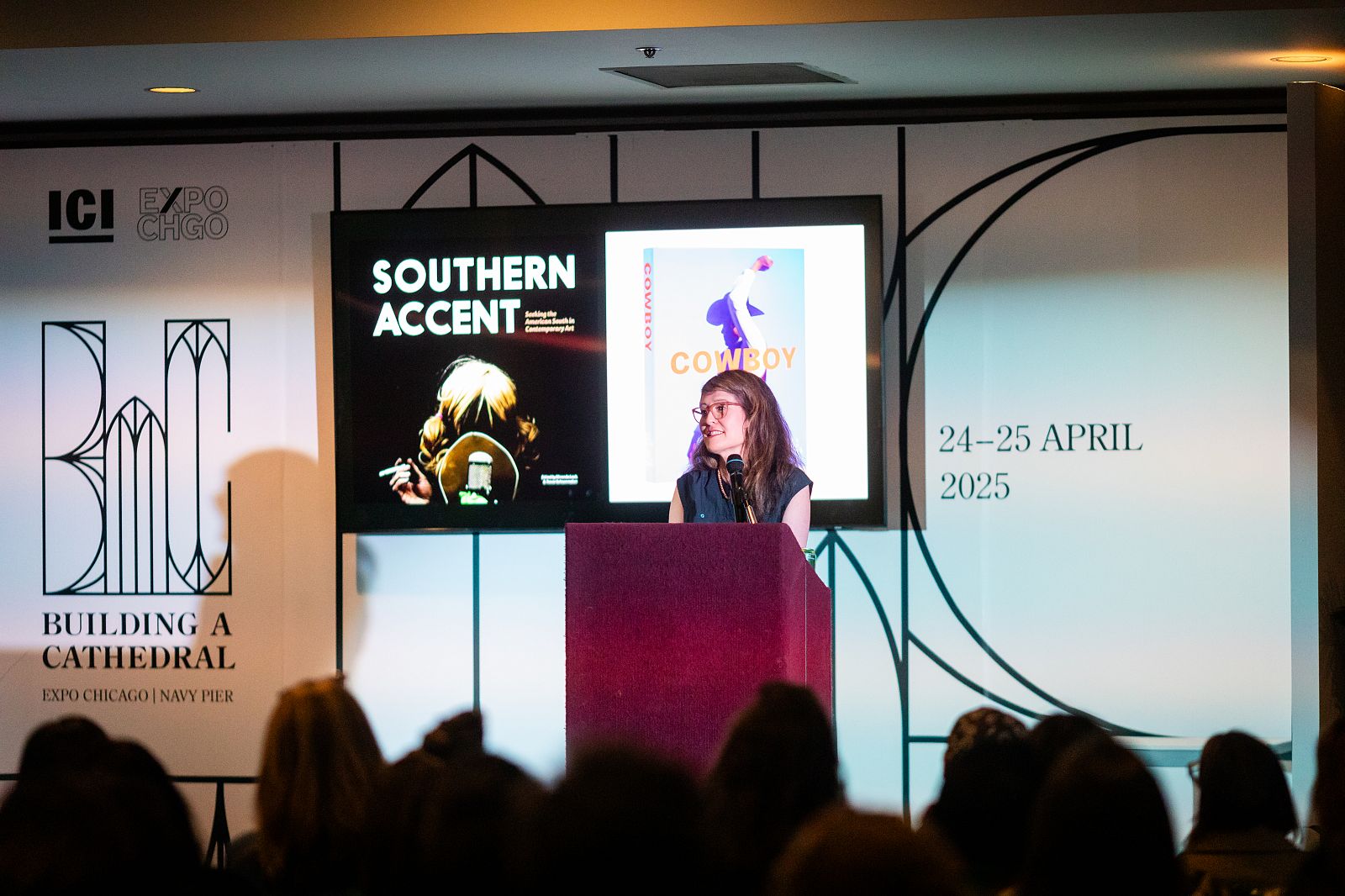
As part of our annual Curatorial Forum, ICI selects an emerging curator(s) from our network to conduct research, and to reflect on how their own practice engages with the themes and discussions explored through the program. The 2025 public curatorial conference, entitled "Building a Cathedral," used the metaphor of cathedral construction to ask how our approach to curatorial work, and to one another, changes when we operate under a timeline that extends beyond the limits of our own lifespan. What might it look like if one generation focuses on preparing the site, the next on pouring a foundation, so the following can take up the work of construction?

Our 2025 Curatorial Forum Research Fellows, Wisdom Baty and A.Martinez of WILD YAMS: Black Mothers Artist Residency, approach these topics and more in this writing. When thinking about intergenerational approaches to institution-building, one group naturally enmeshed in these conversations and concerns are mothers and other types of caretakers. Through both necessity and desire, the participants in WILD YAMS are building a multi-generational ecosystem and an institution with a truly holistic approach, meant to support not just the participating artists, but everyone in their broader community.

While this may not be thought of as traditional curatorial work, one of the lessons of "Building a Cathedral" is that how we build something, and with whom, is just as important as the thing itself. A “cathedral thinking” approach recognizes the scale of change necessary, and acknowledges that creating the environment in which artists feel supported to do their work is on equal curatorial footing as creating an exhibition. As our field evolves, practices like those of WILD YAMS emphasize the maintenance of relationships that make creative work possible, and recognize that building more supportive, equitable, accessible, and nurturing spaces is truly a multi-generational undertaking.
Wisdom Baty (Founder and Director, WILD YAMS Black Mothers Artist Residency)

  • On the artist residency and motherhood: A Manifesto You’re a maker, you create things, in a certain way, under certain circumstances; artist, mother and BLACK. A trifecta— a methodology— a manifesto— a map.

    There is a long-standing normalization of exclusionary practices toward women who parent within the “Western” art canon. Artist residencies are widely recognized as vital to an artist’s development: they provide uninterrupted studio time, artistic camaraderie, professional critique, network growth, and access to creative resources, sometimes even financial support. For many artists, such opportunities feel like a dream. Yet for those who parent, that dream is often deferred. As a Black artist, organizer, parent, and former educator, I have witnessed how traditional residency models routinely exclude artists who are primary caregivers, most often mothers responsible for the majority of unpaid domestic labor. Residency structures frequently perpetuate inequities rooted in race, class, gender, and family status. This practice disproportionately impacts Black and Brown artist mothers and caretakers.

    Primary caregivers of children or elders cannot leave for a week or more, often in remote locations, without reliable, affordable support systems in place. While there are artist-run initiatives, that center artists who mother, they remain far too few. When residency  models fail to imagine structures that accommodate caregivers, they reinforce inequality within the art canon, simultaneously limiting access to sustained artistic growth and visibility for those who need it the most.
  • On erasure: As a parent you become someone’s everything: An emotional, social, and physical vessel. When you disappear, and you will, you must trace yourself, under pressure, stress, institutional racism, gender oppression, identity politics, trace yourself, within the loudness of your community and over baby tears trace yourself, under constant change, growth or stagnation, perimenopause and old age, trace and Retrace yourself, in your own image, confer with your ancestors. Tracing and naming one-self is an act of self-preservation.
     
  • On constructs: Design for yourself. Be more Augusta Savage- like; carve out room for your ideas to run wild, like your babies. Some areas to consider: the Art canon, your community, “sister of the yam” circles, kiddie circles, quilting circles, the kitchen table, book clubs, bathtub, music festivals, your child’s school, the bedroom, the closet, your mind.
     
  • On Inspiration: Say Her Name (call and response) 

    Edmonia Lewis, Lorraine O'Grady, Augusta Savage, Lois Mailou Jones, Elizabeth Catlett, Faith Ringgold, Toni Morrison, bell hooks, Betye Saar (living) 

    Forget-me-nots
     

  • On dream chasing: Follow your dreams in the day, when the sun is up.

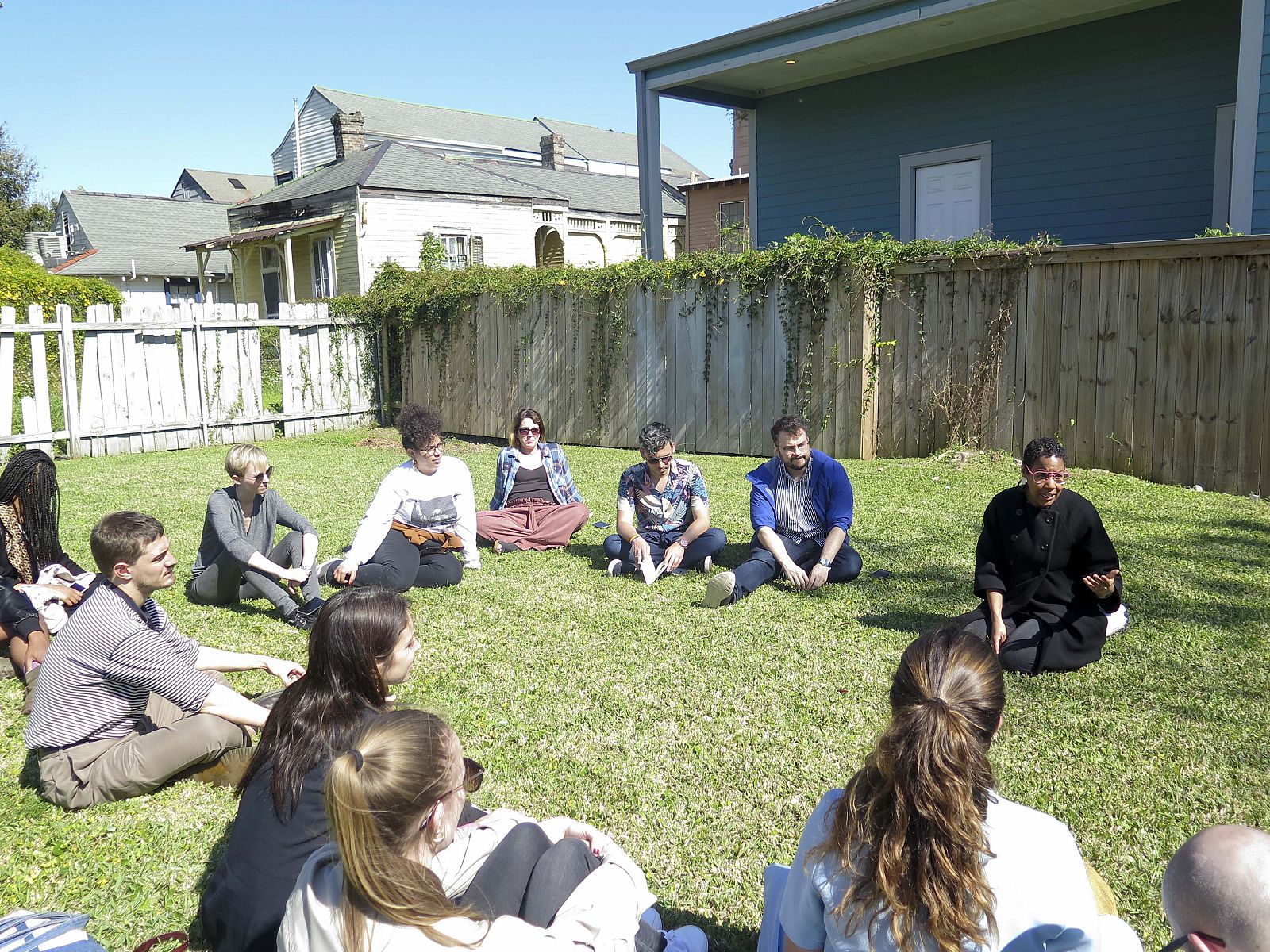
WY SEED Resident Andrea Hill (center) shares reflections during Origin Story, a collective writing activity facilitated by Curatorial Fellow Tiffany Johnson (not pictured), inviting artists to reflect on lineage, creative practice, and the lived experiences that shape their work, ACRE 2026

Designing a Model of Creative Equity: The WILD YAMS Framework

There are very few art residencies in the U.S. (or globally) that are explicitly designed for Black artist mothers and caretakers. WILD YAMS: Black Mothers Artist Residency is positioned to address the existing patchwork of adjacent residency models that are not race-specific, care-focused or family-centric. Founded in 2019 through a Propeller Fund Research & Development Grant, WILD YAMS was created to uplift Black mother artists and caretakers by supporting their creative practice and advancing their artistic careers. We utilize an intersectional and intergenerational framework that promotes creative equity, access to artist resources, studio space, exhibition opportunities, and community. Our name is inspired by bell hooks' seminal Black feminist text Sisters of the Yam, which explores self-recovery and healing through self-actualization within Black culture. The name also references the wild yam plant (Dioscorea villosa), an herb historically used to support women’s reproductive health.

Methodologies and Structure

Rooted on Chicago's South Side, WILD YAMS operate as a collective, a site, and a practice, an evolving constellation of mothers, caretakers, and artists charting new pathways between exhaustion and creation, memory and daily life, desire and urgency. Our work is intentional and specific: slow and responsive, grounded and adaptive. We are organized as an LLC and fiscally sponsored by Experimental Sound Studio.

Departing from conventional residencies, WILD YAMS centers care, equitable studio practice, and collective knowledge-making. We reimagine the residency as a living ecosystem, one that recognizes artists as whole people and builds structures that sustain both their creative labor and caregiving responsibilities.

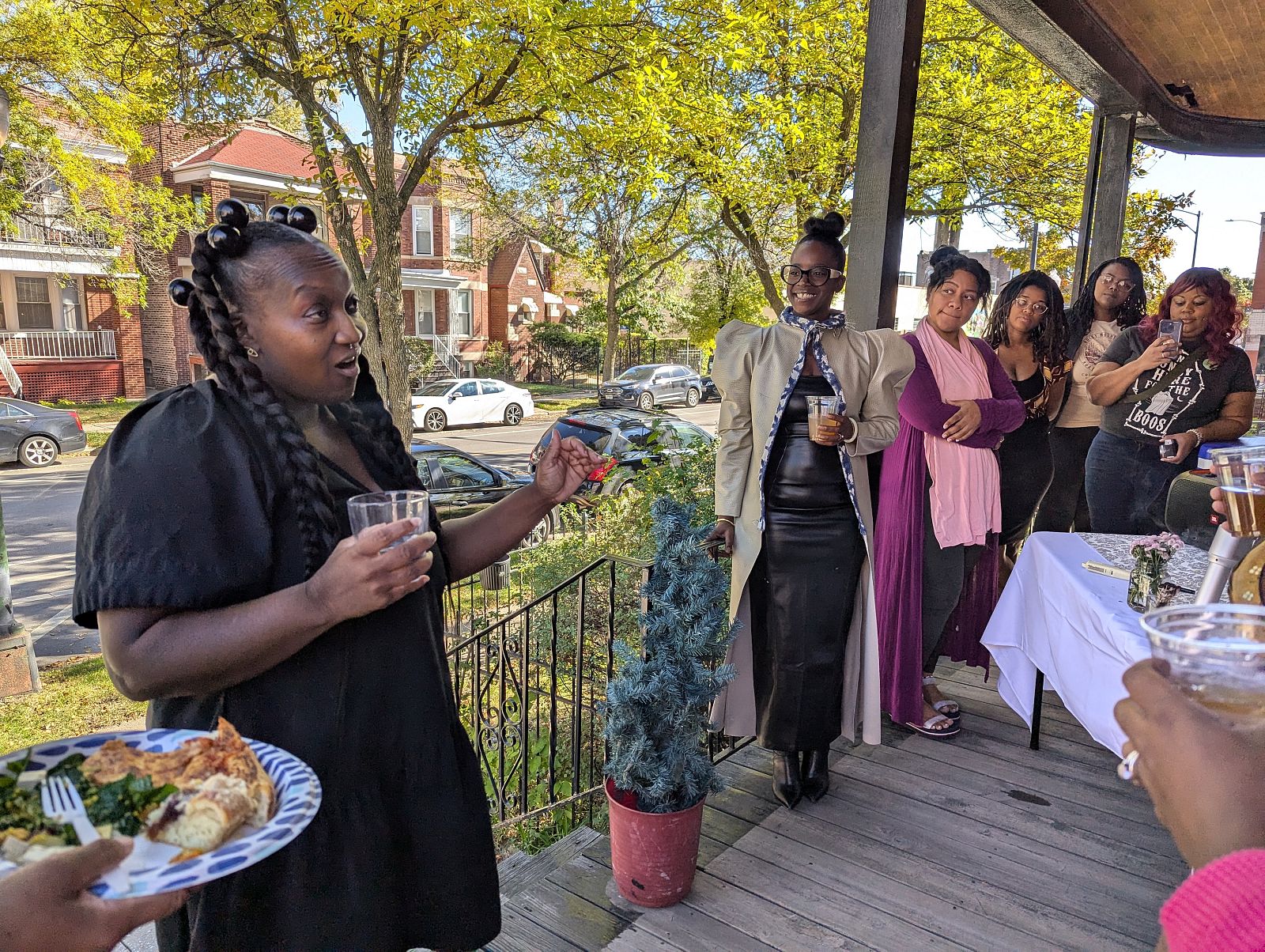
Wisdom Baty (left) leads a libation and grounding ritual—a central practice of WILD YAMS' gatherings that help establish collective intention, reflection, and care within shared creative spaces—before a WILD YAMS artist open house in Chicago’s Greater Grand Crossing, 2024

Guiding Principles

  • Acknowledging and Addressing Collective Fatigue: We confront exhaustion produced by systemic oppression through healing-centered frameworks, communal rest, and reflective dialogue.
  • Innovative Collaboration and Partnership: Inspired by Black feminist traditions, the Black art movement and mutual aid principles, WILD YAMS operates in collaboration with institutions, artists communities, and mentors and peers to develop shared resources, co-learning experiences, shared artist studio, and community accountability.
  • Supportive Creative Development Planning: Artists receive mentorship, career development, and guidance that honor dual commitments to family and art.
  • Hyper-Accessibility and Barrier Removal: WILD YAMS is committed to strengthening artists’ studio practice by removing the barriers that most often disrupt creative continuity for mothers and caretakers. We support artists as whole people and thought partners by providing childcare and material stipends, curatorial support, flexible participation structures, and accessible studio space within the city with adaptable hours.

Curating Conditions for Black Mother Artists

My curatorial practice is guided by a simple question: What conditions do Black mother artists need to flourish? WILD YAMS emerged from a space I could not find, to a space I collectively envisioned and designed, and ultimately became the space I, and so many others needed. We understand care as curatorial infrastructure. We cultivate relationships, shared resources, and creative community as essential elements of an artistic practice. These principles reimagine the residency model not simply as a place artists visit to create objects, but as an ecosystem designed to sustain Black mothers, caretakers, and their creative worlds.

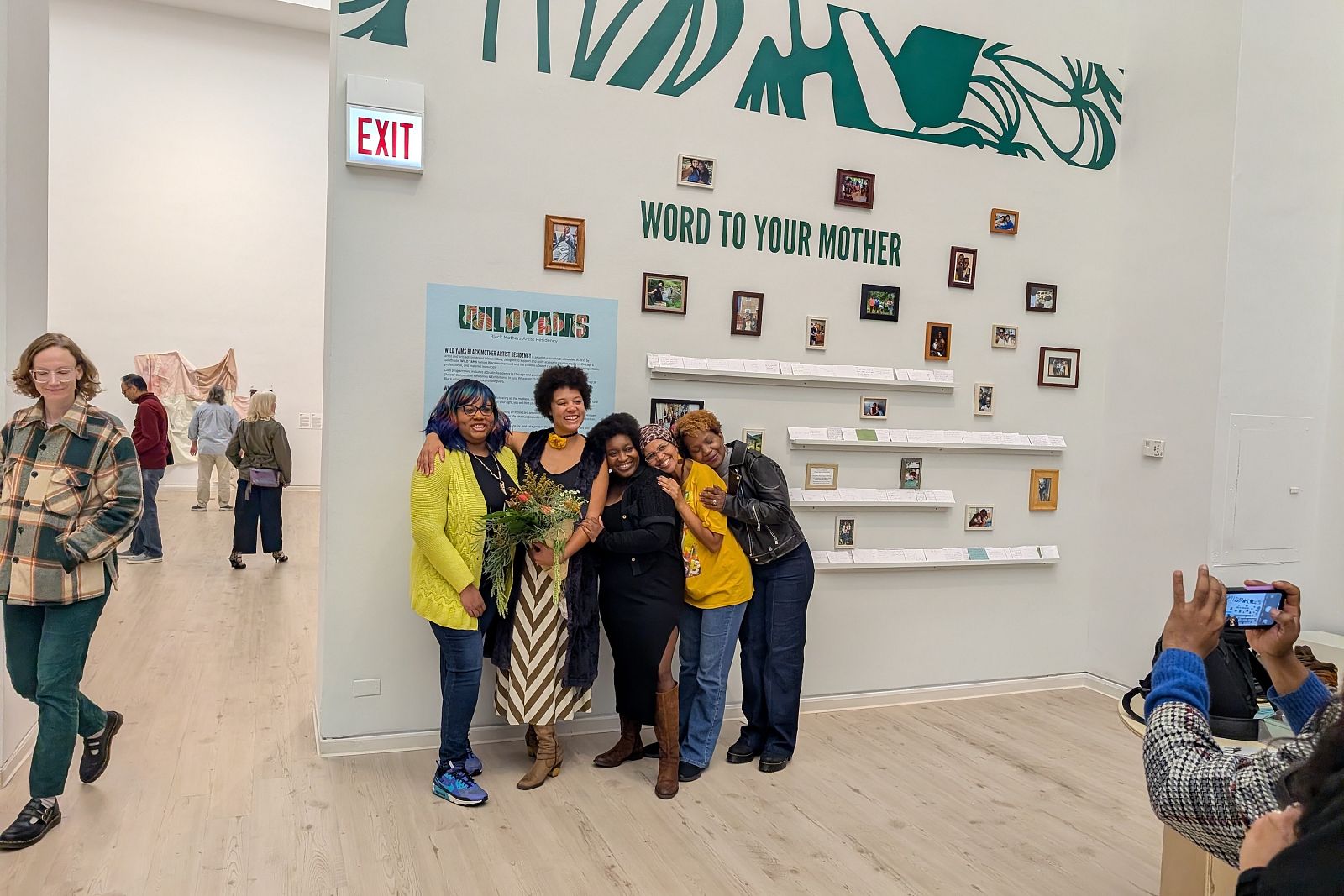
Participating artists with the “Word to Your Mother” interactive installation presented as part of Not a Soft Thing: A Group Exhibition by Artist Mothers at Chicago Cultural Center, 2025–2026

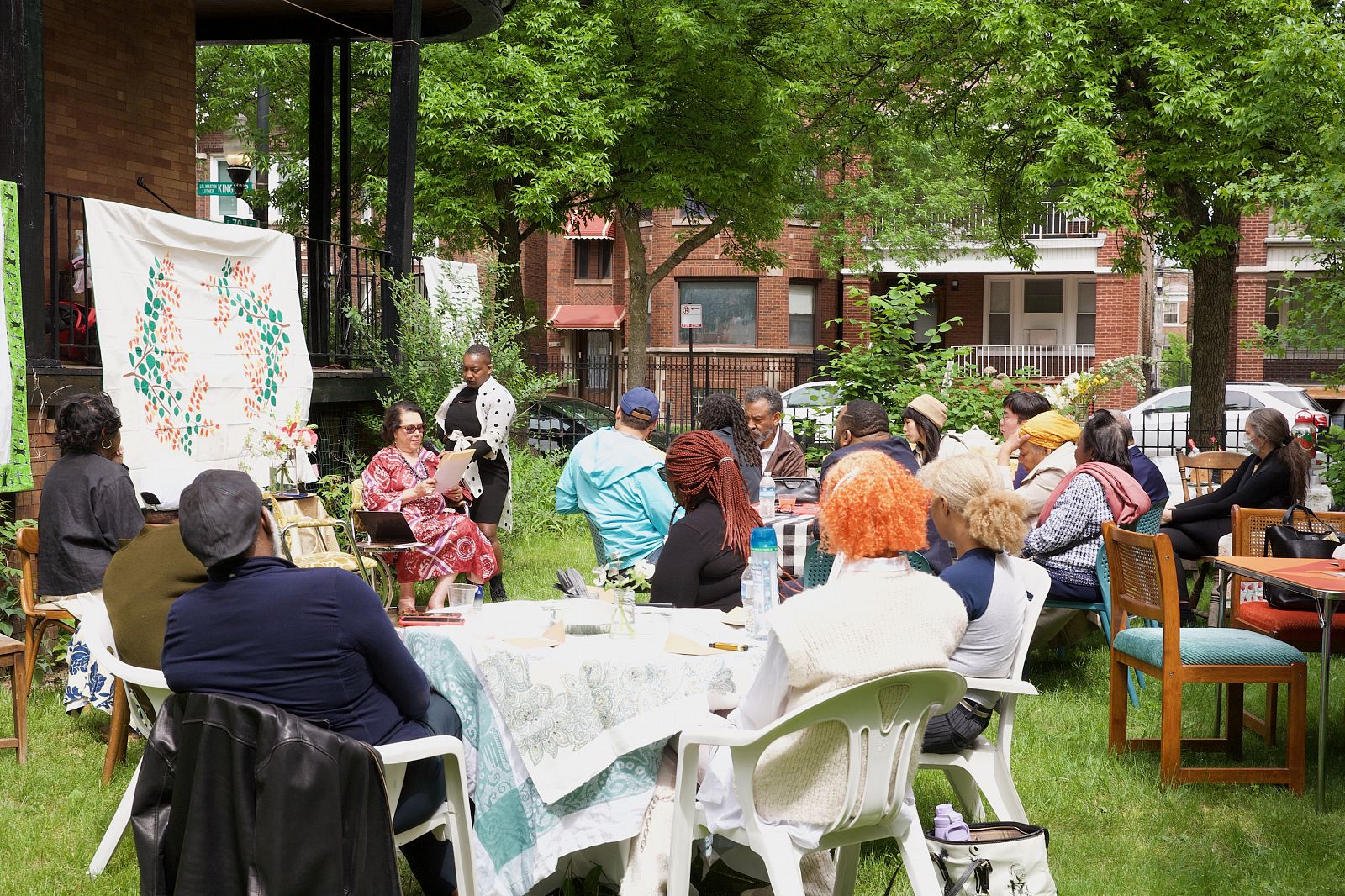
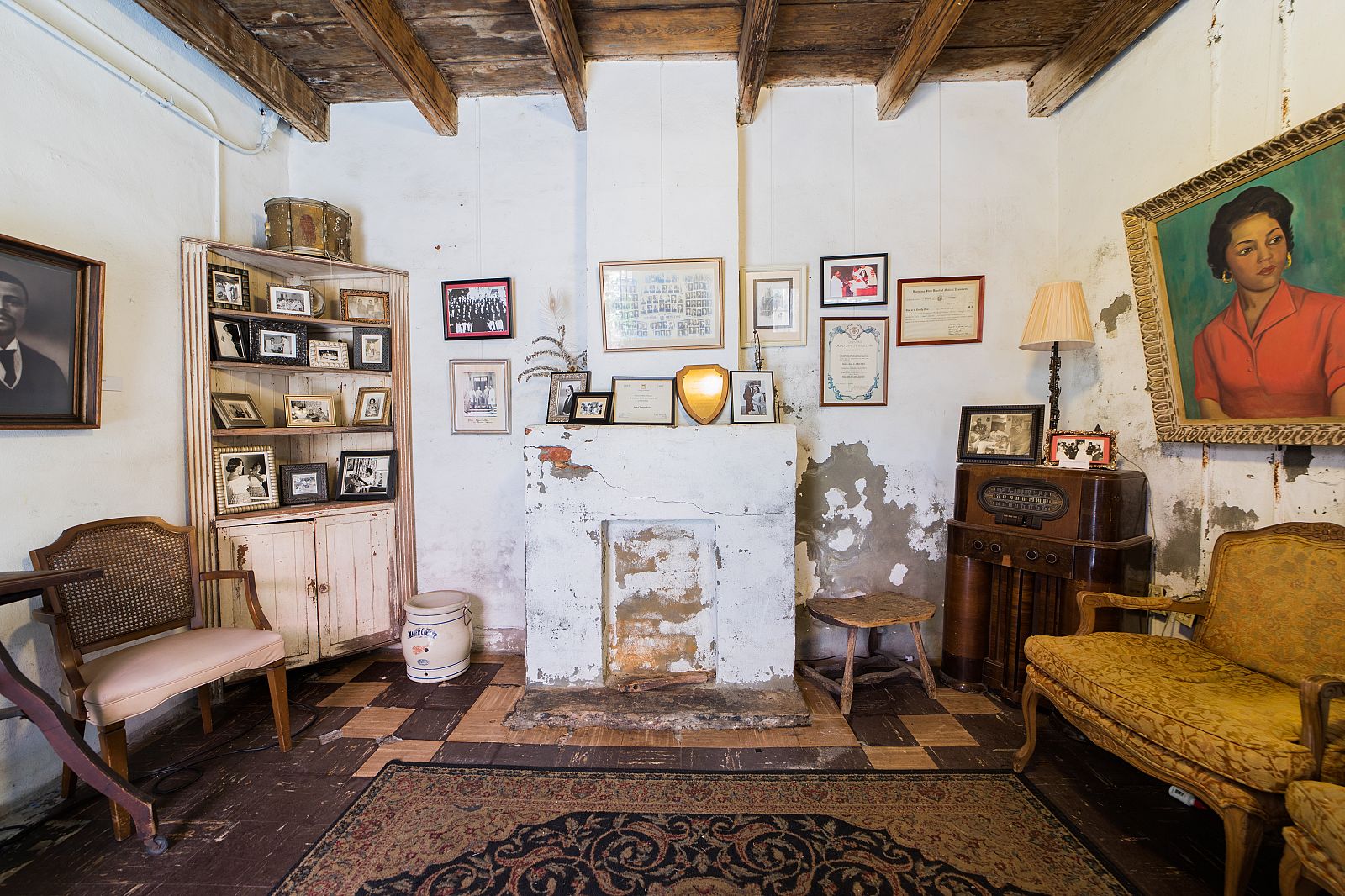
A community gathering featuring writer and collector Sandra Ann McCollum as lead griot, sharing stories centered on intergenerational healing, community memory, and Black cultural traditions, with a meal curated by Alexandra Antoine. This program was presented in partnership with Justice Hotel at 1618North and held at THE cre.æ.tive ROOM (TCR), WILD YAMS former studio space, 2023

A.Martinez (Program Director, WILD YAMS)

Transmissions from the Cold Creek: Black Artist Mothers at ACRE

Two days before I am due to pick up Teni Odunsi (WILD YAMS SEED Resident and writer) and her son to carpool from Chicago to Wisconsin for our partnership with ACRE Residency, I received a text from her—she was feeling overwhelmed and reconsidering going at all. The start date for Chicago Public Schools shifted earlier from the previous year, and her almost 11-year-old was due to begin 6th grade the morning after we returned from our 4-day artist residency. And all this after a long summer break of trying to find the balance of childcare while she worked, recently back from other travel, she was feeling underprepared for the start of school.

“I’m not sure if it’s a good idea that we go.

I couldn’t blame her. With my kid starting 5th grade the same day, I felt similarly unprepared. I adore the summer months, but with every week looking different, logistically it can be exhausting, especially for working single parents.

And as working parents who are also artists, it is often too easy for Black Women to prioritize all else over creative practice. In many cases, we make the decision to opt out of experiences such as artist residencies because there is simply too much to figure out if it’s even possible at all. The barriers that many caregivers face are not only logistical, but also financial and emotional. And so, even with all the details worked out for an opportunity, sometimes just getting yourself there, mentally, can feel like too far. This is a main impetus for WILD YAMS Black Mother Artist Residency.

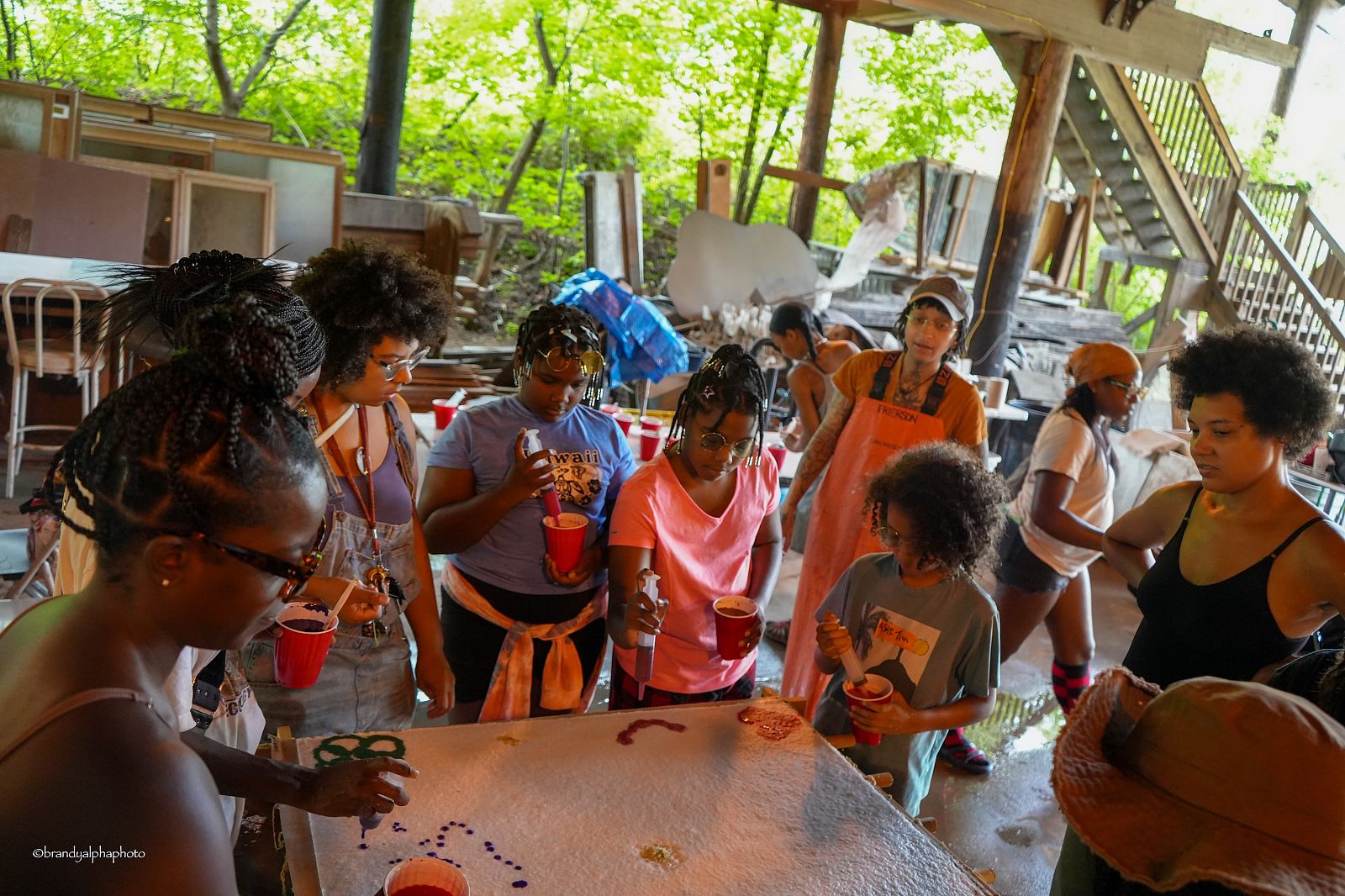
Aidan Anne Frierson and Talia Kimberly Wright of Chicago Pulp lead a collective paper-making workshop, 2025. (Photo: Brandy Alpha)

In her famous essay, Poetry is Not a Luxury, Audre Lorde proclaims that, “For women, then, poetry is not a luxury. It is a vital necessity of our existence. It forms the quality of the light within which we predicate our hopes and dreams toward survival and change.” Even with a deep belief in this ideology, we recognize that, without proper support, this belief does not always make the thing happen in reality. We call Wisdom the ACRE Whisperer because each year she ends up having to connect with an artist or two who need a little extra support in getting themselves there. She is deeply committed to figuring out solutions to whatever barrier our artists face, whether it’s gas money, someone to hold the baby, or just general overwhelm—or sometimes a pep talk is all that’s needed. So I tell Teni that I understand, but I also tell her to reach out to Wisdom and talk to her about what she’s feeling. The next day I received another text: 

“So, after talking to Wisdom and thinking, Jude and I should really come to ACRE. I was crying this morning and then I got up and meal-prepped for the next week and figured out Jude’s supplies. I’ve got this.”

We made a plan to stop at the store together on Sunday upon our return for some last minute school supplies and first-day outfits. Then I picked them up and the four of us headed north to Steuben, Wisconsin.

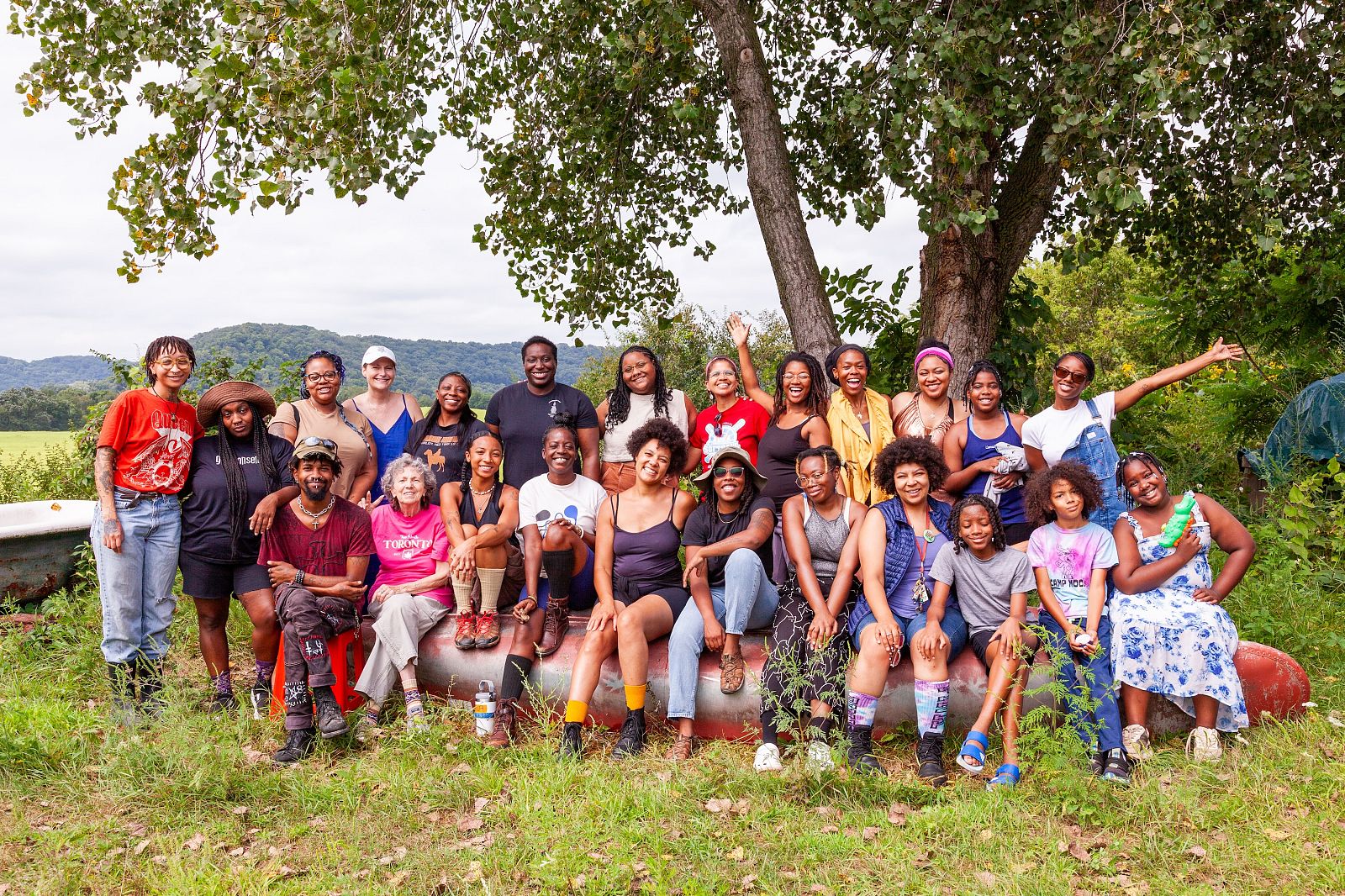
For years, I had wanted to attend more traditional residency programs, but with lengths ranging from weeks to months, as a caregiver to a young kid I had no way of making them work. As both an artist and an administrator/curator of the WILD YAMS collective, envisioning this specially tailored partnership with ACRE and then having the opportunity to spend four-five days there each year since 2023 has been a dream. WILD YAMS artists that are invited to ACRE are able to attend with the children or adults they care for as well as a second caregiver for support. They may also, however, choose to leave their kid(s) at home. ACRE selects a handful of guest artists to staff our session who they believe will align with and support our unique group. These artists give demonstrations, conduct studio visits, provide support, and generally warm the campus for us.

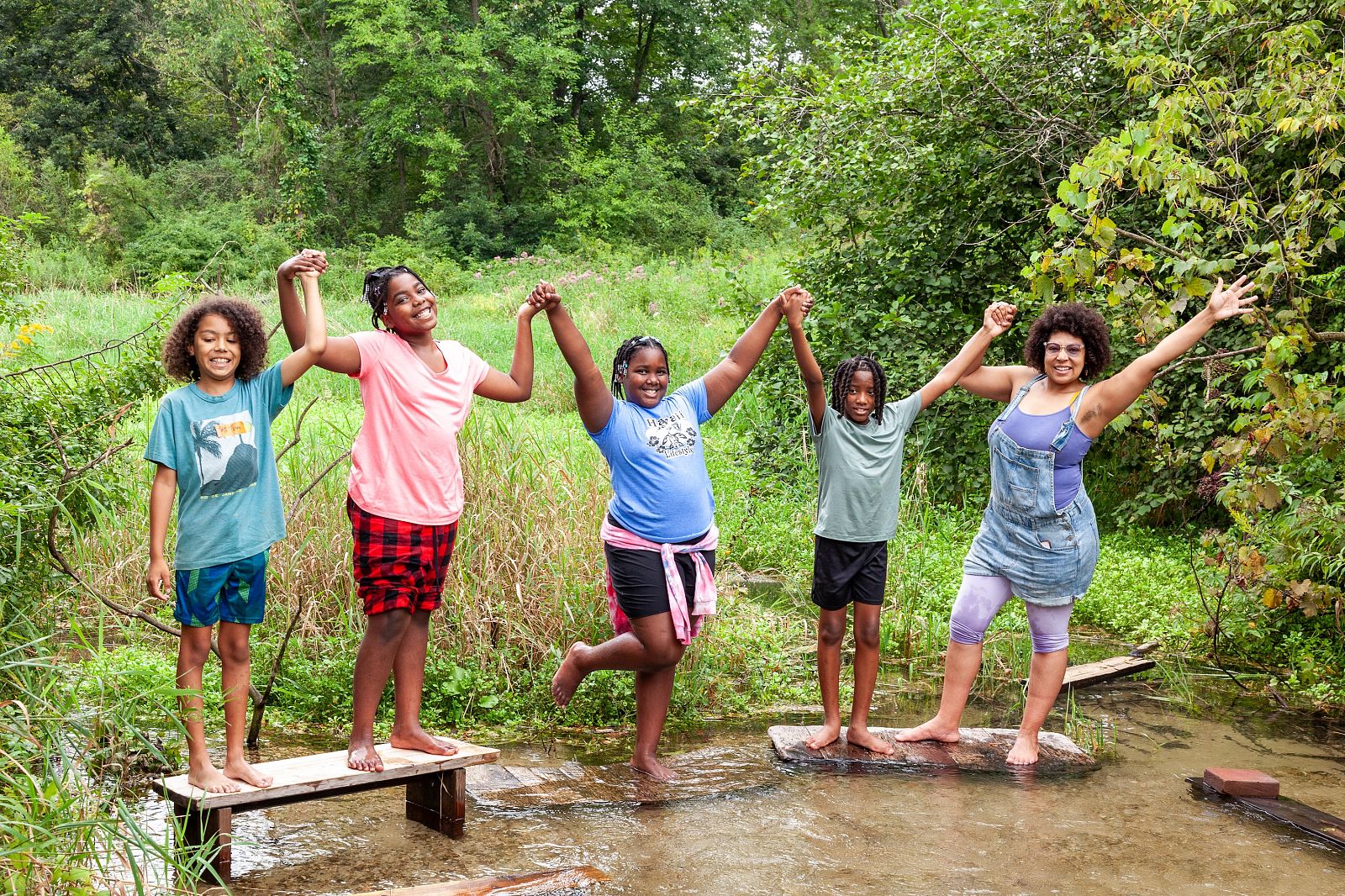
WILD YAMS Sprouts at the Cold Creek with Youth Facilitator Gaby Martinez (right), 2025. (Photo: Kate Bowen)

We bring our own Youth Program Educator, Gaby Martinez, who engages the youth, or WILD YAMS Sprouts as we call them, in creative and nature-based activities during the day while the mothers work in the studios. But the Sprouts also have the opportunity to learn directly from ACRE staff and artists on campus by getting to help in the kitchen to prepare the meals, throw on the ceramic wheel, jam out on synths in the A/V studio, or DJ our dance parties. This parallel intergenerational aspect of the residency, which is central to our mission, is a beautiful thing to see play out organically at ACRE. Of the four years this residency has taken place, no year looks exactly the same depending on who’s there and what they’re working on. In 2025, one of our residents brought her elderly mother with dementia, as well as her adult son who was learning to be her caregiver. Over the last few years, we had our first resident who brought children that were under one year old. Each year we have a different group of artists with varying circumstances and creative practices and we welcome the opportunity to be challenged and grow as organizations while we figure out how to support these caregivers holistically.

And I would be remiss if I didn’t mention the rest. From midday naps in a hammock, late night chats in the lodge, impromptu telescope viewings of the Moon, everyone in our session is encouraged to slow down and enjoy the idyllic views, lack of mobile service, wildlife, and the delicious meals prepared so lovingly for us in this rare stretch of quiet days away from the bustling city of Chicago. You can always find at least a few people relaxing in the Cold Creek, named for the frigid runoff which fills it. This time is each artists’ own to decide how they spend it.

This year, the five WILD YAMS SEED artists primarily focused on work for their culminating exhibition, Between Memory and Becoming: Manifestations of Black Motherhood, which will take place at Co-Prosperity Sphere in Chicago this August. Our Curatorial Fellows, tiffany m johnson and Oguguam (OG) Ugwuanyi, thoughtfully prepared outlines for each individual artist which was meant to give suggestions in guiding their time and prioritizing their tasks. While other years encouraged more experimentation and play, this time we simplified our programming in order to provide longer stretches of uninterrupted and focused studio time for the artists ahead of this important exhibition.

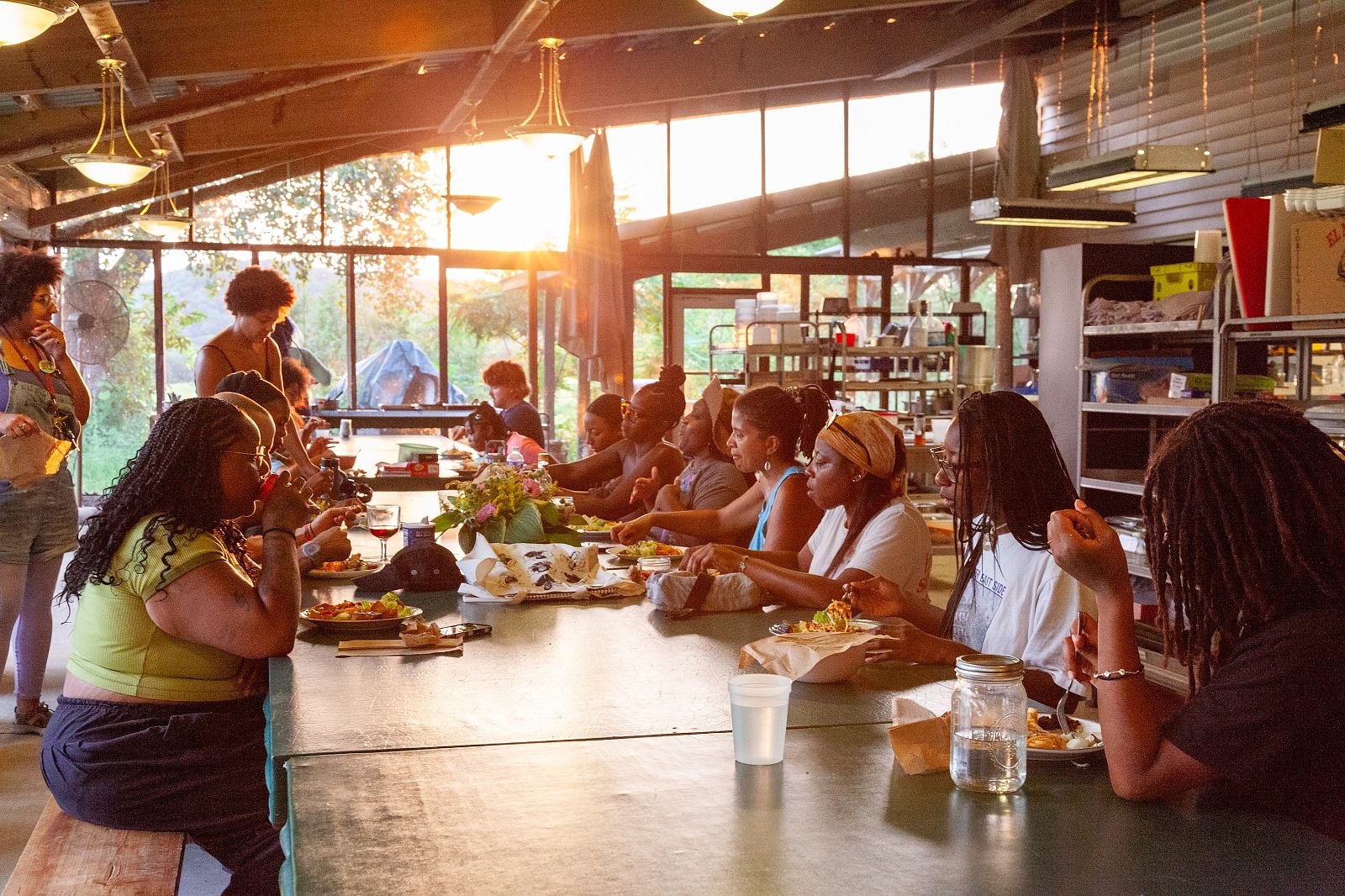
Dinnertime at ACRE, 2025. (Photo: Kate Bowen)

By curating a space that can support us fully, WILD YAMS x ACRE addresses systemic gaps in support for Black mothers in the arts while fostering collaborative networks that expand opportunities for both of our organizations, staff, and participants. By combining our strengths, we aim to develop a model that centers intergenerational and intersectional collaboration, nurtures a multitude of artistic practices, and provides tailored resources for both adult artists and their children. This partnership is not just a residency for one group, but an opportunity for both organizations to expand their networks and create lasting, meaningful connections among artists in Chicago and beyond.

Although we have been excited to see many new caregiver and family-inclusive residency programs pop up over the last few years, we recognize that many programs are still just not equipped or resourced to provide the necessary support for caregivers to attend. Our unique framework allows artists to lean heavily on the existing support system of the WILD YAMS collective, which in turn supports ACRE in hosting us. The long-established and solid framework of WILD YAMS is a large part of what makes this residency even possible—we hope this will offer another model for other organizations to work towards caregiver-inclusive residencies.

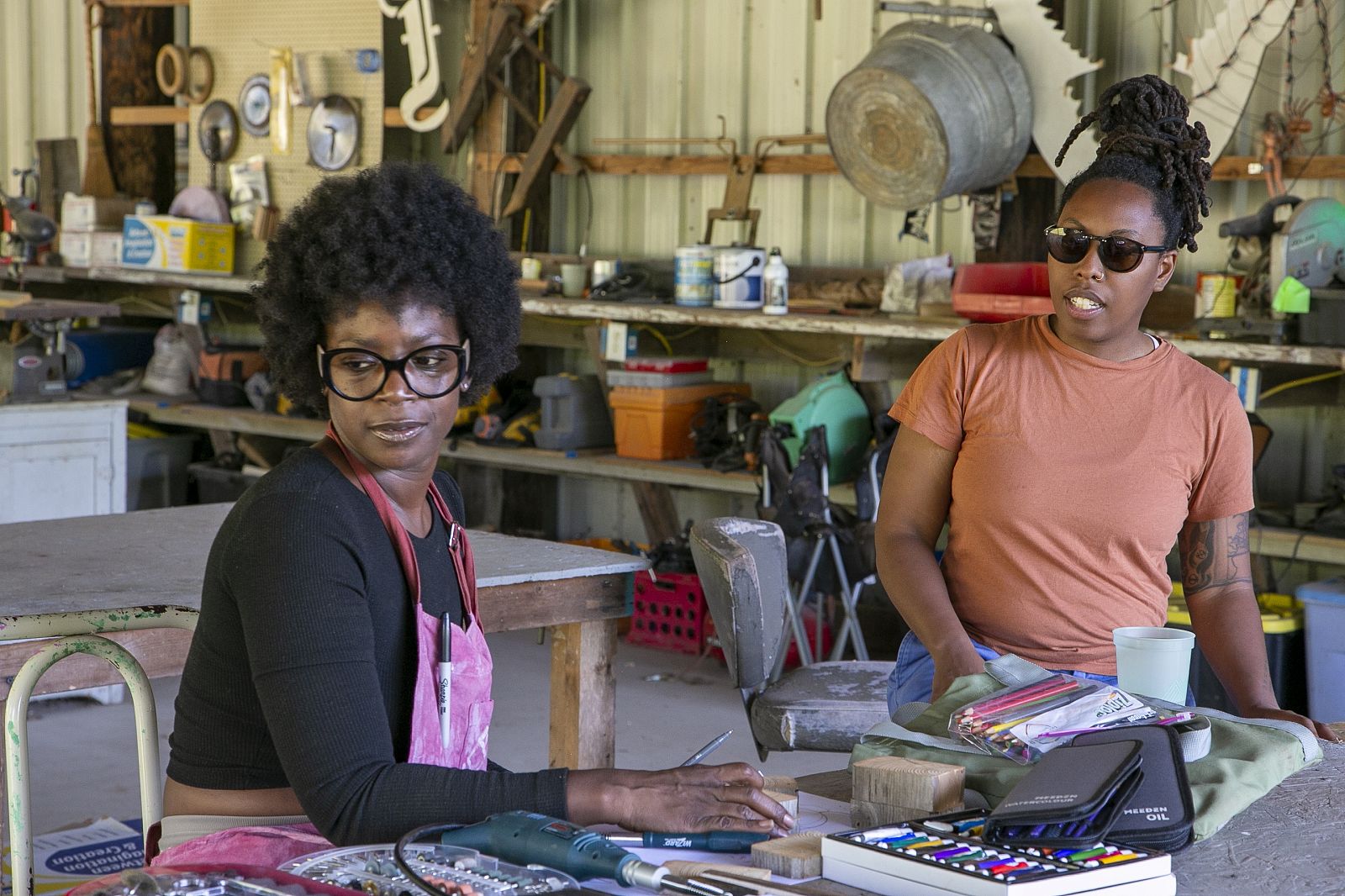
Andrea Yarborough (right) conducts a studio visit with Summer Coleman, 2023. (Photo: Kate Bowen)

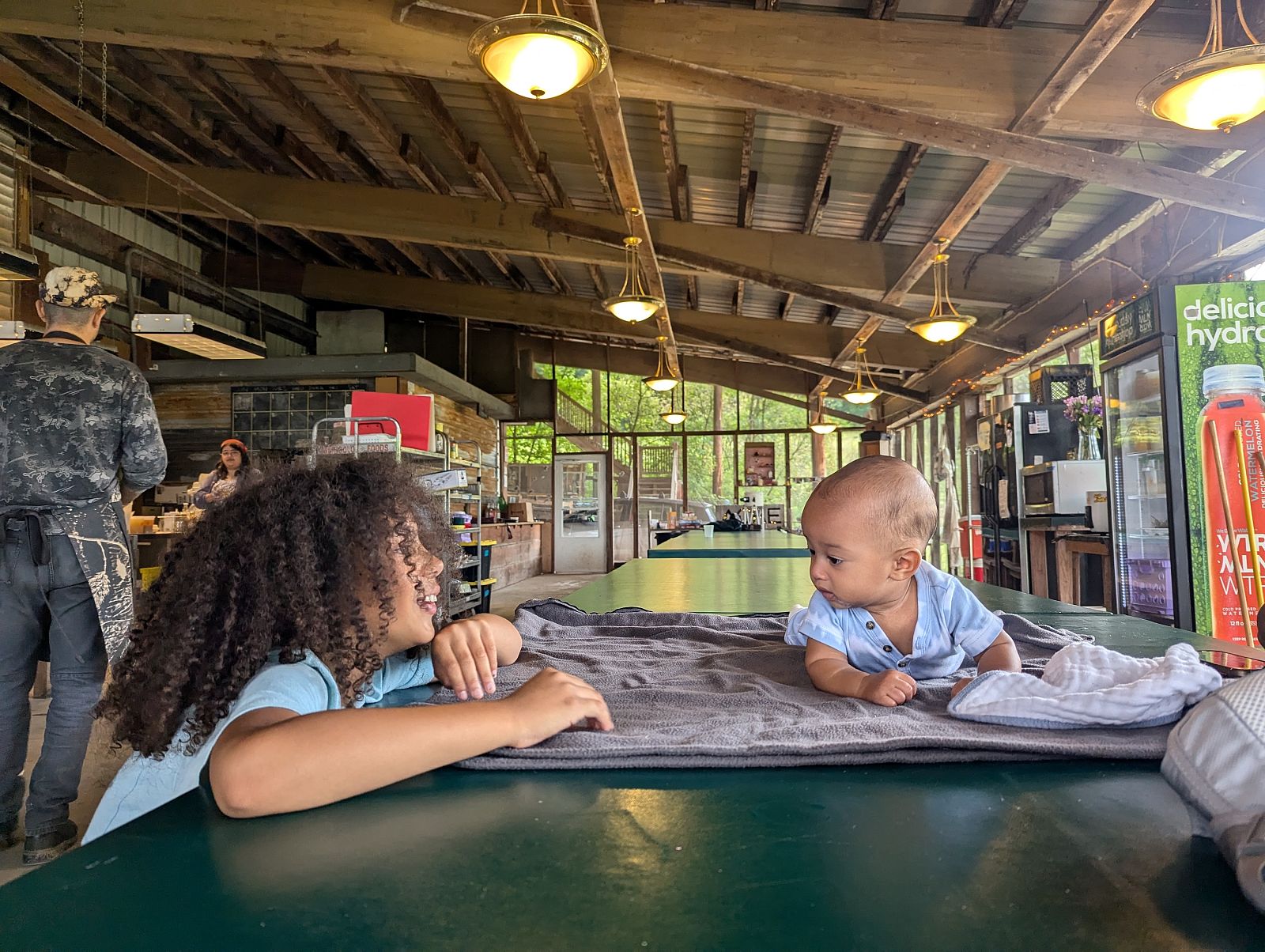
Asher and Baby Sol hangout before lunch, 2024. (Photo: A.Martinez)