Abstraction, especially abstract expressionism, requires a personal language from the artist; a language that, more often than not, isn't spoken by the viewer, whether in the art world or not. Indeed, that is what makes abstraction such a profound method of art. It is intensely personal and individualistic. It expresses the unique character and life of the artist in a way that non-abstract formalism cannot. However, since it is in a personal language of the artist, the viewer may interpret it, but interpretation can only go so far without the artist specifically telling us what he or she believes the work means.
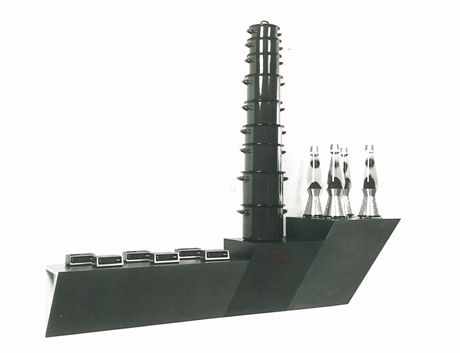
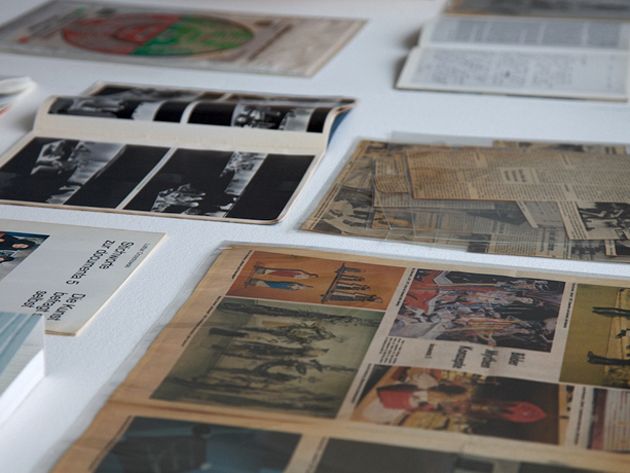
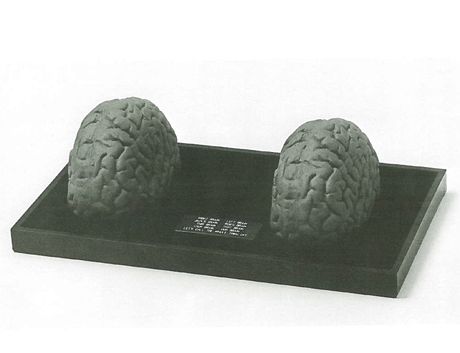
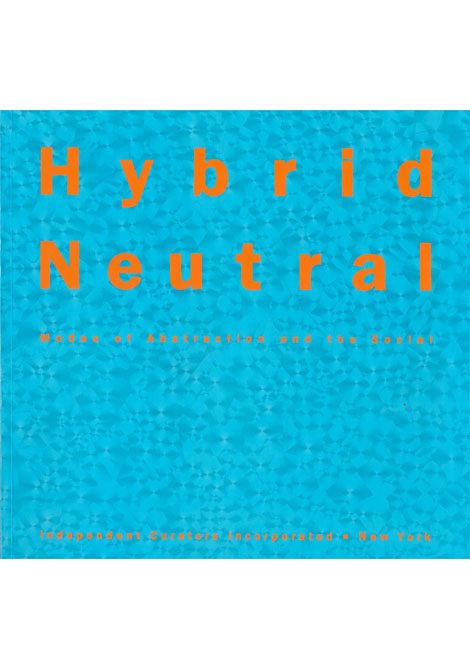
What are we to do, then, with abstract art as it becomes more and more social and political? How are we to criticize a work whose language we don't speak? If someone who doesn't read or speak Spanish were to read Don Quixote in the original Spanish, what value is the reader's opinion? How successful can an abstract artwork that criticizes the US government's methods of dealing with the AIDS crisis if the only people who understand the work are the artist and those who have received personal confirmation from the artist? In Hybrid Neutral, Tricia Collins and Richard Milazzo endeavor to explore this conflict between social abstract art through a compilation of new works by a variety of artists in this compelling and beautiful collection.
Texts by: Tricia Collins, Richard Milazzo, Gary Indiana
Featured artists: Vikky Alexander, John Armleder, Gretchen Bender, Ross Bleckner, Saint Clair Cemin, Sarah Charlesworth, David Diao, Robert Gober, Peter Halley, Tishan Hsu, Jeff Koons, Jonathan Lasker, Annette Lemieux, Peter Nagy, Joel Otterson, Haim Steinbach, Gary Stephan, Philip Taaffe, Meyer Vaisman, James Welling
Collins, Tricia and Milazzo, Richard, Hybrid Neutral: Modes of Abstraction and the Social, Independent Curators International (ICI), New York, 1988. 62 Pages, softcover. ISBN: 0916365271