Eduardo Carrera’s research explores LGBTQ+ BIPOC representation and resistance to the HIV epidemic, as seen in queer photography from the southern United States, a region intricately linked to Latin America and the Caribbean due to its territorial and cultural proximity. By examining underexplored archives, images, and cultural practices, the project highlights how photography not only documented, but actively shaped transnational narratives of displacement, activism, and belonging across the South. Carrera uses an intersectional framework to rethink the boundaries of American art history, showing how visual practices that are rooted in queer and disaporic experiences destabilize canonical definitions of queerness, identity, and HIV representation. This article traces histories of photography alongside developments in queer culture throughout the American South, drawing from photographic archives in Dallas, Texas and New Orleans, Louisiana.
Eduardo Carrera: "Southern Queer Style (1985–1995): Photography, Performativity & Spirituality in the HIV/AIDS Archive"
2024 Curatorial Research Fellowship
Apr 18, 2024 – Dec 1, 2024
Southern Queer Style (1985–1995): Photography, Performativity & Spirituality in the HIV/AIDS Archive
“I want to see the blessed face
Of Him who died for me
Sacrificed his life for my liberty”
— Yolanda Adams, My Liberty (1993)
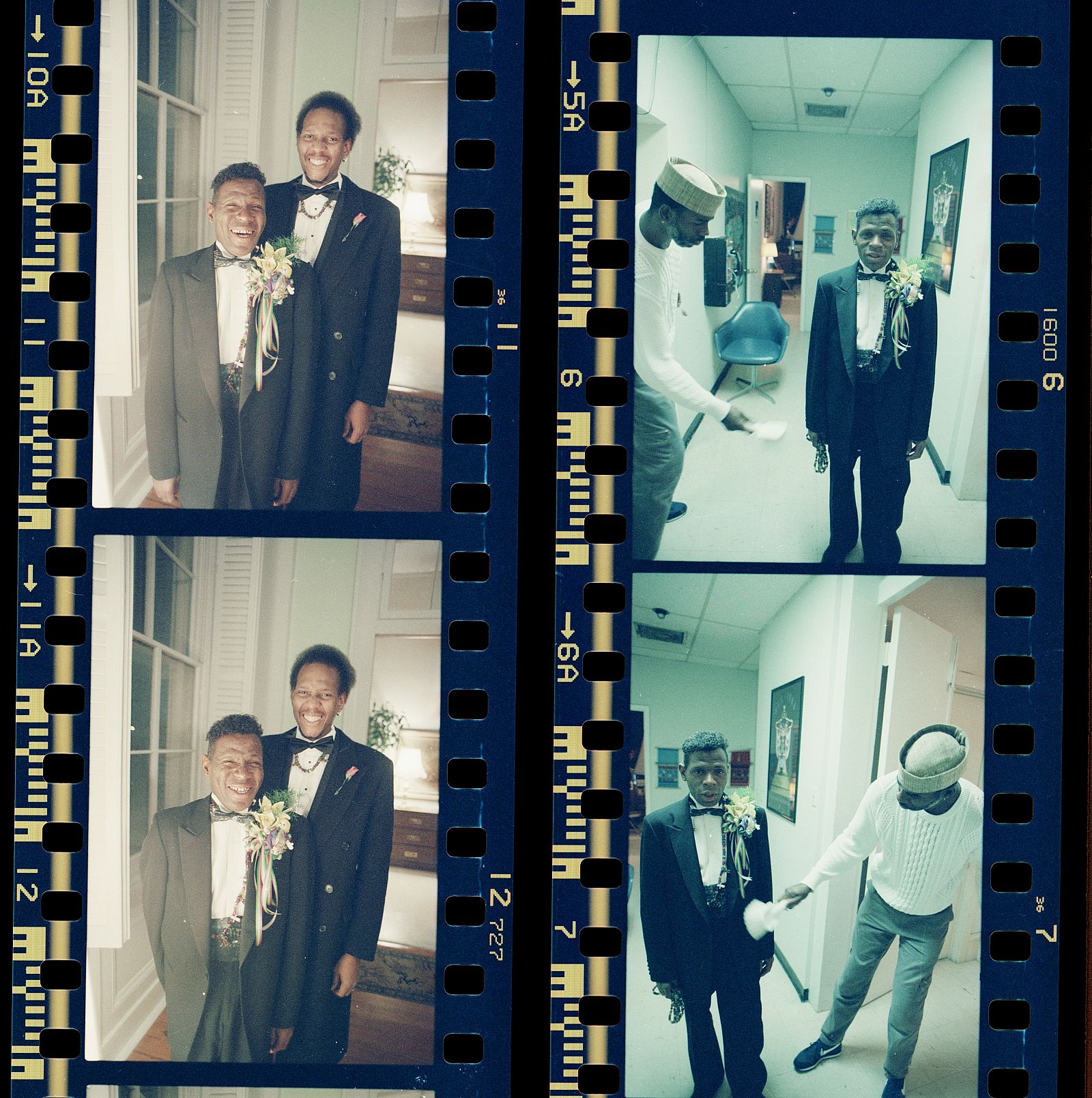
In a roll of two strips of 35 mm film, a series of portraits shows two Black gay men dressed in black suits, white shirts, and bow ties. On the lapels of their jackets, they wear boutonnières—small floral ornaments typically worn on formal occasions such as weddings, balls, or celebratory church ceremonies. The man on the right wears a single pink flower, while the boutonnière worn by the man on the left is more elaborate and extravagant. Both men wear cummerbunds—broad, usually pleated waistbands typical of tuxedos—and Mardi Gras necklaces. Their pose suggests a close relationship, possibly as a couple. In one of the images, a Ficus plant appears in the background, its lush leaves framed by windows and household objects such as lamps, furniture, framed pictures, and carpets, offering the viewer a sense of home and interiority. The photograph was captured in 1989 by Andrew Boyd at Project Lazarus, a residential treatment center in New Orleans founded in 1985 for individuals living with HIV/AIDS and lacking stable housing.(1)
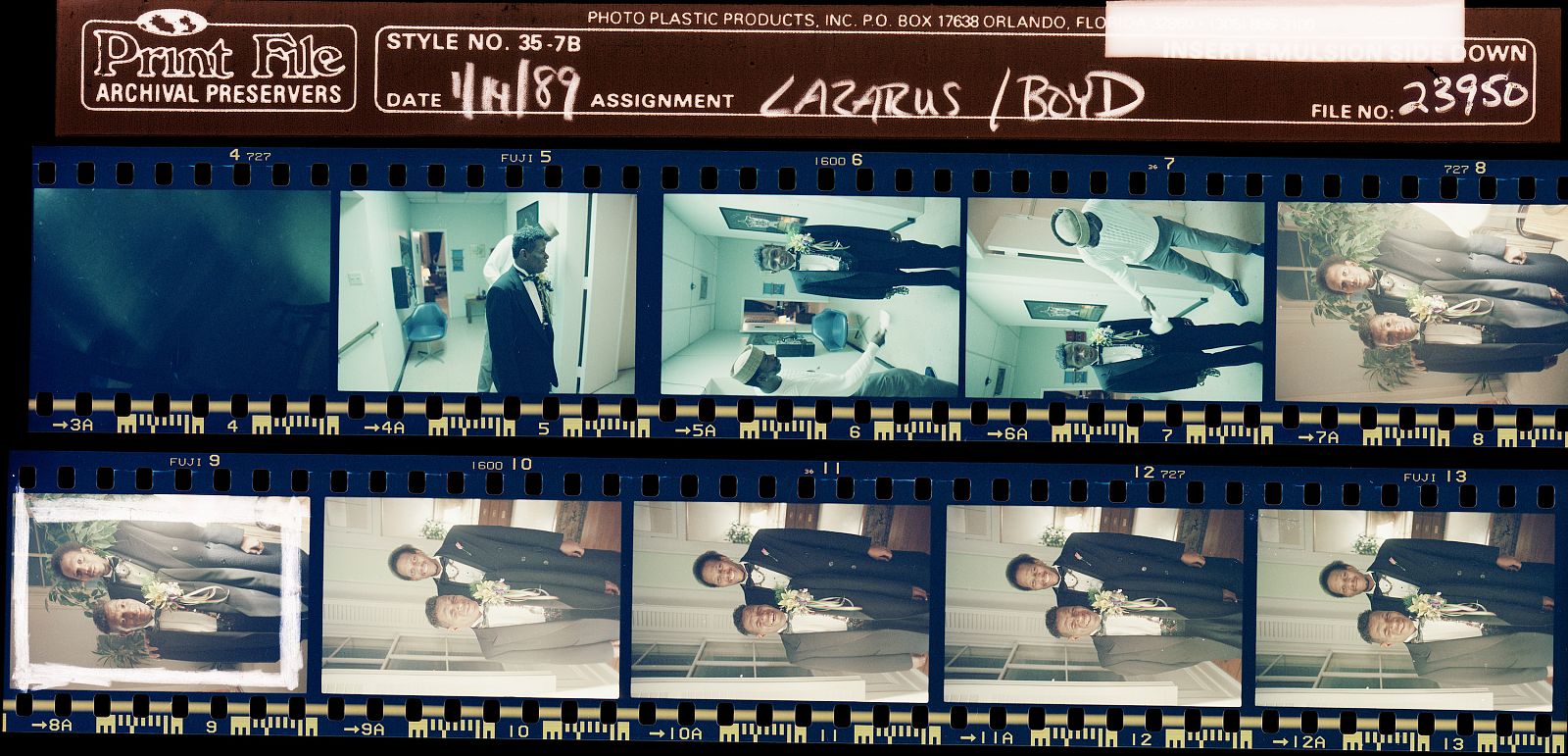
G. Andrew Boyd, Untitled (couple in suits at Project Lazarus, in a residential treatment center for individuals living with HIV/AIDS in New Orleans), 1989. The Historic New Orleans Collection
In the words of bell hooks, “Cameras gave to Black folks, irrespective of class, a means by which we could participate fully in the production of images. Hence it is essential that any theoretical discussion of the relationship of Black life to the visual, to art making, make photography central. Access and mass appeal have historically made photography a powerful location for the construction of an oppositional Black aesthetic.”(2) Along these lines, another image by Boyd shows an individual using a brush to remove lint from the couple’s black tuxedos. This gesture, part of the wardrobe and photographic production, suggests that the men wore formal attire specifically for the portrait and may have commissioned the photograph to commemorate the moment.
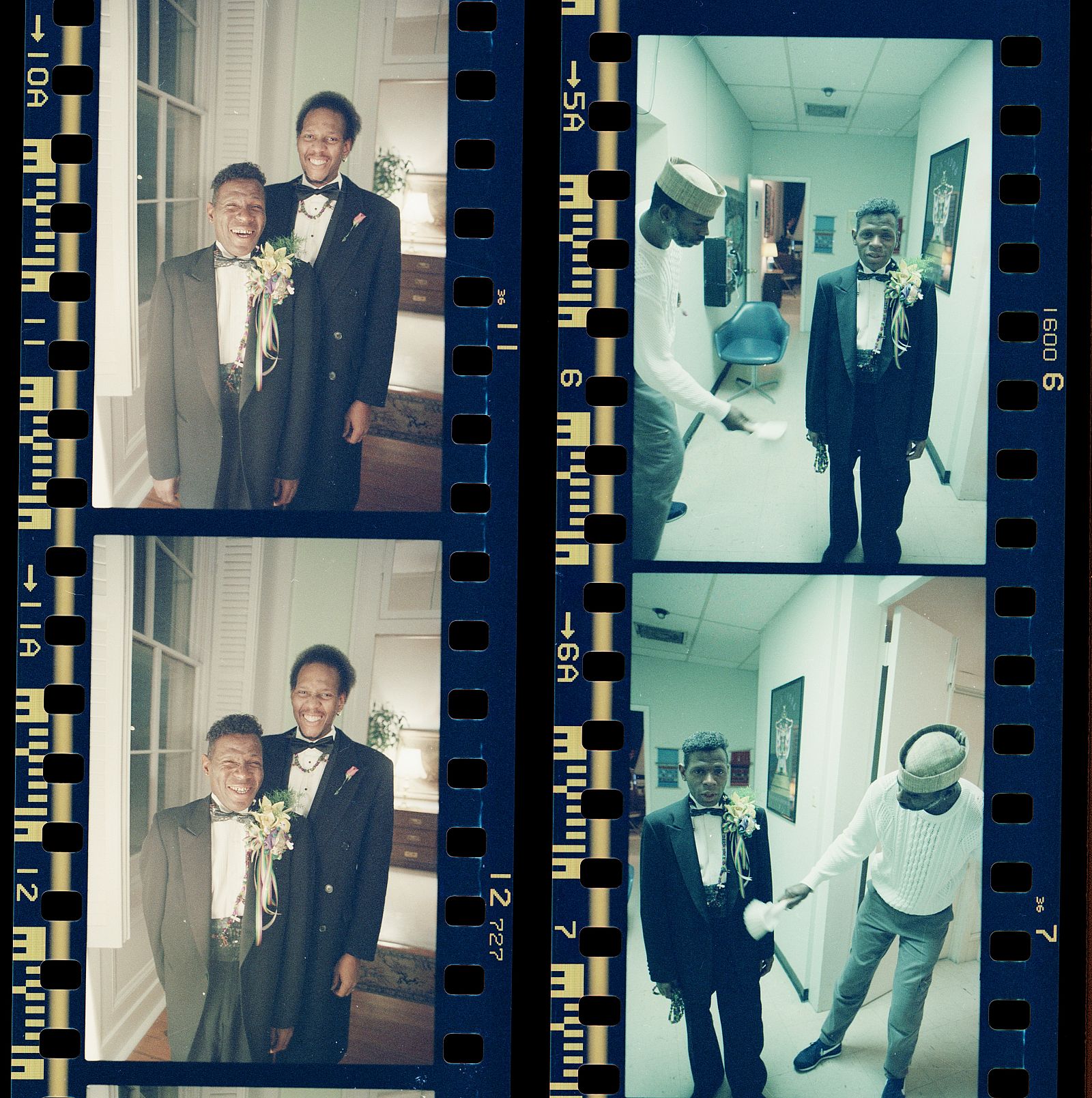
Detail, G. Andrew Boyd, Untitled (couple in suits at Project Lazarus, in a residential treatment center for individuals living with HIV/AIDS in New Orleans), 1989. The Historic New Orleans Collection
The relationship between photography, memory, and cultural survival is further elaborated by art historian Krista Thompson, who notes that “The photographic medium, which often captures an unrecoverable moment from the past, allowing it to reside 'freeze-framed’ in other times and spaces, might have a special analogous relation to African diasporic communities who are often cut off or removed from spaces and times.”(3) Building on Thompson’s view of photography’s significance for African diasporic subjects—frequently displaced or historically excluded—the portraits made at Project Lazarus challenge dominant visual narratives of HIV/AIDS.(4) Rather than depicting individuals at the brink of death, these images offer alternative representations of intimacy, style, care, and survival.
In this ongoing research, I present a selection of photographs that document the lives of Black, Brown, and Latinx queer men—distinct yet overlapping communities which are marked by shared experiences of marginalization—during the HIV/AIDS crisis in the Southern United States.(5) These images capture the intersection of queerness, spirituality, style, and representations of racialized subjects, shedding light on the epidemic’s profound impact on Southern LGBTQ+ communities. The project focuses on the period from 1985 to 1995, and is marked by significant social, political, and medical developments related to HIV/AIDS. In 1985, President Ronald Reagan publicly acknowledged AIDS as a public health problem for the first time, having previously avoided referencing it, and his administration faced criticism for inadequately funding research. Legal regulations emerged to close venues associated with “high-risk sexual activity,” such as bathhouses, while organizations like ACT UP advocated for access to treatments and clinical trials. Medical advances—including the approval of AZT in 1987 and the first protease inhibitor in 1995—paved the way for highly active antiretroviral therapy (HAART).(6) By the early 1990s, AIDS had become the leading cause of death for Americans aged 25 to 44, underscoring the urgency of these developments. This curatorial project captures the complexity and transitions of this tumultuous decade, offering a visual narrative of endurance, activism, and joy in the American South.
Compared to cities like New York and San Francisco, the Southern United States faced unique challenges in addressing the HIV/AIDS epidemic during the 1980s and 1990s. Despite infection rates comparable to the hardest-hit urban areas, limited healthcare access, entrenched stigmas around sexuality, and reluctance to address sexual health and LGBT rights complicated responses.(7) As scholar Celeste Watkins-Hayes notes, “HIV/AIDS is an epidemic of intersectional inequality fueled by racial, gender, class, and sexual inequities at the macro-structural, meso-institutional, and micro-interpersonal levels.”(8) These structural inequities disproportionately affected African American and Latinx communities, shaping both exposure to the virus and the social, medical, and political responses to the epidemic.
Intersecting forces of racism, Christian fundamentalism, classism, and right-wing politics shape LGBTQ+ experiences in the Southern United States. The region encompasses vast socioeconomic and ecological differences, from the plantation landscapes of the Deep South to the poverty-stricken valleys of Appalachia, and from the isolation of the Ozarks to the Gulf Coast’s “Redneck Riviera.”(9) According to Mexican artist and activist Leo Herrera, Southern queers have long developed strategies to weather both literal and political storms, demonstrating not merely resilience but resplendence.(10) These strategies have found expression in urban centers like New Orleans, Dallas, Miami, Houston, and Atlanta, all of which served as early centers of LGBTQ+ activism. However, exploring Southern queer history remains challenging, due to the limited availability of archives and scarcity of records.(11)
Historian James T. Sears captures this tension, observing that “Southern history is never simple and seldom straight,” reflecting the complex interplay of regional contexts and queer memory.(12) Scholars like E. Patrick Johnson also emphasize how gender, class, and race intersect to shape the South's queer diversity. During the 1970s and early 1980s, these divisions fragmented LGBT communities, and many gay men did not openly discuss HIV until the early 1990s, often struggling to comprehend the sudden pneumonia-related deaths of friends beginning in 1981.(13) In rural areas, inadequate medical services and prevention were deepened by cycles of poverty and insecurity, further compounding the crisis and making the South one of the most challenging regions for LGBTQ+ residents.
Part 1: Photography, Style, and the HIV Epidemic
While this research centers on 1985–1995, it is useful to return briefly to 1978 to examine a photograph from an earlier moment in the Southern queer style archive. The mid-to-late 1970s represent a pivotal moment of vibrant queer self-expression in the South—an era brimming with creative freedom and stylistic experimentation, echoing the borader currents of the Sexual Revolution and gay liberation activism, yet shadowed by an unrecognized fragility that would soon be shattered by the emerging epidemic.
In this photograph from the Historic New Orleans Collection, artist George Dureau captures Quentin Crisp, a British writer and gay icon known for his flamboyant personality, seated in a chair next to a man labeled as "unknown." Crisp wears a light long-sleeved blouse, trousers that reach his ankles, stockings, black shoes, a scarf around his neck, and a ring on his finger, with his hair and eyebrows carefully styled.
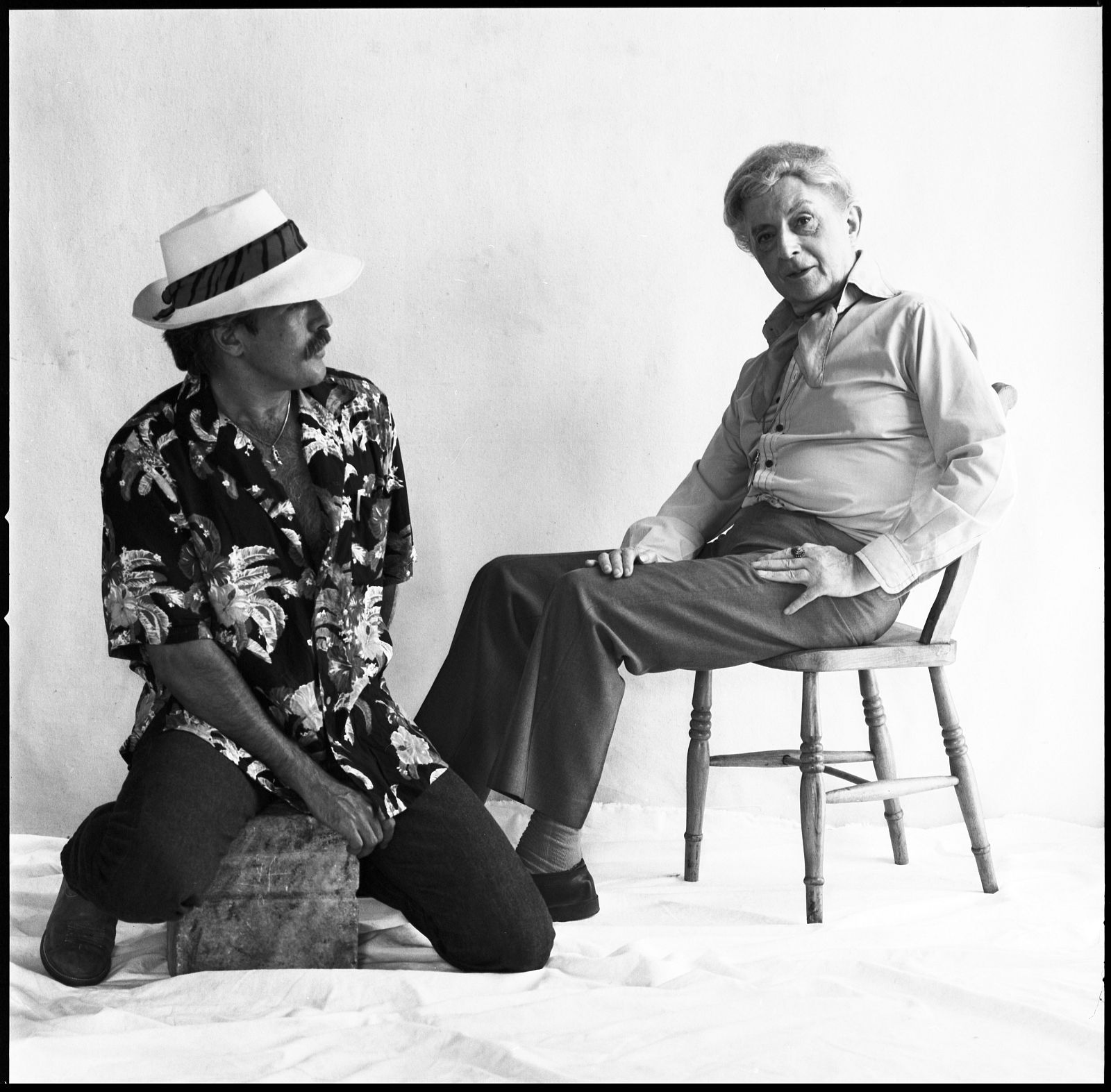
George Dureau, Quentin Crisp and George Febres, 1978. The Historic New Orleans Collection.
Crisp embodied a radical queerness through flamboyance and theatrical self-fashioning, challenging rigid binaries of gender and sexuality in mid-century Britain. At a time when authorities criminalized homosexuality, Crisp used his style as a subversive performance and personal manifesto, unsettling conventional norms while celebrating queer possibility. As Taylor Black notes, we can understand Crisp’s aesthetic as a process of transformation, with his appearance manifesting a deliberate form of difference that resists categorization. His homosexuality and effeminacy—traits that exposed him to social rejection—became the foundation of his unique expression, through which he turned what society considered anomalous into a life lived as art.(14)
The “unknown” man next to Crisp is George Febres, a Latinx artist and prominent queer figure who migrated from Guayaquil, Ecuador to New Orleans in the late 1960s and whose career was cut short by AIDS. In contrast to Crisp’s sober attire, Febres wears a short-sleeved floral shirt, unbuttoned to reveal his chest adorned with an alligator-shaped pendant necklace. At the time, Crisp was 70 and Febres was 35, a generational gap reflected in their dress and demeanor. Febres, wearing a Toquilla straw hat from his native Ecuador, gazes at Crisp in profile, his tanned skin and outfit evoking a distinctly Latin American tropicality. While Crisp sits on a wooden chair, Febres leans against a block on the studio floor, his posture suggesting someone mounted on a horse and the positioning of the two figures within the composition implying a hierarchy.
By 1978, Crisp was well-known in queer and art circles in Britain and the United States. In New Orleans, Dureau worked within a vibrant artistic community, collaborating closely with Febres, who was Dureau's friend and a regular model for his photographs, as well as a gallery owner and well-connected artist whose contributions art historians have often overlooked. By pairing Crisp, whose cultivated flamboyance made him an icon of queer visibility, with Febres, a younger Latin American artist drawn to camp aesthetics, Dureau staged a queer generational link articulated through personal aesthetics, performance, and embodied resistance to normative expectations. The photograph creates not a record of personal ties, but a visual constellation in which Crisp and Febres perform distinct yet resonant strategies of queer style and self-fashioning.
The hat Febres wears, made from the fine straw of the Carludovica palmata plant in Ecuador’s coastal region of Montecristi, is internationally known as the Panama hat. Valued for its meticulous weave, the toquilla hat gained global fame in the early 20th century when Panama Canal workers and visitors used it for sun protection; its popularity grew after journalists photographed U.S. President Theodore Roosevelt wearing one in 1906. Traditionally worn by Ecuador’s mestizo and Montubio working class, its production also supported Indigenous and rural communities who sold the hats locally. In Dureau’s portrait of Crisp and Febres, the toquilla straw hat evokes both queer style and cultural memory. Febres recontextualizes the hat, already a marker of Ecuadorian national identity recalling working-class roots, as a symbol of diasporic queer-Latinx subjectivity. It merges heritage, migration, and the cosmopolitan codes of New Orleans, while asserting presence and transforming a national symbol into an emblem of aesthetic and political expression. The hat’s tropical flair amplifies Febres’s visual language, turning clothing and gesture into forms of living memory and embodied refusal. As Taylor Black observes, style is “the rudimentary source of difference that distinguishes one thing from another… an immaterial force or energy… that imbues everything under the sun."(15) Within this framework, Febres’s sartorial choices operate as both mythic and tangible expressions of Latinx-queer subjectivity.
Style operates as both a personal and political tool, revealing individuality while signaling collective resistance, both fundamental to uniqueness and mythic in its capacity to imbue meaning. Unlike fashion, which reflects external and changeable aspects of appearance, style represents a lasting, intrinsic manifestation of identity. In another photograph, this one from the 1990 Houston LGBT parade, a group of men marches wearing red berets, black shirts, dark jeans, and black leather boots with red laces; two members are Black and the remainder of the group is white, and all wear sunglasses and carry rifles. They are in the parade representing Ripcord, Texas’s oldest leather bar and a landmark for the Montrose community since 1982 which hosted diverse events. In this context, leather evokes an aesthetic of rebellion, symbolizing political resistance, social change, and the transformation of cultural and economic values.
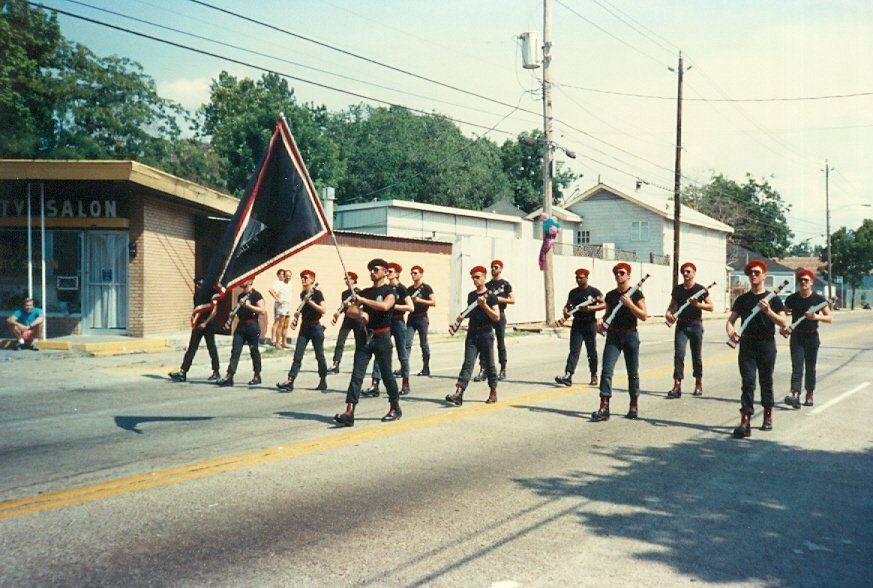
Ripcord, Pride Houston, 1990. Houston LGBT History Archive
The group’s attire references the clothing worn by social and political movements linked to social reforms, particularly Latin American guerrillas. In an iconic 1960 photograph by Alberto Korda, Ernesto “Che” Guevara appears with a stern gaze, leather jacket, and beret adorned with a yellow star. This image became a staple of cosmopolitan fashion, shaping styles and political aesthetics across global urban centers like New York, Paris, Mexico City, and Havana.(16) Guevara’s jacket and beret emerged as symbols of rebellion and political endurance, and were adopted by movements such as the Black Panthers, Brown Berets, and—as seen in this photograph—the leather gay community. Leather thus functions as a charged cultural signifier, linking aesthetics with histories of struggle and fostering solidarity across diverse movements committed to radical social transformation.
From George Febres’s staged Latinx identity to the dignified formalwear at Project Lazarus and the revolutionary aesthetics at the parade, clothing and visual codes—whether suits, flamboyant dress, or regional attire—become acts of visibility and resistance. Together, these images document a revolutionary aesthetic in which self-presentation, fashion, and subjectivity are inseparable from the political work of survival, memory, and reimagined futurity.
Part 2: Photography, Queer Amulets, and Spirituality
In 1980, thirty men formed the Turtle Creek Chorale (TCC), the first gay men's choir in Dallas, Texas, performing at Holy Trinity Catholic Church. From this moment, the Turtle Creek Chorale Archive began documenting TCC from the 1980s to today, including photographs of the choir in the church, obituaries of members lost to AIDS-related complications, and images of individuals gathering food or participating in support events during the epidemic.
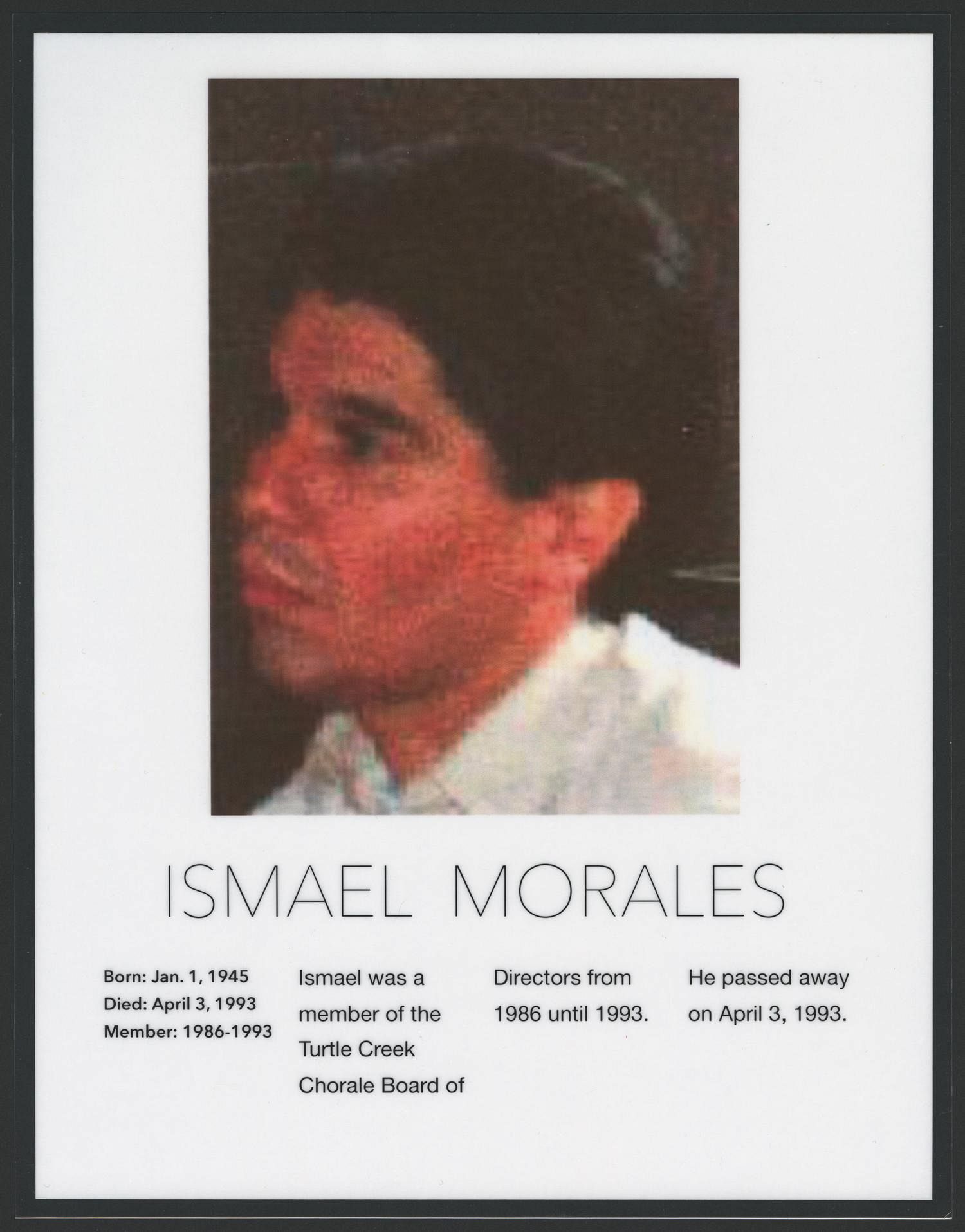
Obituary for Ismael Morales, 1993. Turtle Creek Chorale Archive, Texas, 1980s-1990s
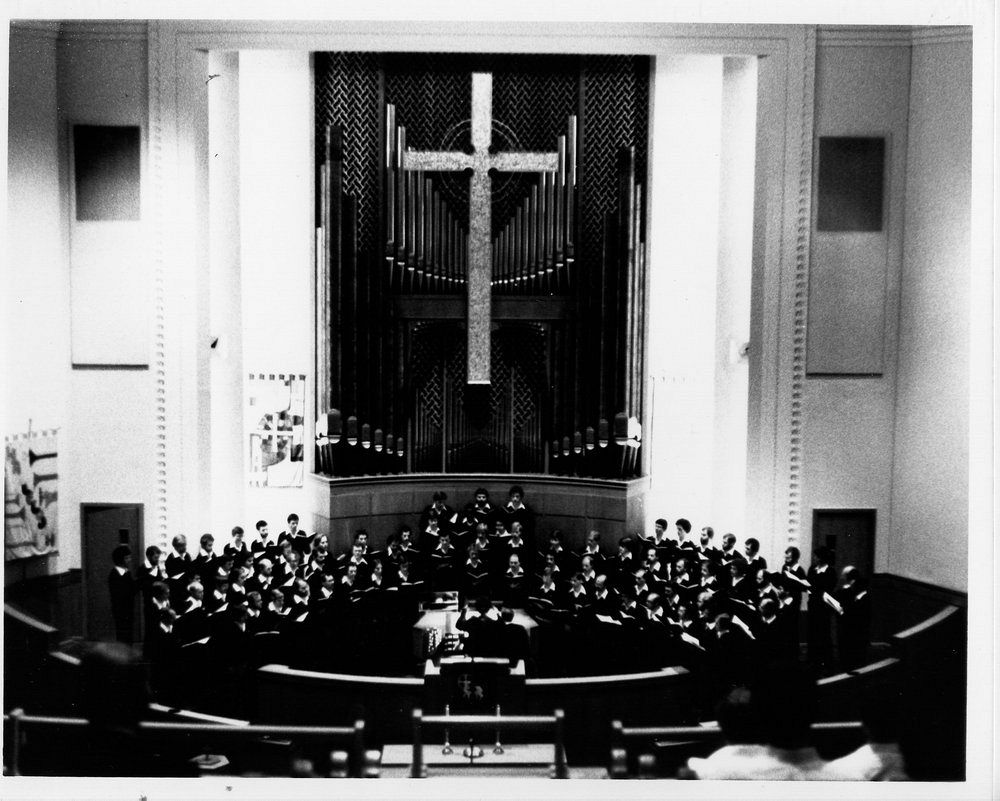
Turtle Creek Chorale Archive, Texas, 1980s-1990s
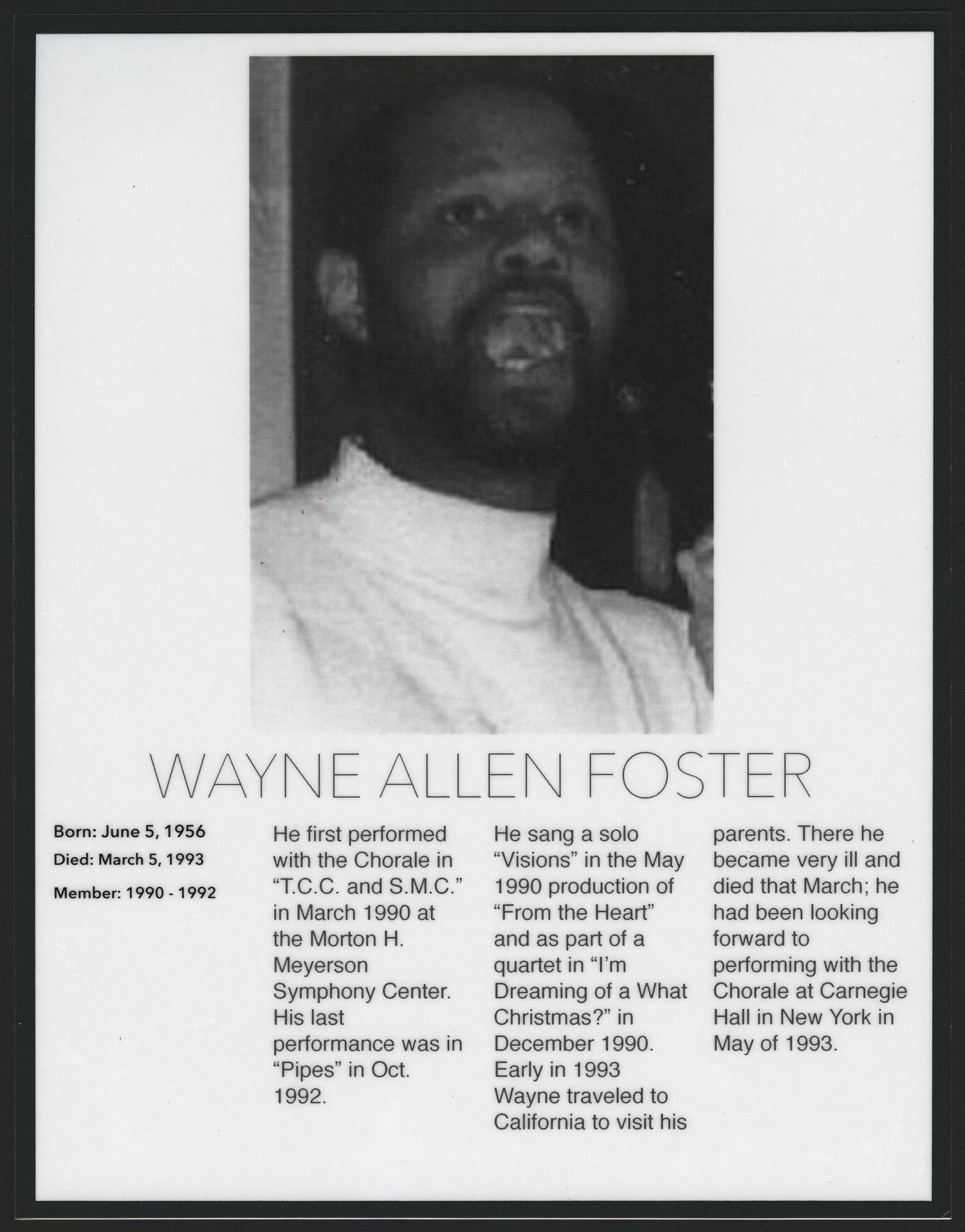
Obituary for Wayne Allen Foster, 1993. Turtle Creek Chorale Archive, Texas, 1980s-1990s
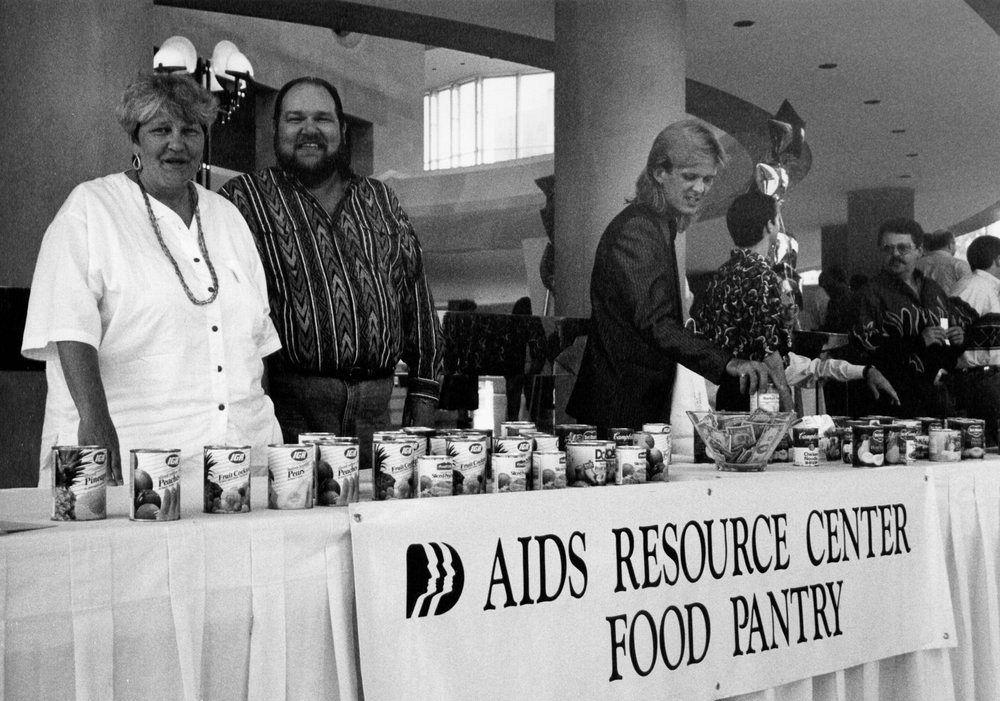
Turtle Creek Chorale Archive, Texas, 1980s-1990s
Among these archival materials, a 1985 photograph captures the Turtle Creek Chorale in performance. Eighteen Black and Brown men, dressed in suits, sing mid-performance, their expressive faces and poised posture conveying musical skill, ensemble cohesion, and the power of their voices. Each choir member takes a deep breath, sustaining tone and strength, captured in the photograph as a vivid expression of unity and vocal harmony. As Krista Thompson observes, photography does more than record moments; it captures ephemeral aspects of human action and presence, revealing how subjects present themselves and how audiences perceive them.(17) In the South, where open expressions of homosexuality or political activism were rare, Black and Brown gay men used choirs to resist oppression, cultivate community, and engage with Southern religious traditions while expressing their talents.(18)
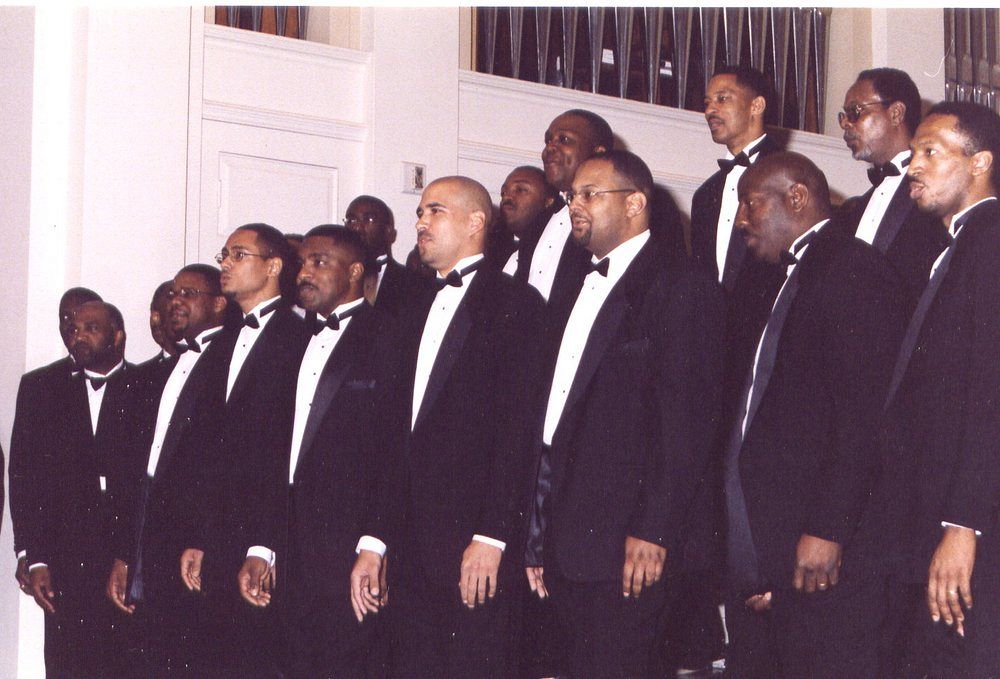
Turtle Creek Chorale Archive, "the Most Recorded Male Chorus in the World," Texas, 1985
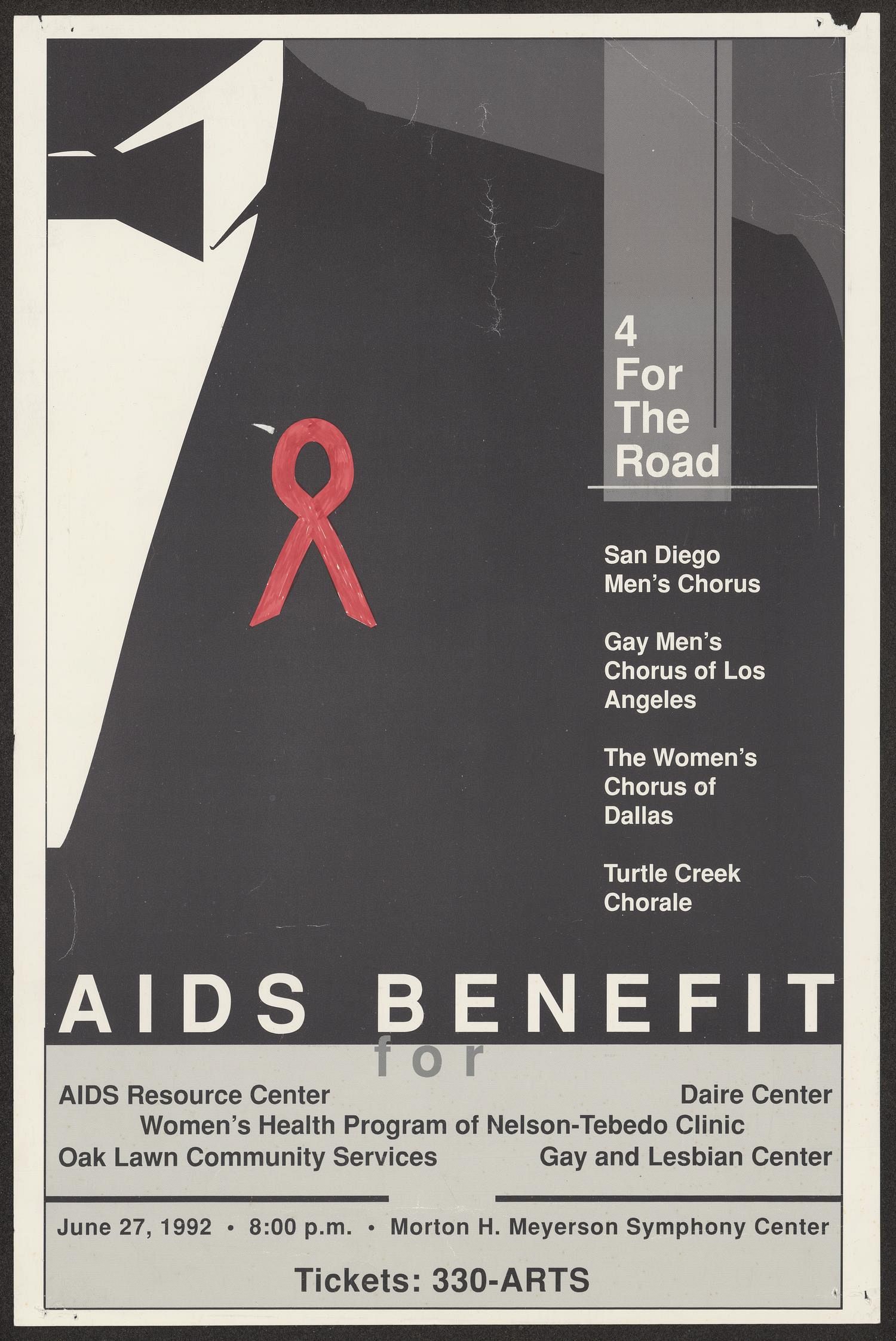
Poster from the Turtle Creek Chorale Collection for their "4 For the Road" AIDS benefit concert on June 27, 1992. An illustration of a suit with a red AIDS awareness ribbon pinned to its lapel decorates the poster.
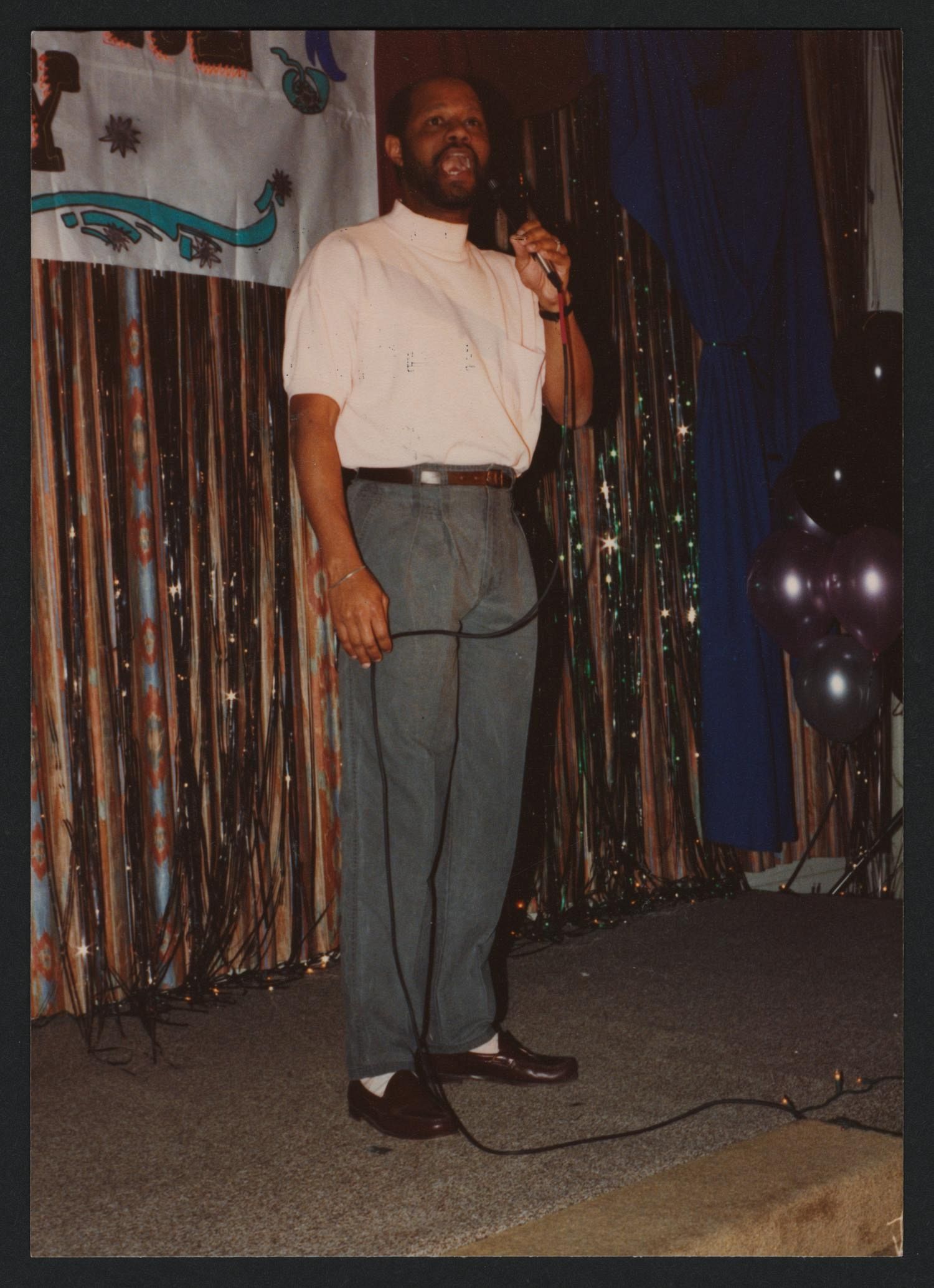
Wayne Foster performs at a Turtle Creek Chorale retreat, holding a microphone onstage. He wears grey pants and a white turtleneck, with metallic streamers and a white banner behind him, 1980s
E. Patrick Johnson addresses the complex role of gay men within Black church communities, where implicit and explicit homophobia persisted. He examines enduring stereotypes—such as the flamboyant choir director or musician—that, while not unique to the South, resonate powerfully in that context. Johnson proposes several reasons why gay men were drawn to the choir: as a space to navigate religious life with relative safety, to build community, and to express sexuality through the theatricality of worship. Photographs of men in tuxedos capture both the performative dimension and the spiritual resonance of collective singing, which allowed participants to engage with faith, transcendence, and emotional communion. Choir participation involved preparation and presentation, where attire and gesture became a medium for elegance, self-styling, and ritualized expression. As Johnson observes:
"For many years, the choir was my saving grace. The choir was where I felt free to express myself and where I felt appreciated. By the time I was twelve, I had made quite a reputation for myself as “the little fat boy with the high butt and high voice that could sing.” I was the only male soprano, and I could out-sing any of the girls in the soprano section. I got the church to shoutin’ every Sunday by singing a solo originally sung by Yolanda Adams with the Southeastern Inspiration Choir out of Houston, Texas. The song is called “My Liberty”—how prophetic."(18)
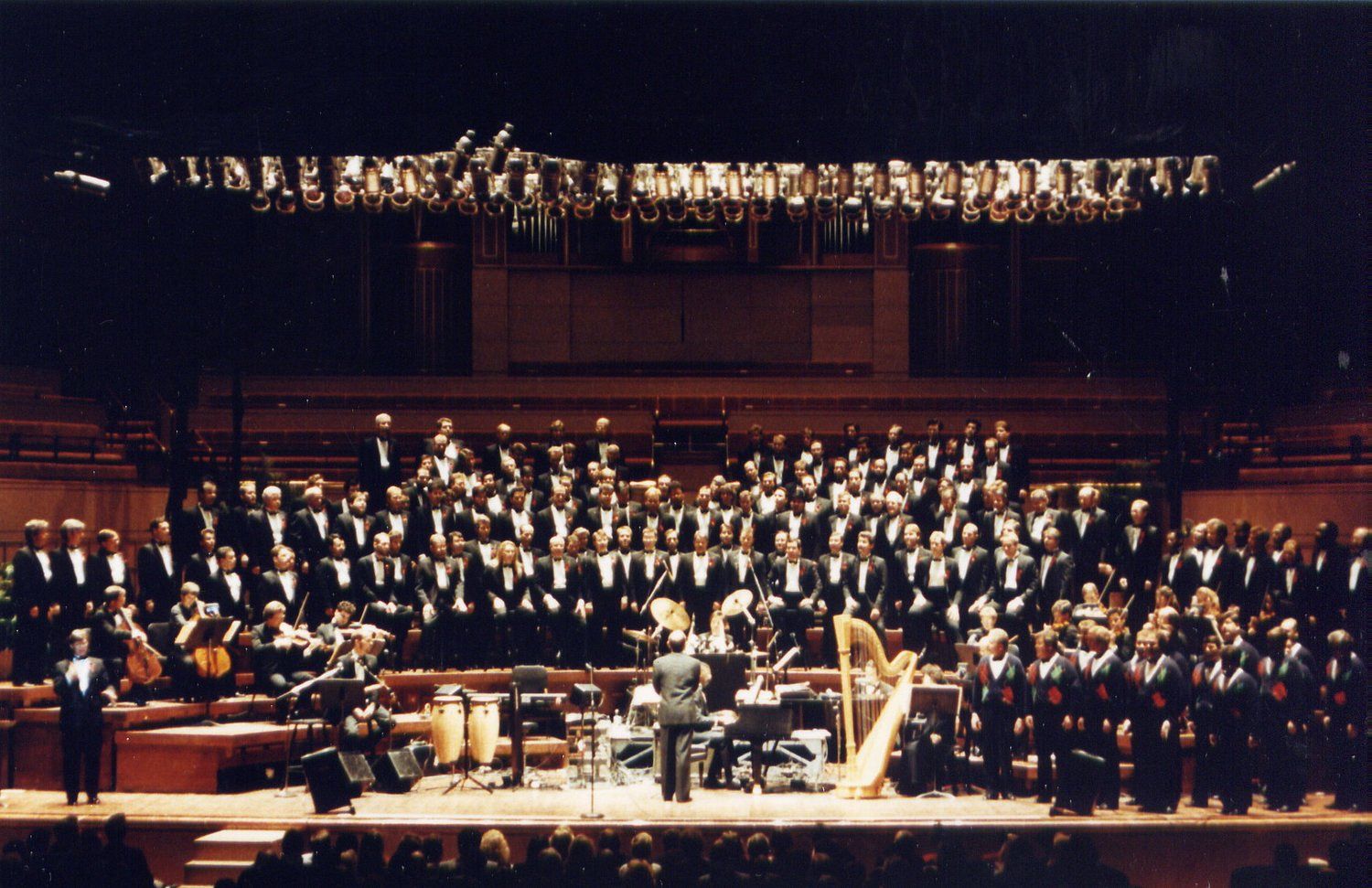
Turtle Creek Chorale Archive, Texas, 1980s-1990s
This intersection of spirituality, queerness, race, and performance was not unique to Dallas. In New Orleans, these forces converged just as powerfully, shaping a queer community rooted in longstanding cultural and religious traditions. By the 1980s, the city was home to a dynamic network of gay restaurants, religious congregations, cultural organizations, and iconic events such as Mardi Gras and Southern Decadence.
Founded in 1969, the Krewe of Armeinius is one of the city’s oldest and most prominent gay carnival organizations, known for its extravagant and satirical performances. The Krewe reimagined Carnival as a space for gender transgression, camp pageantry, and ritualized queer performance. In one photograph, a figure wears a costume of red and black feathers that rise upward, combined with silver human silhouettes evoking spirits emerging from his body. A harness accentuates his chest, leather chaps cover his blue jeans, and a mask completes the outfit. In another image, a minotaur-like figure dons a bull’s head, bare torso, glittering black cape, and hooved feet. These costumes, from Armeinius’s 1987 ball, "Give Me That Ol’ Time Religion," and the 1992 ball, "The Tarot," satirize conventional religious and cultural norms while asserting a queer claim to visibility, pleasure, and communal memory. They create a space where ritual, artistry, and gender fluidity coexist.
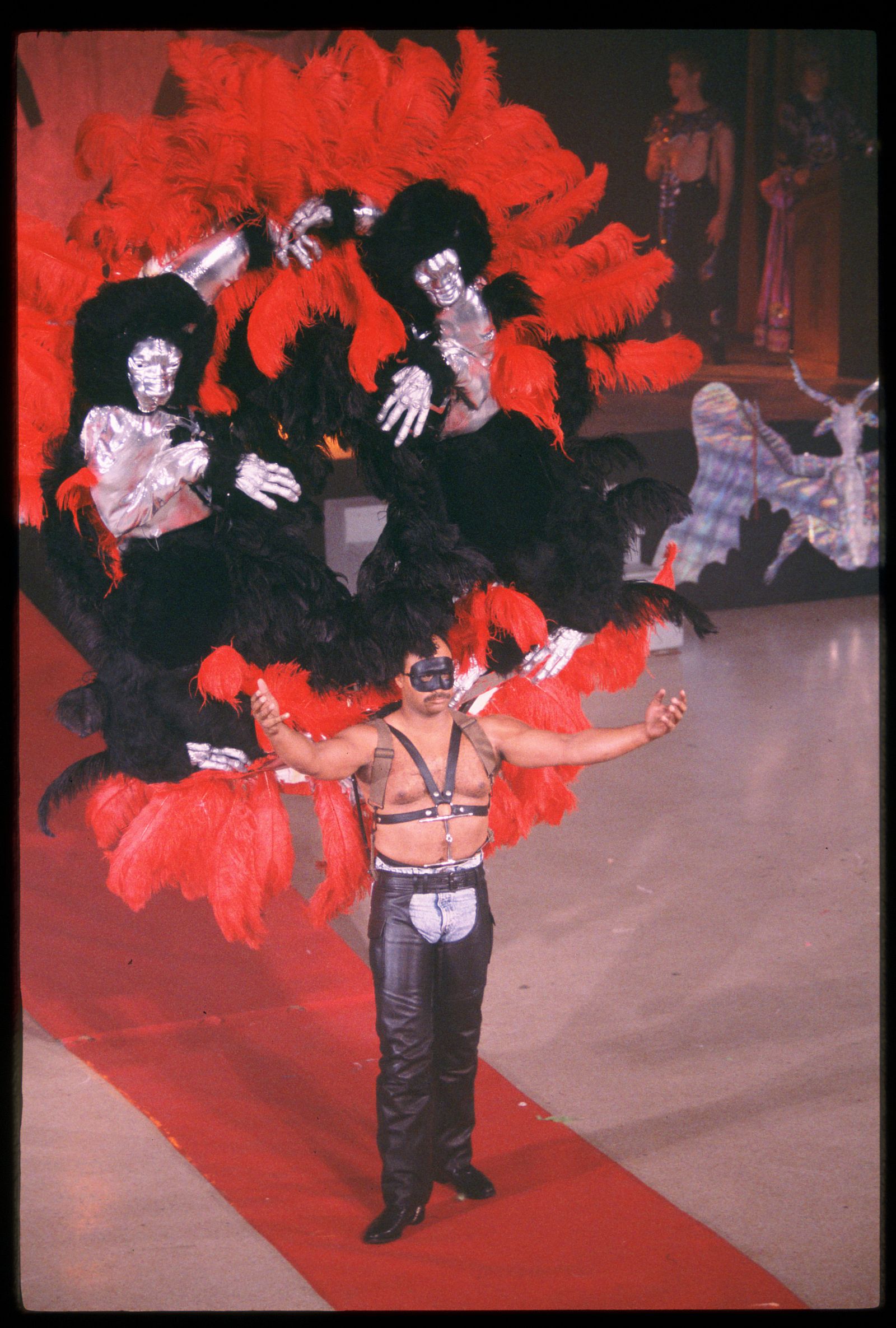
Members of the Krewe of Armeinius during the annual gay Mardi Gras ball at the St. Bernard Cultural Center in New Orleans, with the theme "Give Me That Ol' Time Religion," 1987. Photo: Mitchel L. Osborne, © The Historic New Orleans Collection
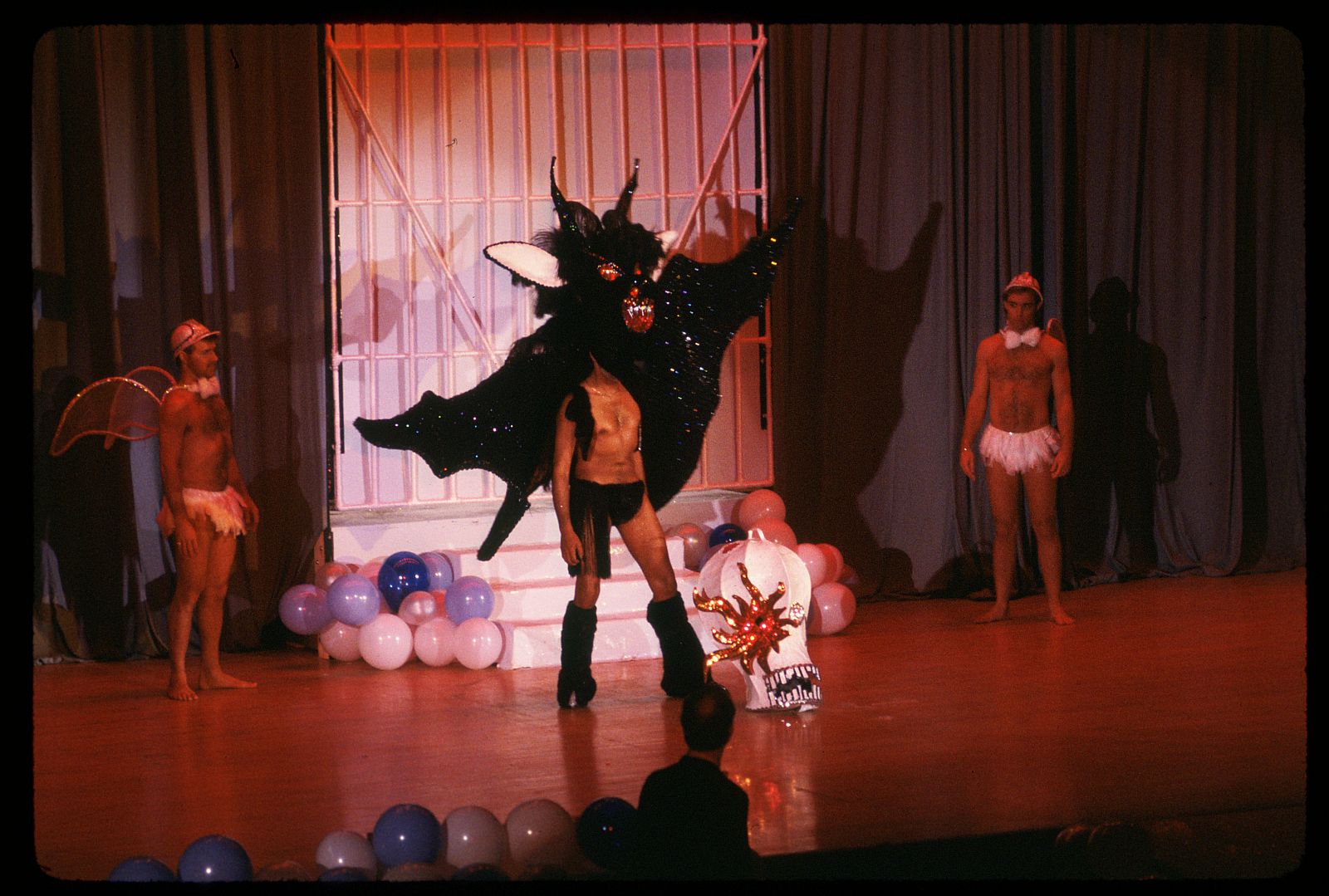
Mardi Gras ball with the theme "The Tarot," 1992. Photo: Mitchel L. Osborne, © The Historic New Orleans Collection
The Church of Our Lady of Guadalupe, located on Rampart Street in New Orleans and later linked to the Lazarus Project, holds deep historical resonance. It was built in 1826 as a burial church during the yellow fever pandemic; it later served the Italian immigrant community and by the 1930s, its novenas to Saint Jude Thaddeus led to the construction of a dedicated sanctuary. In a 1989 photograph by Andrew Boyd, a young Black man and his sister light red candles in this sanctuary, the man dressed in a Louisiana-style jacket, denim pants, and cowboy boots. Candles that are scattered throughout the space and a blue-and-gold religious wall painting—depicting Jesus and God the Father in a Byzantine-inspired style—create a warm, dramatic Baroque atmosphere. In another frame, the man kneels before a sculpture of Saint Jude, patron saint of those who face desperate situations, reciting the Novena. His posture and focused gaze convey devotion, while the photograph captures this intimate moment and freezes his inward reflection.
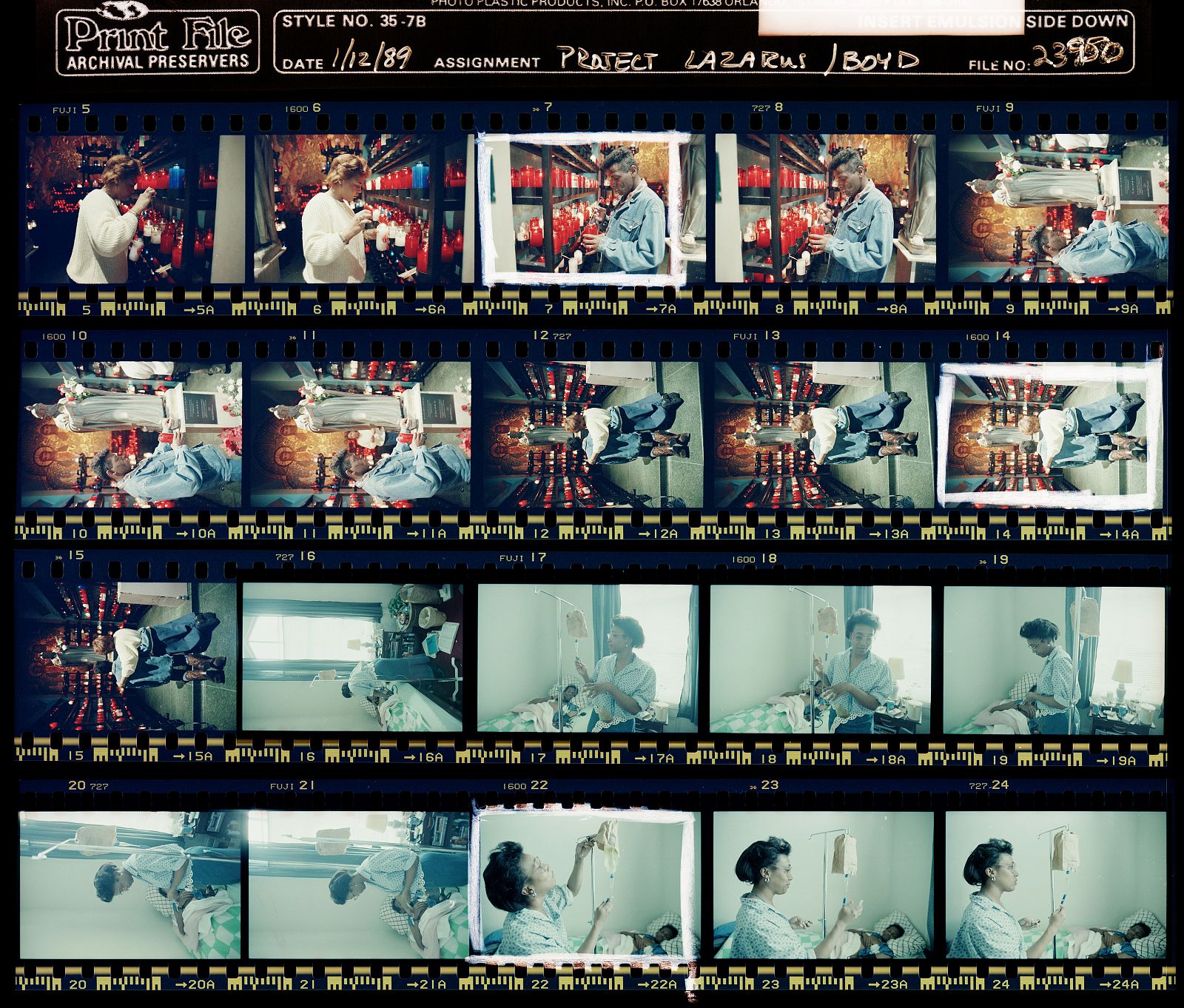
G. Andrew Boyd, Untitled (lighting candles at the Shrine of St. Jude), 1989. The Historic New Orleans Collection
Art historian W. Ian Bourland, writing about Rotimi Fani-Kayode’s photographic objects, describes how they transcend mere documentation to become talismanic, opening portals to spiritual communion and transformative energies.(19) Similarly, these photographs bridge queerness, spirituality, and the embodied realities of those affected by HIV. Together, they reveal how embodiment and faith intersect amid social and historical adversity, and reconstruct visual narratives of what it meant to be Queer, Black, Brown, and Latinx in a region deeply impacted by the AIDS epidemic, racism, and xenophobia. For queer communities, a photograph can function as an amulet against erasure. It bears witnes to existence, survival, and devotion, channeling symbolic protection against harm, illness, misfortune, or malevolent heteronormative forces.
Just as artists in Latin America used photography to materialize political ideas under authoritarian regimes, queer photography in the U.S. South during the HIV/AIDS epidemic responded to economic precarity, religious conservatism, homophobic violence, and neglected public health infrastructures.(20) Latin American cultural references—such as guerrilla fashion, Che Guevara’s imagery, and the Toquilla hat—entered these practices as a visual vocabulary of resistance and transnational solidarity. These images unfold on landscapes that are shaped by the enduring legacies of the plantation economy, whose histories of racialized labor, dispossession, and hierarchical control continue to structure social and economic life in the South.
Following Saidiya Hartman’s concept of the “afterlife of slavery,” the HIV crisis in the U.S. South disproportionately affected Black, Brown, Indigenous, and Latinx queer communities, whose lives reflected the influence of enduring racialized hierarchies, economic precarity, and systemic neglect, all of which are conditions rooted in the post-slavery social order. However, their experiences within these structures were distinct from one another.(21) The South functions as a region where histories and social formations from the Caribbean, Latin America, and the United States intersect and sometimes clash, shaping the experiences of queer communities. Being queer in the South entails participation in pluriversal, overlapping cultures that are continuously being rebuilt and redefined through ongoing negotiation. These communities simultaneously engage in networks of care and resistance that resonate with broader struggles against extraction, racial capitalism, and state violence.
Queer visual cultures in the southern region emerge from these entangled histories, with photography functioning as a language to record style, represent embodied spiritual practices, and produce historical narratives that reveal the lived realities and social strategies of these queer communities. Drawn from archives such as the Historic New Orleans Collection, the Houston LGBT History Archive, and the Turtle Creek Chorale in Dallas, these photographs depict queer men living with HIV/AIDS, their sartorial and performative styles, and their communities cultivating support, spiritual engagement, and collective care.(22) They evoke utopian imaginaries—spaces where individuals from the global majority sustain connection and resilience despite persistent heteronormative and racial violence.
For many Black, Brown, and Latinx queer Southerners, performativity, spirituality, and style provided vital frameworks for resilience and self-expression amid the HIV/AIDS epidemic. While these images represent only part of the material uncovered in this research, they gesture toward a broader, still-expanding archive of HIV/AIDS in the Southern United States, revealing practices of representation, intimacy, and communal care rooted in regional, racialized, and spiritual contexts that extend beyond the established queer canon and queer centers of art production.
Notes
1. New Orleans Historic Collection, "Andrew Boyd" Archive, 1985.
2. bell hooks, Art On My Mind: Visual Politics. New York: The New Press, 1995, p.57
3. Krista A. Thompson, Shine: The Visual Economy of Light in African Diasporic Aesthetic Practice. Duke University Press, 2015, p.11
4. See HIV in World Cultures: Three Decades of Representations, ed. Gustavo Subero, p.22
5. "Latinx" is an English-language neologism used to refer to people with Latin American cultural or ethnic identity in the United States, particularly within queer, feminist, and activist discourses. It is not commonly used in Latin America, where gendered terms like Latino and Latina remain prevalent. "Brown," as theorized by José Esteban Muñoz, denotes a shared affective and political experience marked by racialization, queerness, and minoritarian life, rather than a fixed identity category (See José Esteban Muñoz, The Sense of Brown, ed. Joshua Chambers-Letson and Tavia Nyong’o, Durham: Duke University Press, 2020). The grouping of Black, Brown, and Latinx here is not meant to collapse distinct histories and subjectivities, but to acknowledge overlapping experiences of marginalization, especially during the HIV/AIDS crisis in the U.S. South.
6. See "A Timeline of HIV and AIDS" on HIV.gov, and "Antiretroviral Drug Discovery and Development" from the National Institute of Allergy and Infectious Diseases.
7. National Center for HIV/AIDS, Viral Hepatitis, STD, and TB Prevention: Division of HIV/AIDS Prevention, "HIV in the Southern United States." 2019, cdc.gov.
8. Celeste Watkins-Hayes, "Intersectionality and the Sociology of HIV/AIDS: Past, Present, and Future Research Directions." Annual Review of Sociology, vol. 40, 2014, pp. 431-457.
9. In recent years, there has been a surge in publications in queer studies, including a notable increase in research focusing on Southern queer studies. A significant event reflecting this interest was the "Queering the South: A Gathering of LBGT Arts, Activists, and Academics" conference held at Emory University in June 1997. However, existing publications on gay and lesbian life in the South primarily adopt historical, ethnographic, or documentary approaches. See, C. L. Barney Dews and Carolyn Leste Law, Out In the South, Philadelphia: Temple University Press, 2001. pp.2-5.
10. Leo Herrera is a queer Mexican artist, writer, filmmaker, and activist whose work addresses HIV stigma, queer history, sex, and immigrant identity, including projects such as The Fathers Project and Analog Cruising.
11. John Howard. "Place and Movement in Gay American History." In Creating a Place for Ourselves: Lesbian, Gay, and Bisexual Community Histories, ed. Brett Beemyn, Milton: Taylor & Francis Group, 1997, p.211
12. James T. Sears, Rebels, Rubyfruit, and Rhinestones: Queering Space in the Stonewall South, New Brunswick, N.J.: Rutgers University Press, 2001, p.4
13. E. Patrick Johnson, Sweet Tea: Black Gay Men of the South, Chapel Hill: The University of North Carolina Press, 2012, pp.5, 491
14. Taylor Black, Style: A Queer Cosmology, New York: New York University Press, 2023, p.26
15. ibid.
16. Faye Raquel Gleisser, Risk Work: Making Art and Guerrilla Tactics In Punitive America, 1967-1987, Chicago: University of Chicago Press, 2023.
17. Krista A. Thompson, Shine: The Visual Economy of Light in African Diasporic Aesthetic Practice, Duke University Press, 2015, p.7: “Technology often becomes a prop in performances of visibility rather than or in addition to being a tool that produces a physical representation. In these practices the process of being seen being photographed constitutes its own ephemeral form of image-making. The pose, the gesture, and the choreography of the body before a photographic lens and an audience are types of representation that do not need the physical image produced by the camera”.
18. E. Patrick Johnson, Sweet Tea: Black Gay Men of the South, Chapel Hill: The University of North Carolina Press, 2012, p. 184
19. W. Ian Bourland, Bloodflowers: Rotimi Fani-Kayode, Photography, and the 1980s, Duke University Press, 2019, pp.204-205, 242–243
20. For critical studies on Latin American photography as a political tool under authoritarian regimes, see Luis Camnitzer, New Art of Cuba (University of Texas Press, 1994); and Ana Longoni, “Photographs and Silhouettes: Visual Politics in the Human Rights Movement of Argentina,” in Afterall: A Journal of Art, Context and Enquiry, no.25 (2010). These works explore how photographic practices were employed to challenge oppression, document social realities, and construct visual narratives of resistance.
21. Saidiya Hartman’s critical explorations of the afterlives of slavery and the plantation economy, especially in Scenes of Subjection (1997) and Lose Your Mother (2007), reveal how racialized structures of labor, land, and social vulnerability persist as foundational elements of postcolonial societies. While Hartman primarily focuses on the U.S. and the Atlantic slave trade, her analysis resonates with Latin American contexts, where plantation and hacienda economies similarly entrenched racial hierarchies and economic exploitation. These legacies continue to shape social and spatial relations across the region.
22. The images referenced are utilized solely for scholarly research and community engagement. Appropriate contextual information and photographic attributions have been duly provided within the text to respect archival and ethical standards.