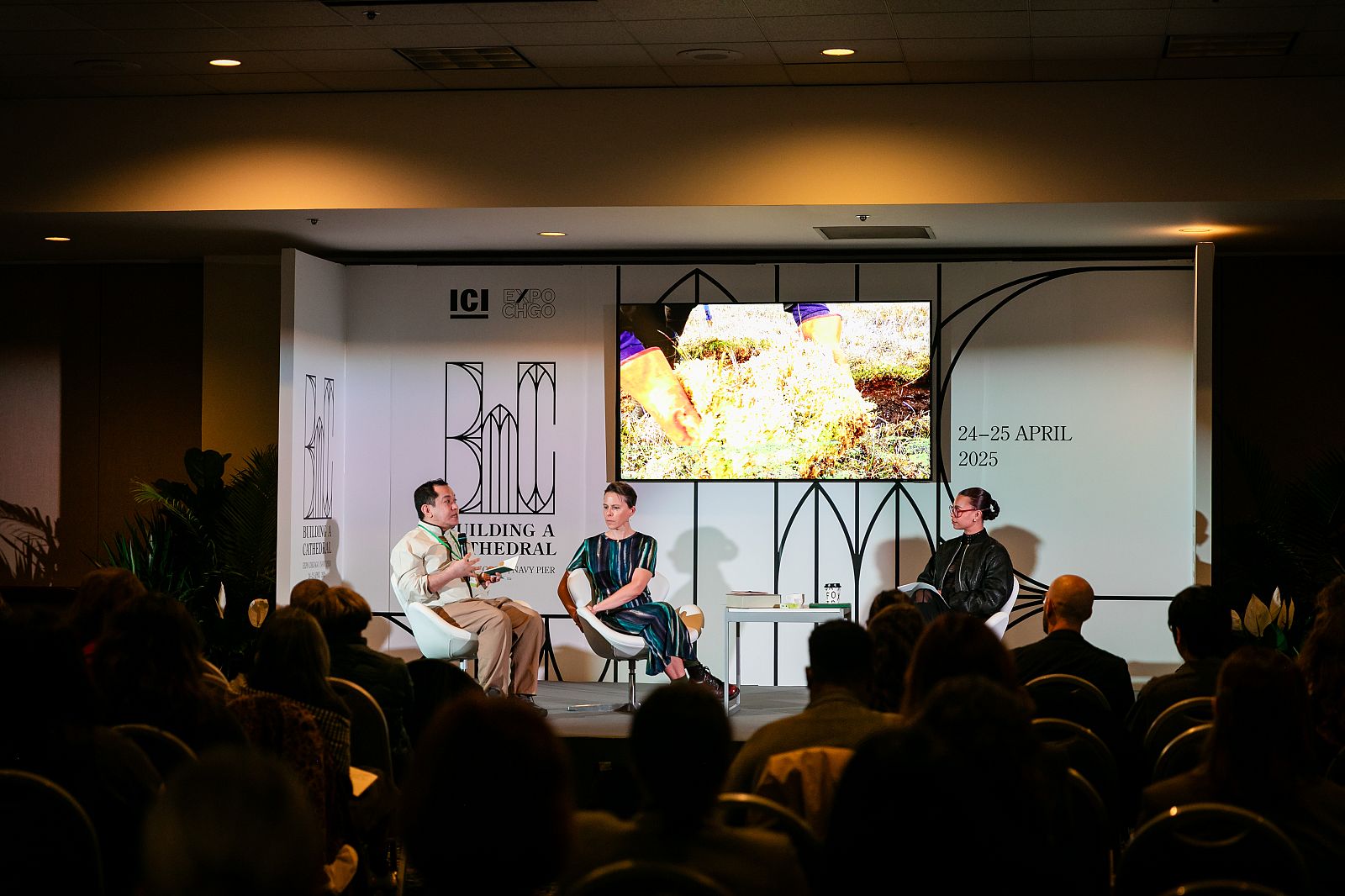
Developed as part of ICI’s Mississippi River Basin Initiative, "Cross-Pollinating Worlds" is a dialogue between Eden Imrie and Kate Bowen that reflects on artistic practice across rural and urban environments. Drawing from their experiences living and working in both contexts, the conversation considers how artists engage with place—not as a backdrop, but as an active, relational force that shapes cultural life. Imrie and Bowen explore questions of access, ecology, and belonging, tracing how relationships to land and community inform cultural work. The dialogue offers a perspective on rurality as a site of complexity and connection, and on cross-regional exchange as a practice grounded in attention, reciprocity, and lived experience.
Cross-Pollinating Worlds
A Dialogue on Rurality, Ecology, and Cultural Practice
By Kate Bowen and Eden Imrie
On Apr 1, 2026
Eden Imrie: Whenever I think about rural space, especially in the context of residencies, I’m struck by how quickly people become aware of their bodies. The moment you lose Wi-Fi or step away from paved roads, you feel the weather, the ground, the insects, the light. It’s a kind of recalibration that city life rarely demands.
Kate Bowen: And what’s interesting is that many people’s first instinct, especially those coming from urban environments, is to encounter the landscape through the camera. They hold up a phone before they do anything else. I’ve come to see that as an entry point. The photograph becomes a bridge: a way of saying, I can imagine myself here; I can begin a relationship with this place.
Imrie: Yes, that mediation can become a threshold. Through it, people slide into a more embodied engagement. Once they’re kneeling in the creek for a photo or brushing ticks from their ankles, they realize: this environment is acting on me too. Rural space reveals porousness quickly. You encounter your own permeability in ways you can easily ignore in a city.
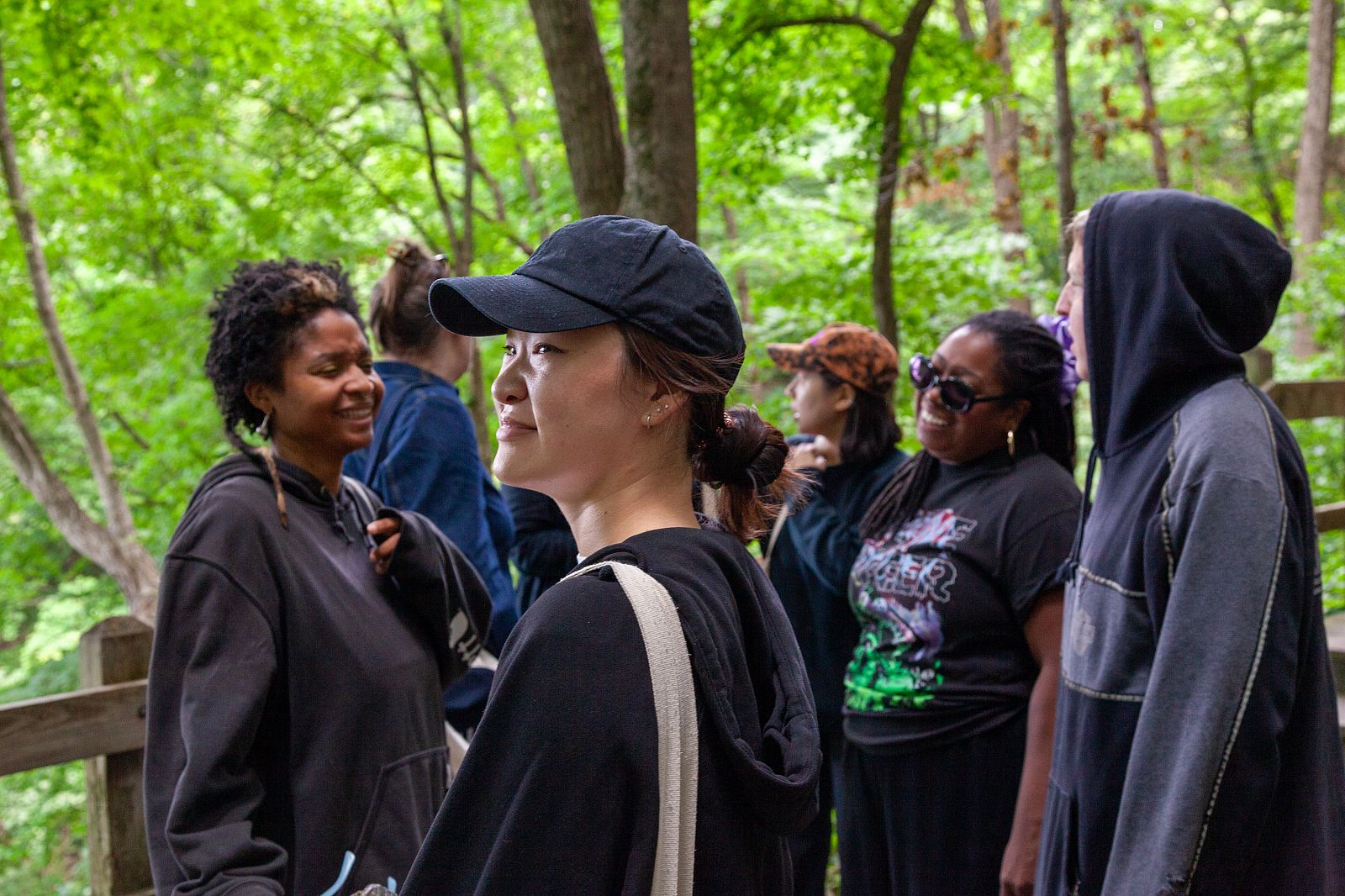
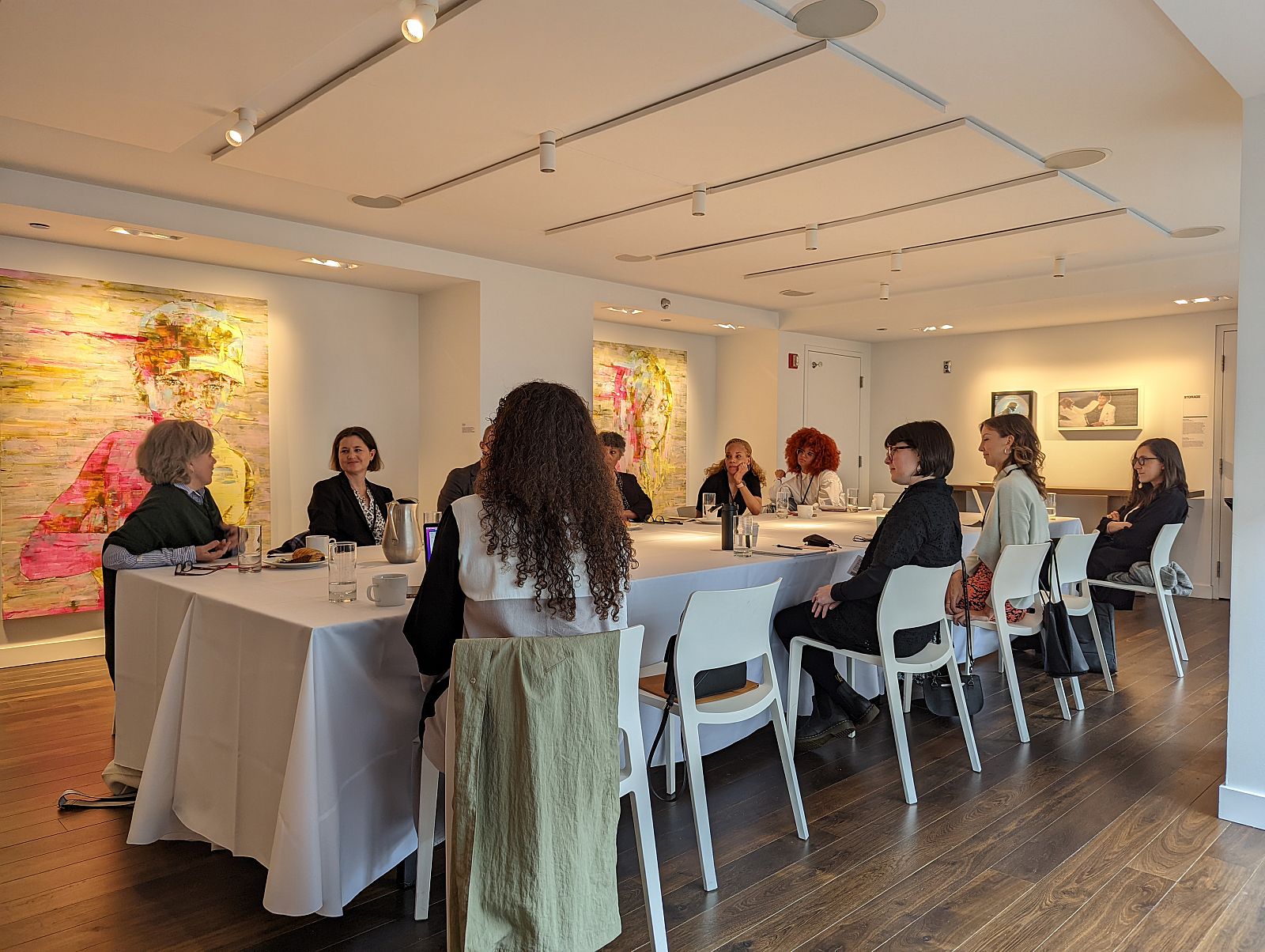
Participants in ICI's Mississippi River Basin convening at ACRE, 2025. (Photo: Kate Bowen)
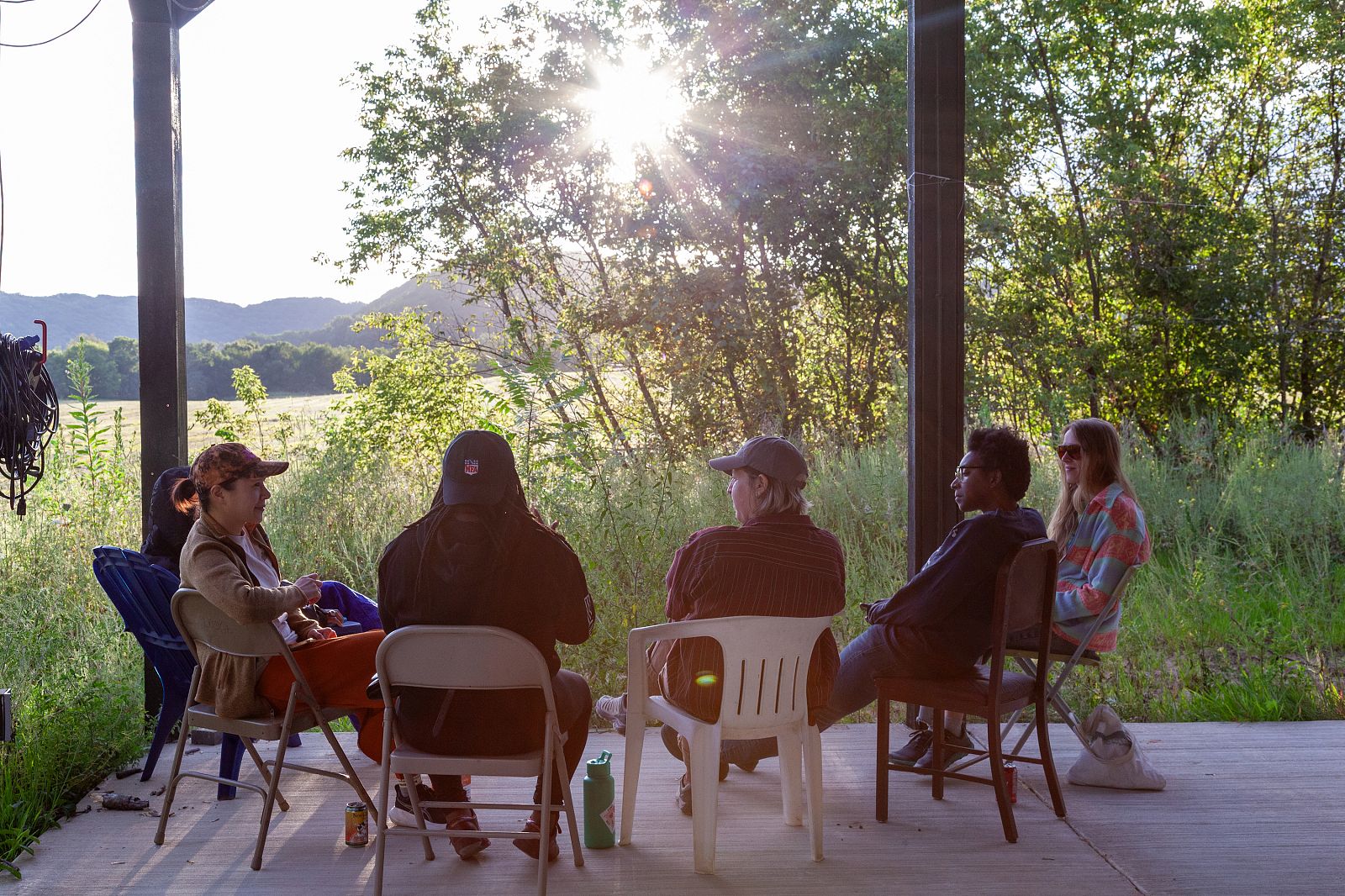
Participants in ICI's Mississippi River Basin convening at ACRE, 2025. (Photo: Kate Bowen)
Bowen: Exactly. Cities emphasize human-to-human interdependence: neighbors, noise, routines, shared systems. Rural environments highlight interdependence with everything non-human. You can’t pretend the land is a backdrop. You’re constantly negotiating terrain, weather, animals, the shifting patterns of a place that existed long before you arrived. And that creates its own social texture.
Imrie: I think that’s an under-acknowledged point: rurality isn’t absence. It has density, but the density is ecological rather than infrastructural. People tend to assume rural life is empty or slow. It’s not. It’s saturated with relationships that have nothing to do with human proximity. You can go days without seeing another person, but never without engaging the living world.
Bowen: And that means human relationships take on a different intentionality. In cities, you can’t escape other people, your proximity is pre-scripted. In rural places you have to actively seek connection, which shifts the emotional stakes. Yet at the same time, you’re in constant, involuntary relationship with land and non-human life. It’s almost an inversion of urban logic.
Imrie: And for artists, that inversion can be clarifying or disorienting. It forces a reevaluation of one’s own position—socially, physically, politically. When you realize you’re not the dominant presence in the environment, a different kind of humility emerges.
Bowen: That humility is essential, especially when thinking about the complexities of fear. People romanticize rural life, but for many queer folks or people of color, those spaces carry real risk. And yet, rural communities also require unexpected forms of cooperation. You might completely disagree with someone, but if a storm takes out the only road, you’re dependent on each other.
Imrie: That’s what makes rural interdependence so complicated. The same place that holds danger can also hold deep solidarity. I’ve had moments where I feared for my safety—particularly as a queer person—but I’ve also experienced generosity that had nothing to do with shared identity. Living rurally teaches you that belonging is not made of agreement. It’s made of necessity, attention, and the quiet labor of coexisting.
Bowen: And cities teach that too, but in a different way. In urban contexts, you’re constantly brushing against difference, often without choice. In rural contexts, difference appears less frequently but more intensely. Both geographies require negotiating plurality; they just stage it differently.
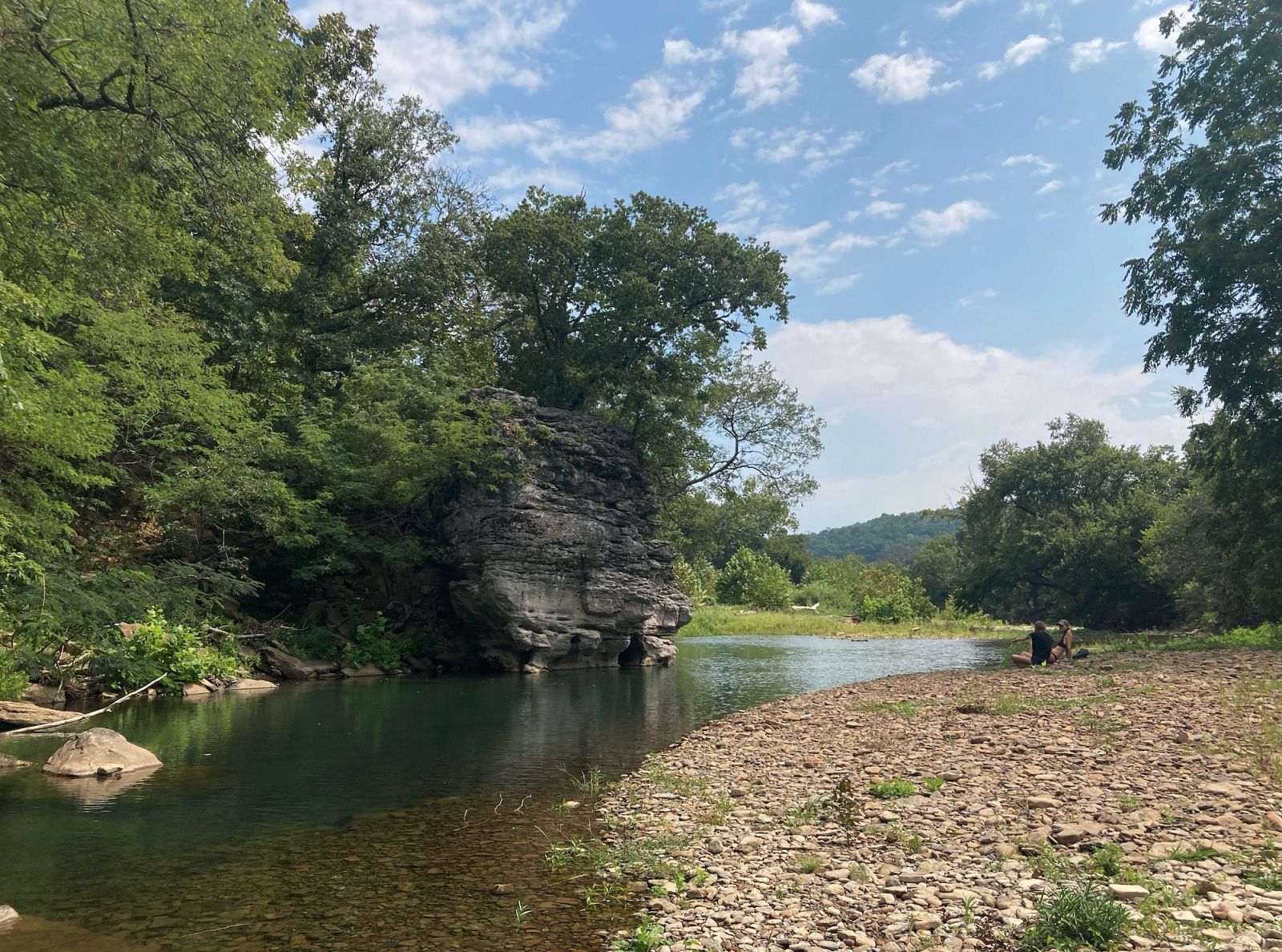
Imrie: Which brings us to culture and access. Cities are seen as cultural centers, but most of that culture is economically inaccessible. When I lived in San Francisco, I was surrounded by institutions I couldn’t afford to enter. Meanwhile in the Ozarks, the richest cultural experiences—swimming holes, handmade rituals, seasonal shifts—cost nothing. The land offers an accessible cultural commons.
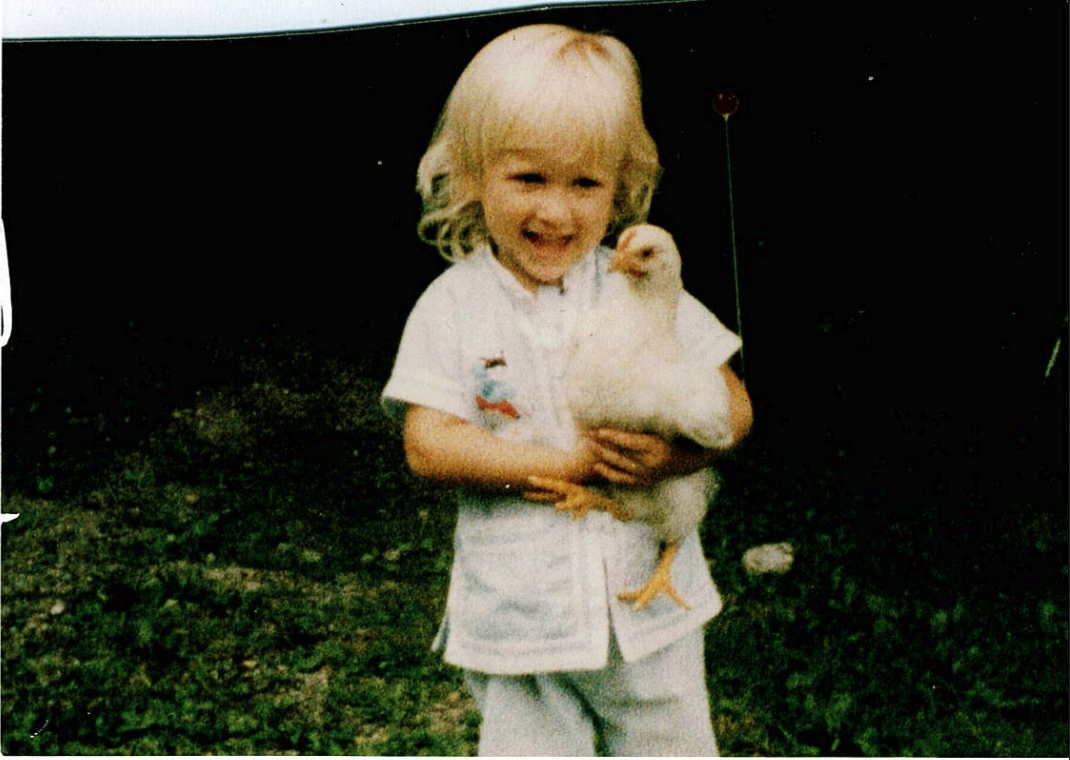
Eden Imrie, age 2
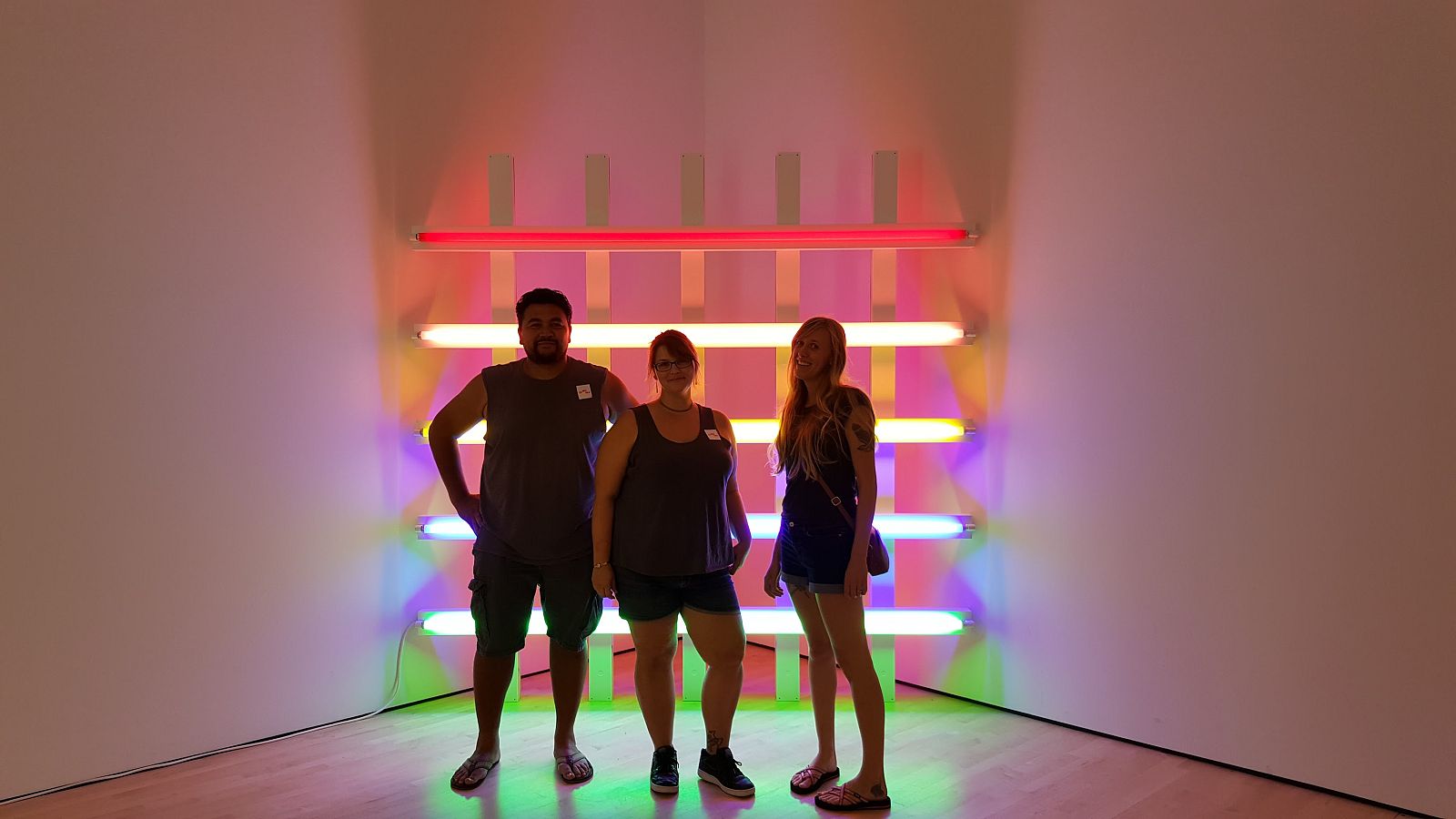
Eden Imrie at SFMOMA with friends Danielle Schlunegger-Warner & Mario Navasero.
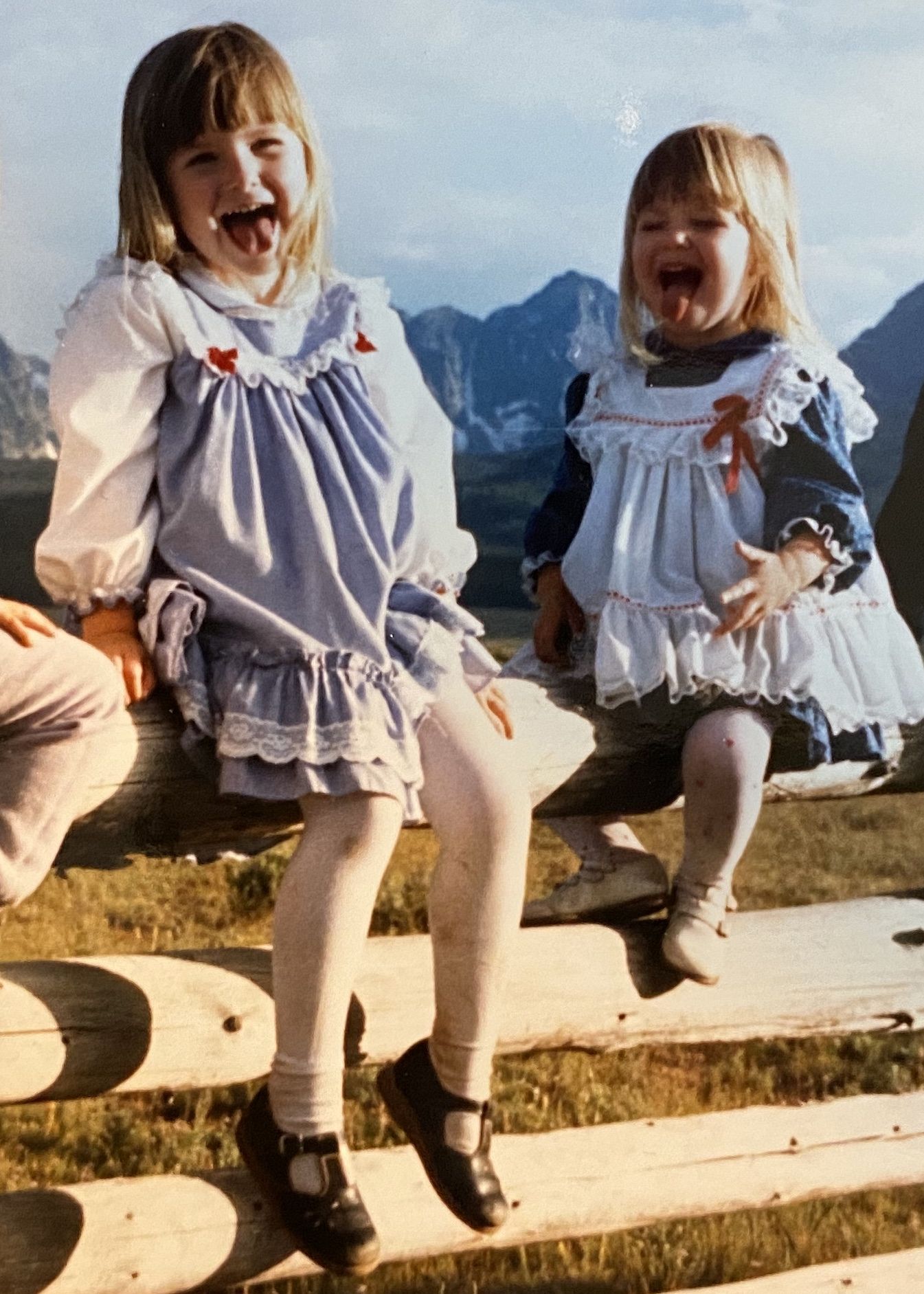
Kate Bowen (left) and sister sit on a fence in their church clothes in rural Idaho. (Photo: courtesy of Kate Bowen)
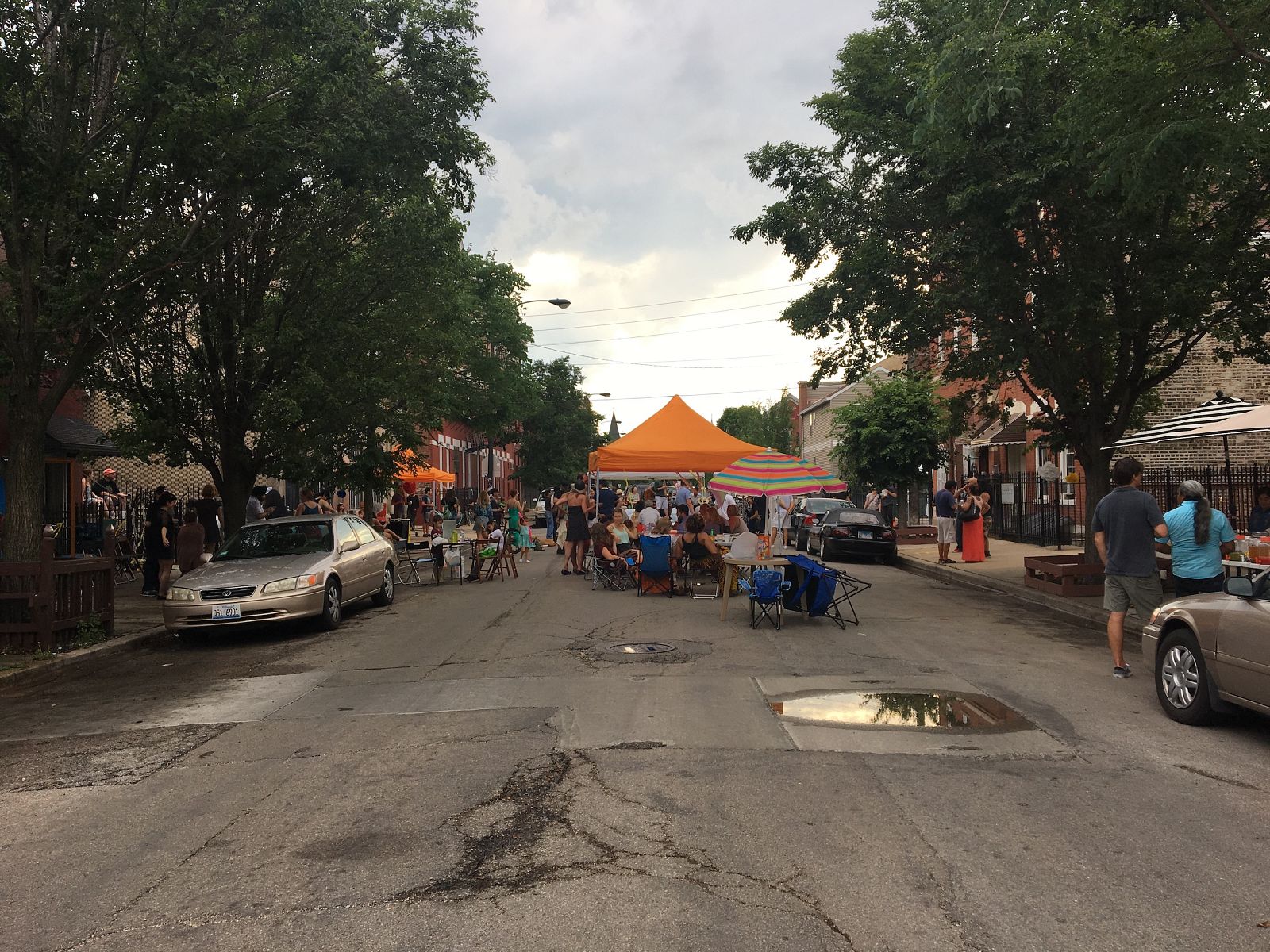
The ¡Viva Rudy! Block Party thrown on 19th Street in the Pilsen neighborhood of Chicago, where the ACRE Projects Gallery was formerly located. (Photo: Kate Bowen)
Bowen: True. But cities offer infrastructural access rural places lack. For disabled artists, for example, proximity to healthcare and mobility support can be essential. I know residencies in urban or near-urban environments that can host artists who simply wouldn’t be able to stay in the woods safely. So both geographies offer access; they just offer access to different things.
Imrie: Exactly. Urban access is infrastructural; rural access is ecological. Understanding that distinction is key for institutions that want to support artists across contexts.
Bowen: And it becomes even more nuanced when we think about queerness. My queerness felt nearly impossible growing up in Idaho. I needed the city, Chicago, to understand myself and how I fit into an identity that had been mostly used against me. It gave me language, community, visibility. Returning to rural spaces later in life meant confronting old fears.
Imrie: My experience was the inverse. I grew up among rural lesbians whose queerness was integrated into daily life without spectacle. My queerness didn’t feel fully authentic to me in urban queer spaces—it felt most real in the woods, in relation to land. Only later did I realize that rural queer life isn’t a contradiction; it’s just a different expression of queer belonging.
Bowen: And the internet changed everything. As coverage spread into rural spaces, queer people weren’t as isolated. A queer rural network became visible.
Imrie: Visible—but visibility isn’t always the goal. For many rural queer folks, embodiment and safety matter more than recognition. Queerness is lived, not displayed.
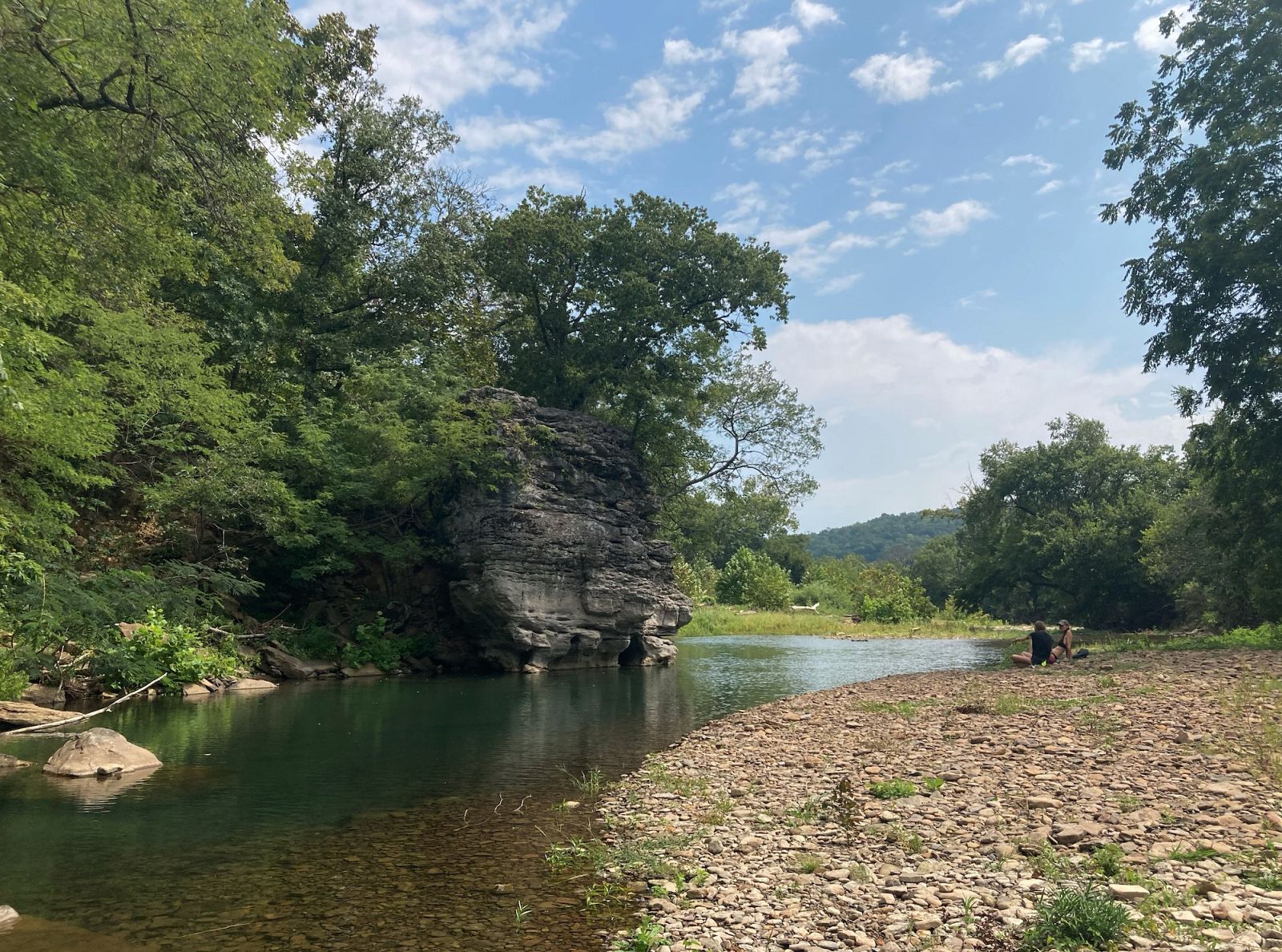
Two lesbians sit at a hidden rural swimming hole, remembered within the local lesbian community as a trusted place for privacy, intimacy, and gathering. (Photo: Eden Imrie)
Bowen: Which complicates the assumption that queer life flourishes only in cities. It flourishes differently, in ways that can be quieter, more relational, sometimes more entwined with the rhythms of land.
Imrie: And that difference matters when thinking about cross-pollination. Too often, institutions parachute culture into rural spaces without understanding the existing ecosystem. They assume rurality is a blank slate. It’s not. It’s a dense, storied, relational environment.
Bowen: Exactly. Real cross-pollination requires beginning with what already exists. It means asking: who is already here? What relationships are already alive? What forms of culture are already meaningful? The most impactful projects I’ve seen weren’t large initiatives but small, locally grounded gestures, like a house show organized by someone the community trusts.
Imrie: Because trust is the medium. Without it, cultural work becomes extractive. With it, cultural work becomes generative and reciprocal.
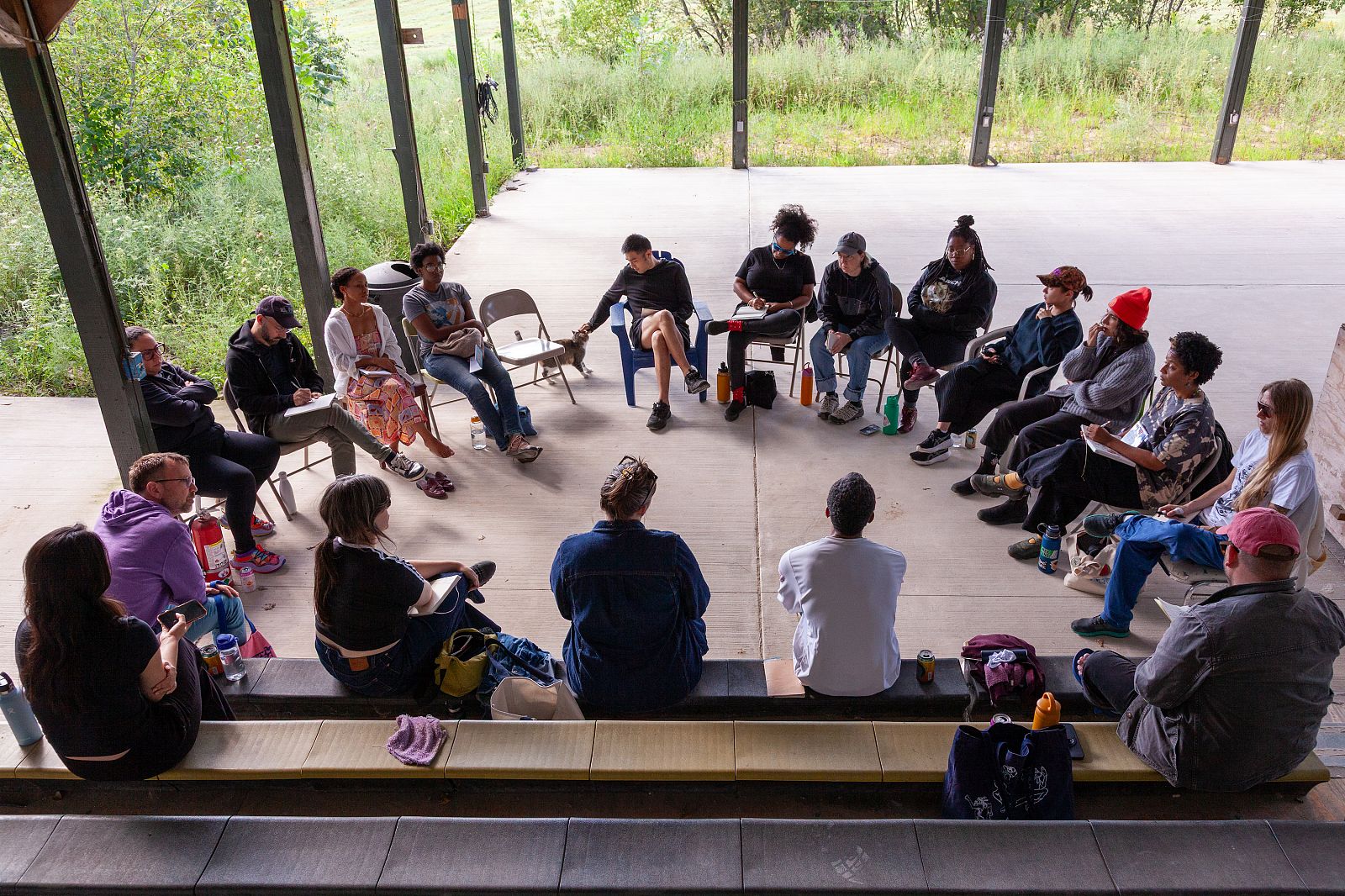
Participants in ICI's Mississippi River Basin convening at ACRE, 2025. (Photo: Kate Bowen)
Bowen: And reciprocal work acknowledges that urban and rural spaces need each other. The movement between them (the shifting of attention, density, and context) enriches artists’ practices. It allows for different forms of knowing.
Imrie: Which is why thinking ecologically about cultural practice feels so important. Ecology teaches that no environment is complete on its own. Interdependence creates resilience. That’s as true socially as it is in a watershed.
Bowen: Yes. It suggests that cultural institutions should approach place not as a stage but as an ecosystem, one that shapes, constrains, and supports human activity in complex ways.
Imrie: And if we frame cultural work ecologically, then cross-pollination becomes more than a metaphor. It becomes a method.
Bowen: And perhaps a responsibility.
Imrie: Absolutely. Because whether we’re working in the woods or the city, none of us exists outside of relation.
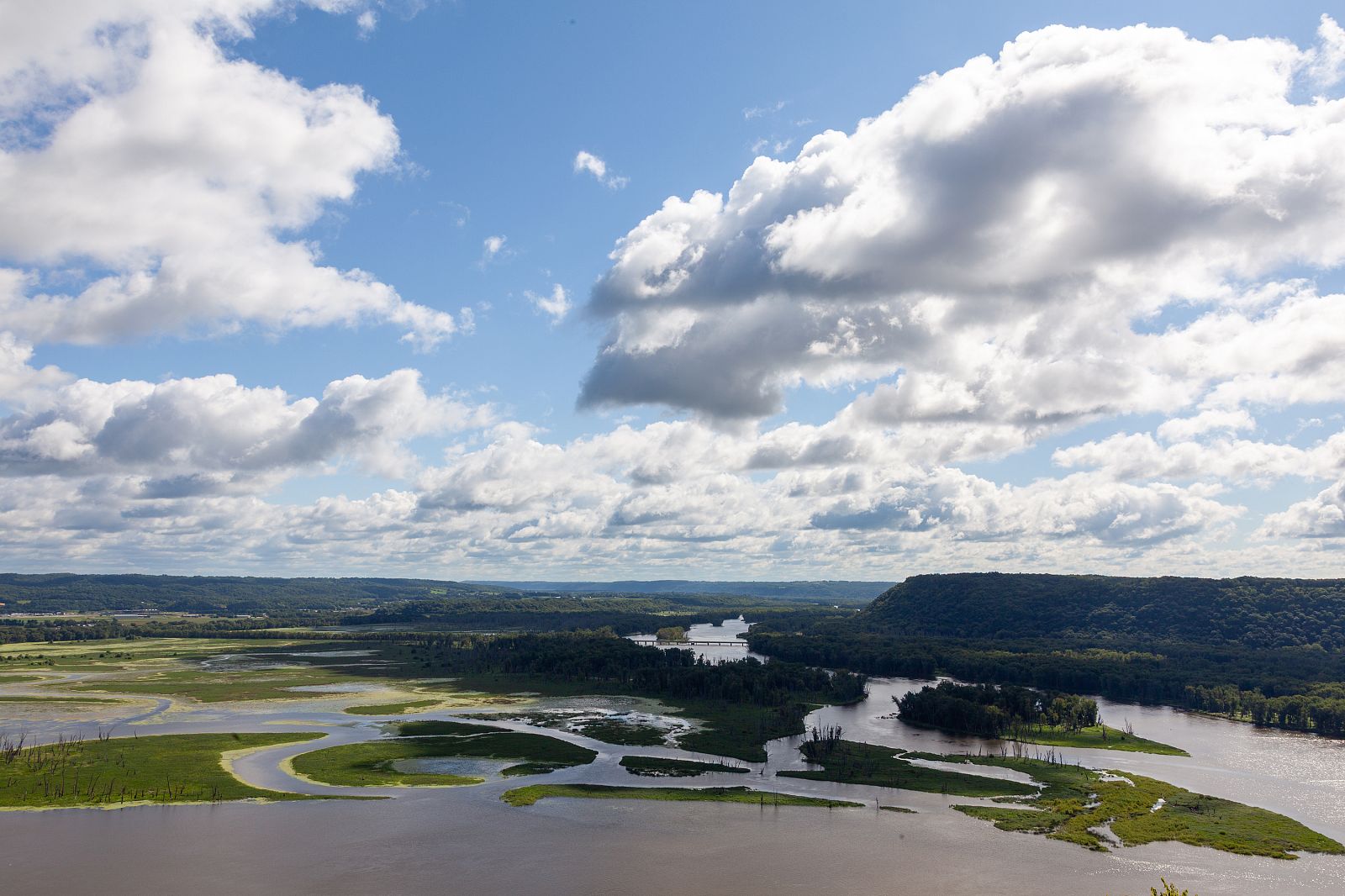
View of the confluence of the Wisconsin and Mississippi rivers from Pike's Peak State Park in Iowa. (Photo: Kate Bowen)
Contributors
Eden Imrie
Eden (Amber) Imrie is an interdisciplinary artist, curator, and educator whose work explores queerness, rural identity, and ecological transformation.
Kate Bowen
Kate Bowen is Executive Director of ACRE, Chicago, IL.
Explore