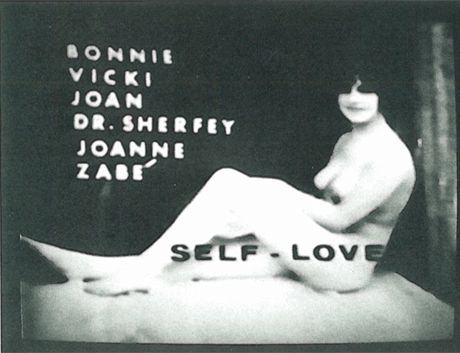
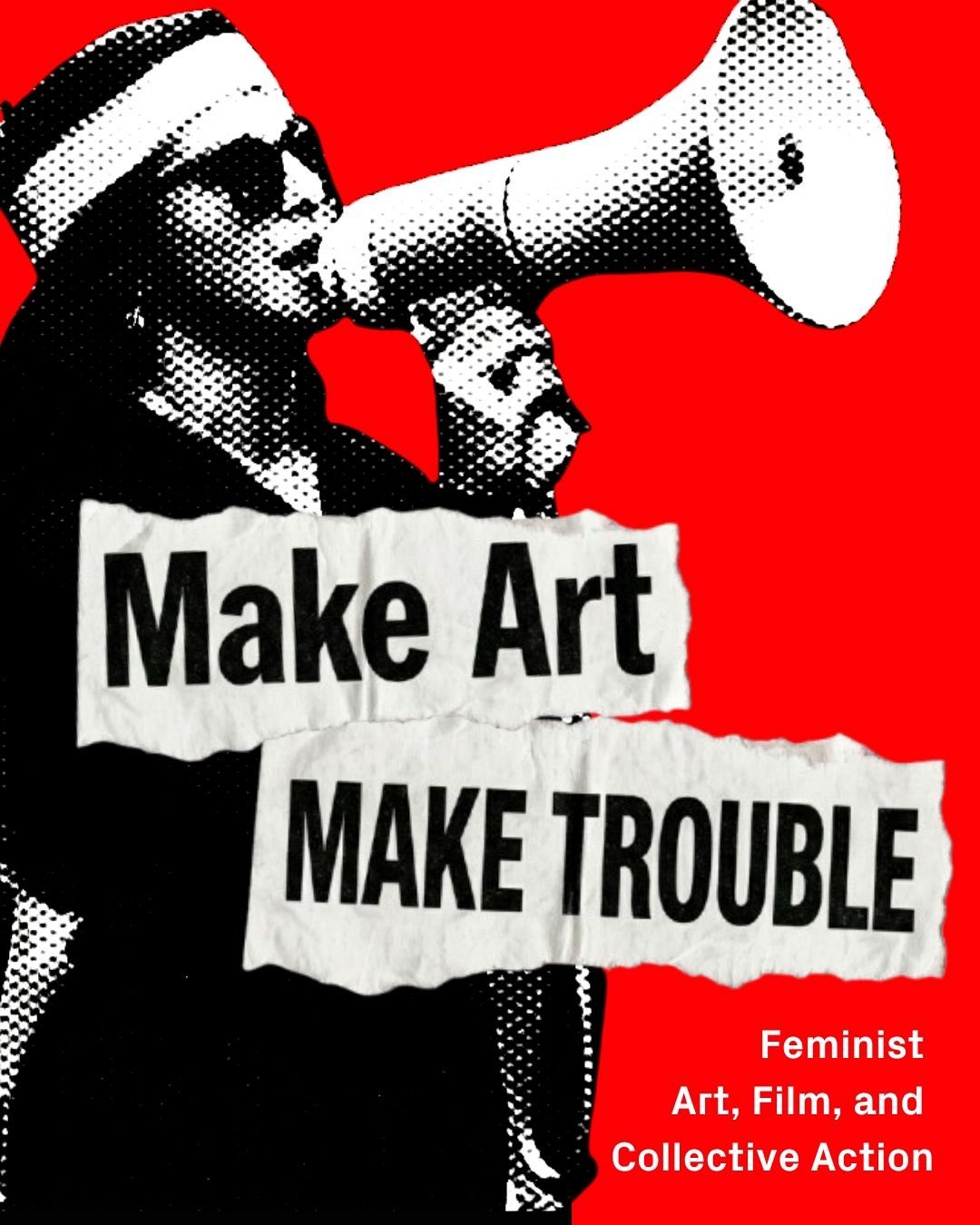
The following films and videos were screened during the public program "Make Art, Make Trouble: Feminist Art, Film, and Collective Action," selected by Joan Braderman Archive and Abina Manning (Executive Director of Video Data Bank from 2006-2021). The program also featured a screening of Joan Braderman’s feature-length documentary THE HERETICS (2009, 95 min.), which traces the radical legacy of the Heresies Collective.
Make Art, Make Trouble: Film and Video Descriptions
Joan Does Dynasty
Directed by Joan Braderman
Conceived, written, produced, and performed by Joan Braderman; co-directed and co-edited by Manuel De Landa
1986, 32 min.
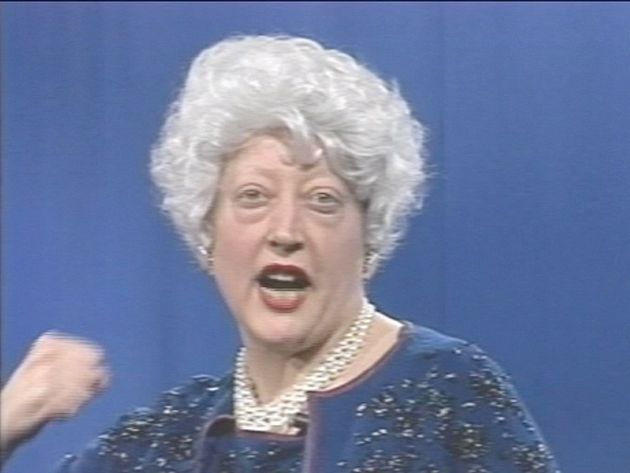
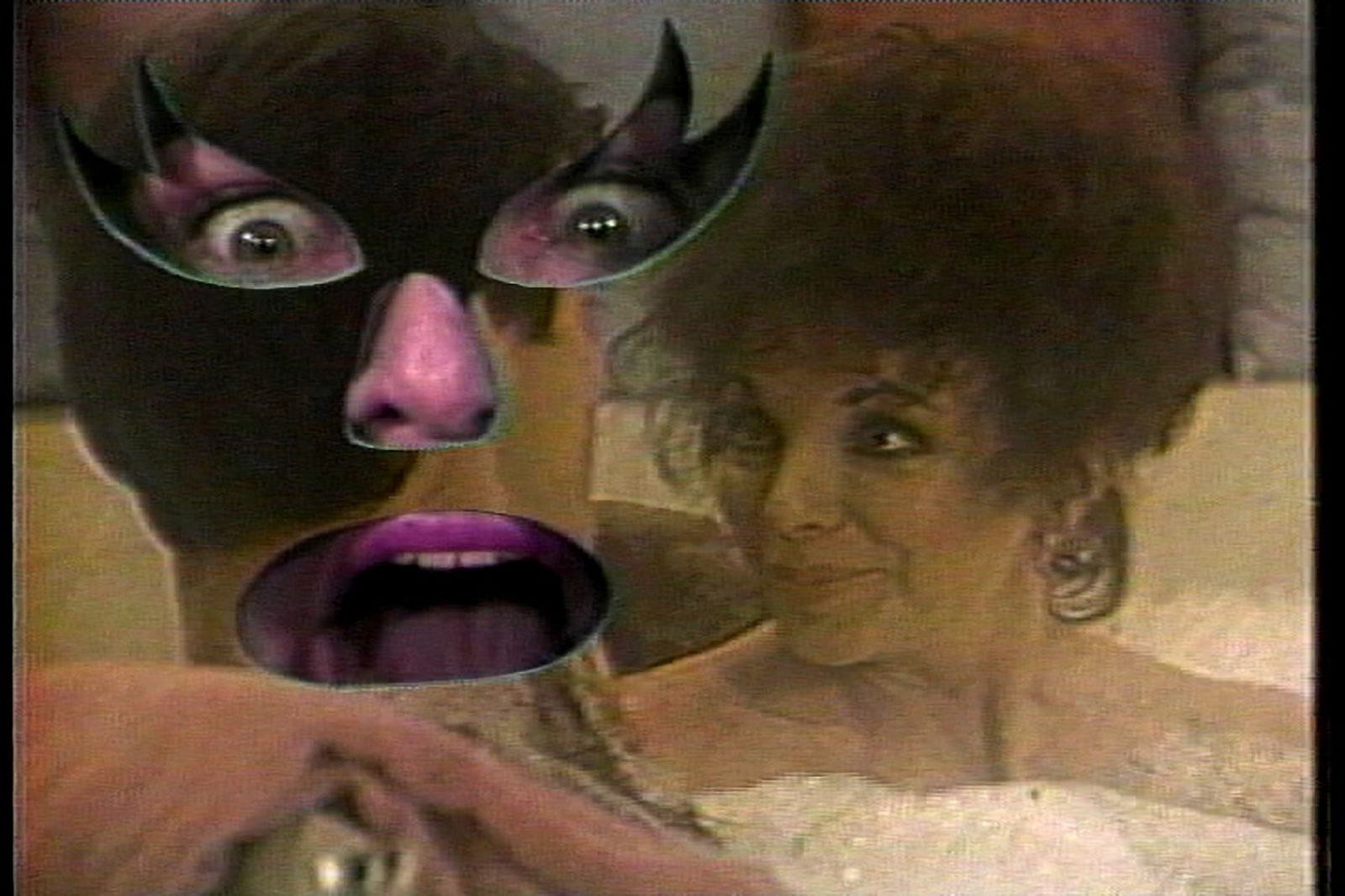
Creating the "post-scratch" chroma-key “text and effects” style she has made famous, Braderman inserts her body into the world of the primetime soap opera Dynasty. In this now-classic performance, the artist embodies the love/hate relationships so many of us experience with the characters and values of TV, "performs" feminist and reception theory, and turns the reigning ideas of her period into video vernacular. Reviews in publications such as The Independent, The Guardian of London, and Contemporanea noted that "few have matched the technique, bravery and humor" of Joan Does Dynasty, which is "one of the two most impressive tapes in the video section [of the 1987 Whitney Biennial]." More information on Joan Braderman's website.
Semiotics of the Kitchen
Directed by Martha Rosler
1975, 6 min.
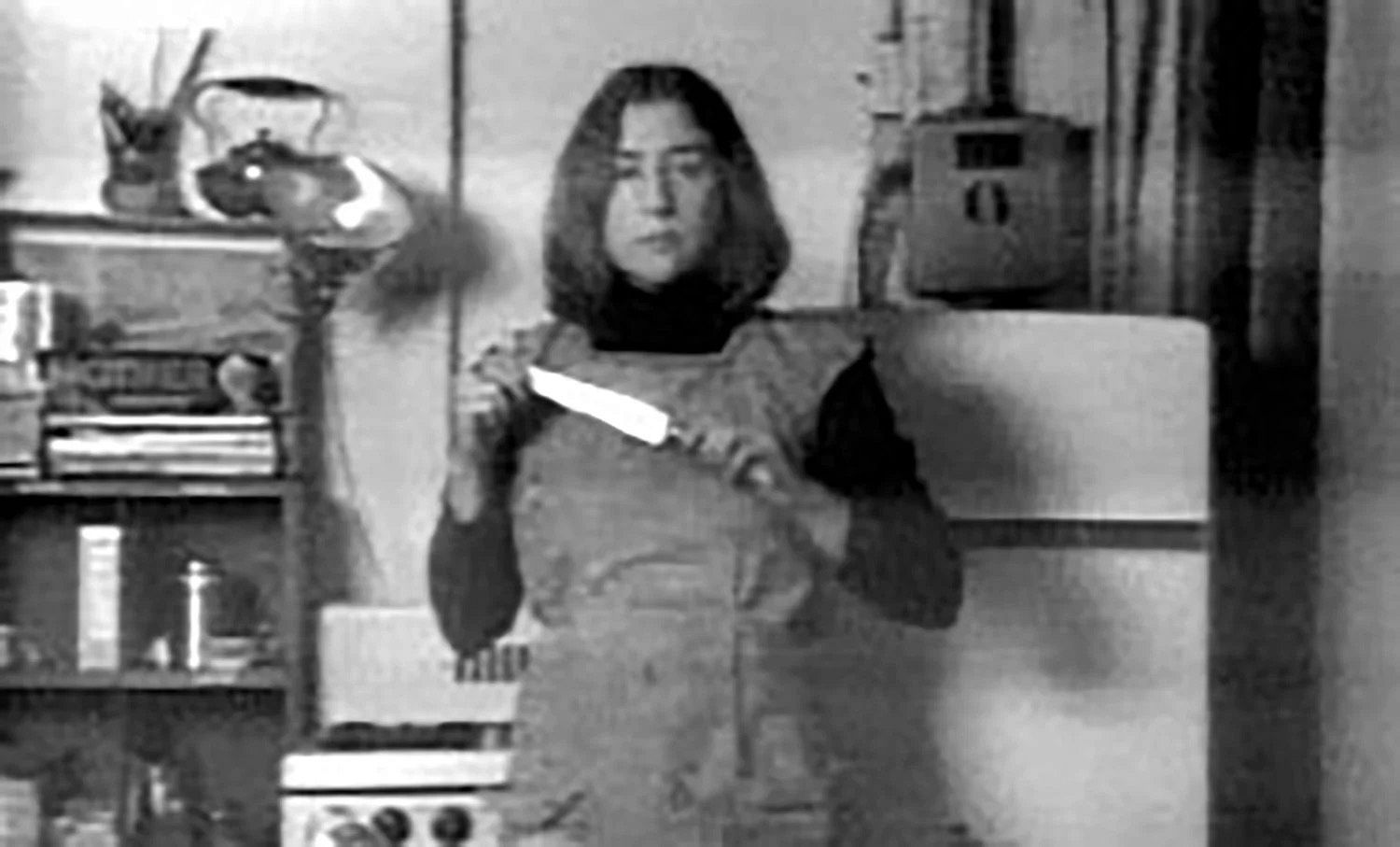
From A to Z in this mock cooking-show demonstration, Rosler “shows and tells” the ingredients of the housewife's day. She offers an inventory of tools, naming and mimicking the ordinary with movements more samurai than suburban. Rosler's slashing as she forms a letter of the alphabet in the air with a knife and fork is a rebel gesture, punching through the "system of harnessed subjectivity" from the inside out. As Rosler describes, "I was concerned with something like the notion of 'language speaking the subject,' and with the transformation of the woman herself into a sign in a system of signs that represent a system of food production, a system of harnessed subjectivity." More information at VDB.org.
Leaving the 20th Century
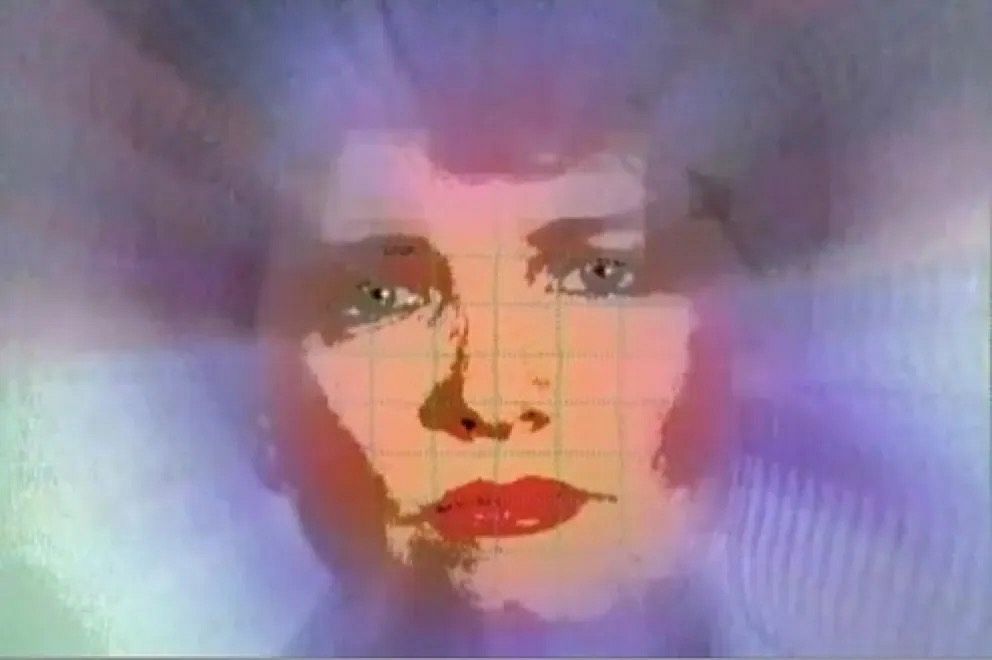
Directed by Max Almy
1982, 11 min.
Believing that we are "dragging our feet into the 21st Century," Almy made this video trilogy to celebrate technology and the future in an ironic melange of politics, sociology, sexuality, and economics. Flawlessly melding sound and image, the video moves through three sections, "Countdown," "Departure," and "Arrival." In the end, Almy posits this paradox: technology as a human development is rapidly making humans obsolete and interpersonal contact impossible, making the future of man’s presence and very existence uncertain. More information at UT Austin College of Fine Arts' Landmarks collection.
Hair Piece: A Film for Nappyheaded People
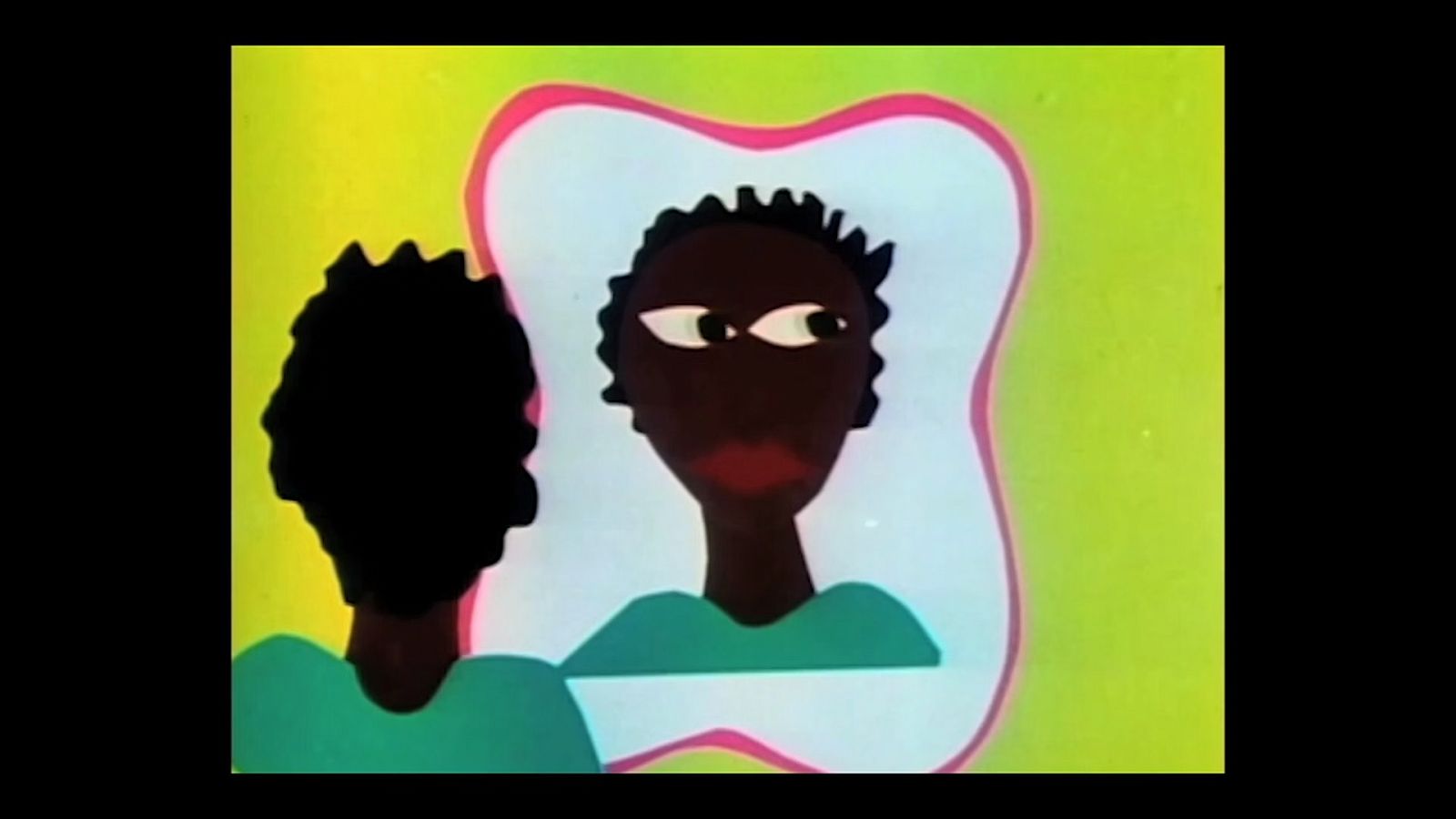
Directed by Ayoka Chenzira
1984, 10 min.
According to the Criterion Collection, "this brash, inventive cartoon musical—a landmark of independent animation—satirizes Eurocentric beauty standards while celebrating the natural beauty of Black hair." In 2018, Hair Piece was one of the twenty-five films selected for the National Film Registry by the Library of Congress. It received a 4K restoration by the Academy Film Archive and The Film Foundation with funding from the Hobson/Lucas Family Foundation.
Gently Down the Stream
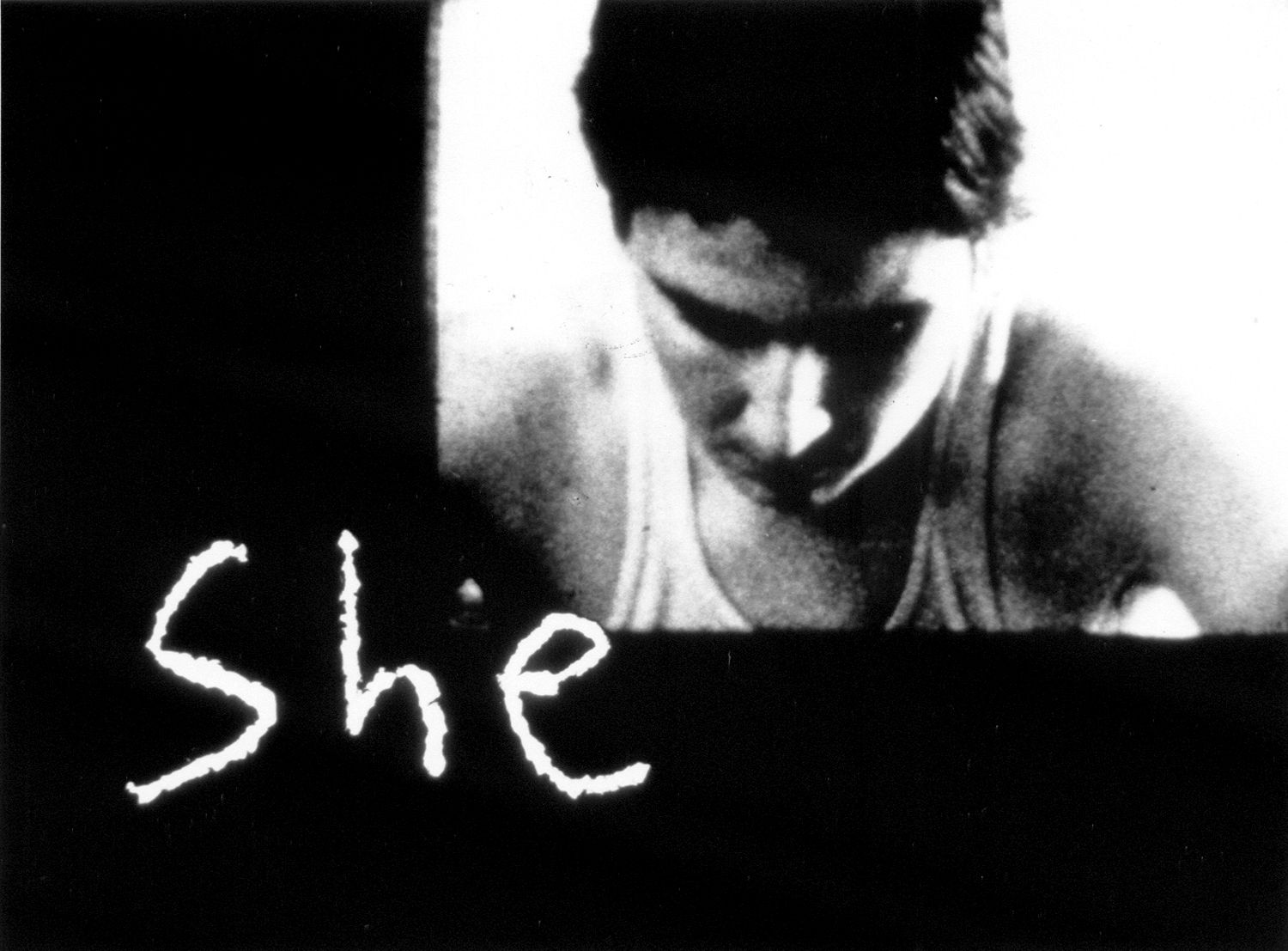
Directed by Su Friedrich
1981, 12 min.
"Gently Down the Stream can be described about as easily as you can hold on to a handful of water....Suffice it to say that Friedrich has an artist's instinctive sense of film-she expresses herself in it with a freedom and rightness that strike the viewer immediately. When the last image leaves the screen, you may not be able to say what you've seen, but you know what you've felt." —Stuart Klawans, The Nation
"...[Friedrich's] films (particularly the celebrated Gently Down the Stream) signaled an important change that was occurring with the evolution of experimental cinema....The film demonstrates Friedrich's considerable technical talents and formal creativity as well as her canny historical sense in reappropriating the formal strategies generally associated with the "structural film." Friedrich's film becomes a public exorcism, one that continually exposes and infects the viewer with the psychic consequences of religious constraints, familial binds and sexual conflicts." —Bruce Jenkins, Millenium Film Journal
Diary of an African Nun
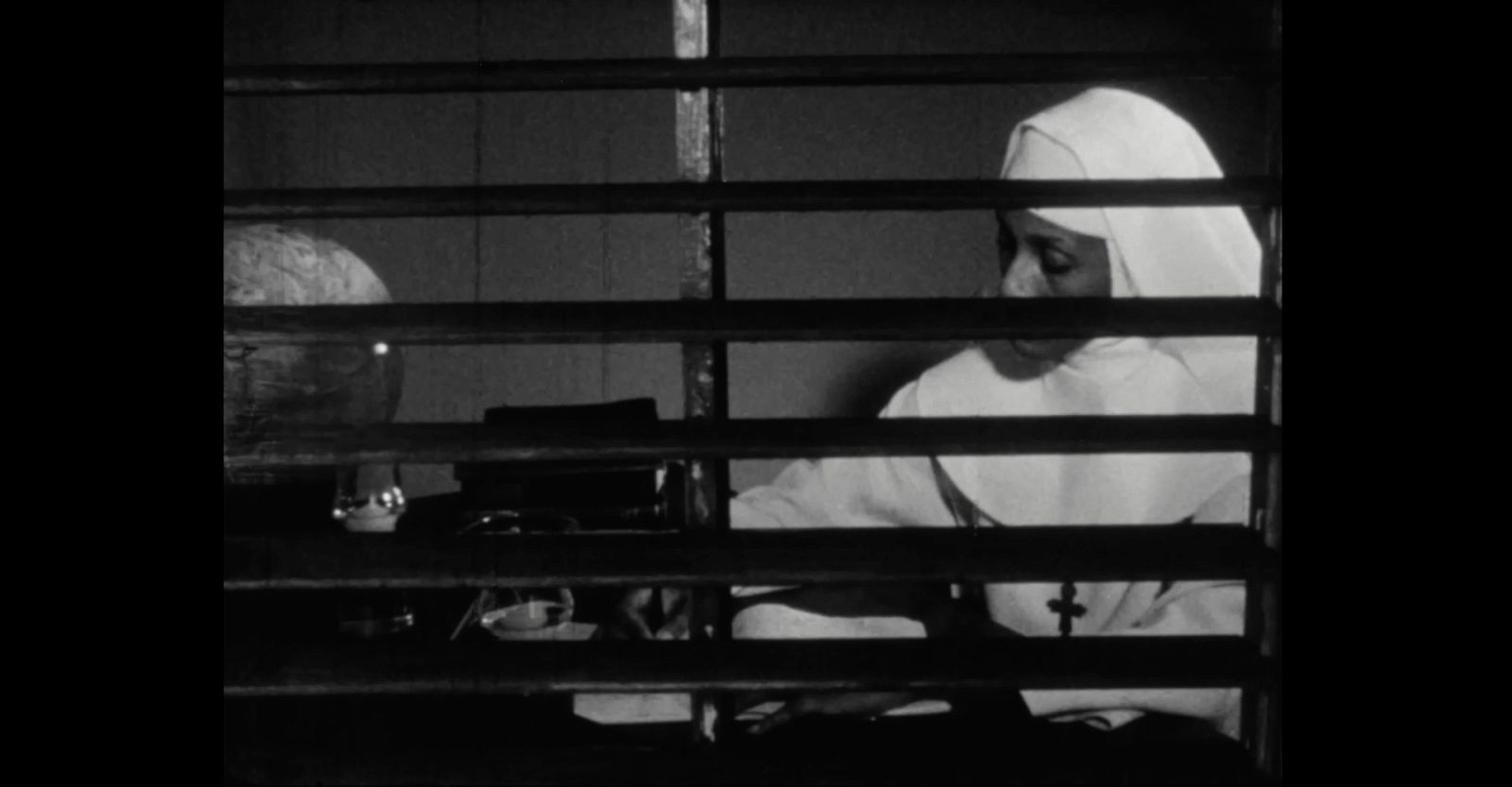
Directed by Julie Dash
1977, 15 min.
Adapted from a short story by Alice Walker, Diary of an African Nun follows a nun in Uganda who is consumed by doubt as she prepares to take vows of poverty, chastity, and obedience. Her anguish intensifies night after night as she lies in her convent room and listens to the rhythmic, beckoning drums of her village. This short, which precedes and anticipates her acclaimed feature Daughters of the Dust, was a deliberate first move by director Julie Dash toward narrative filmmaking. It was restored by Indie Collect in collaboration with the UCLA Film Archive and Women Make Movies. More information at Women Make Movies.
Doublecross
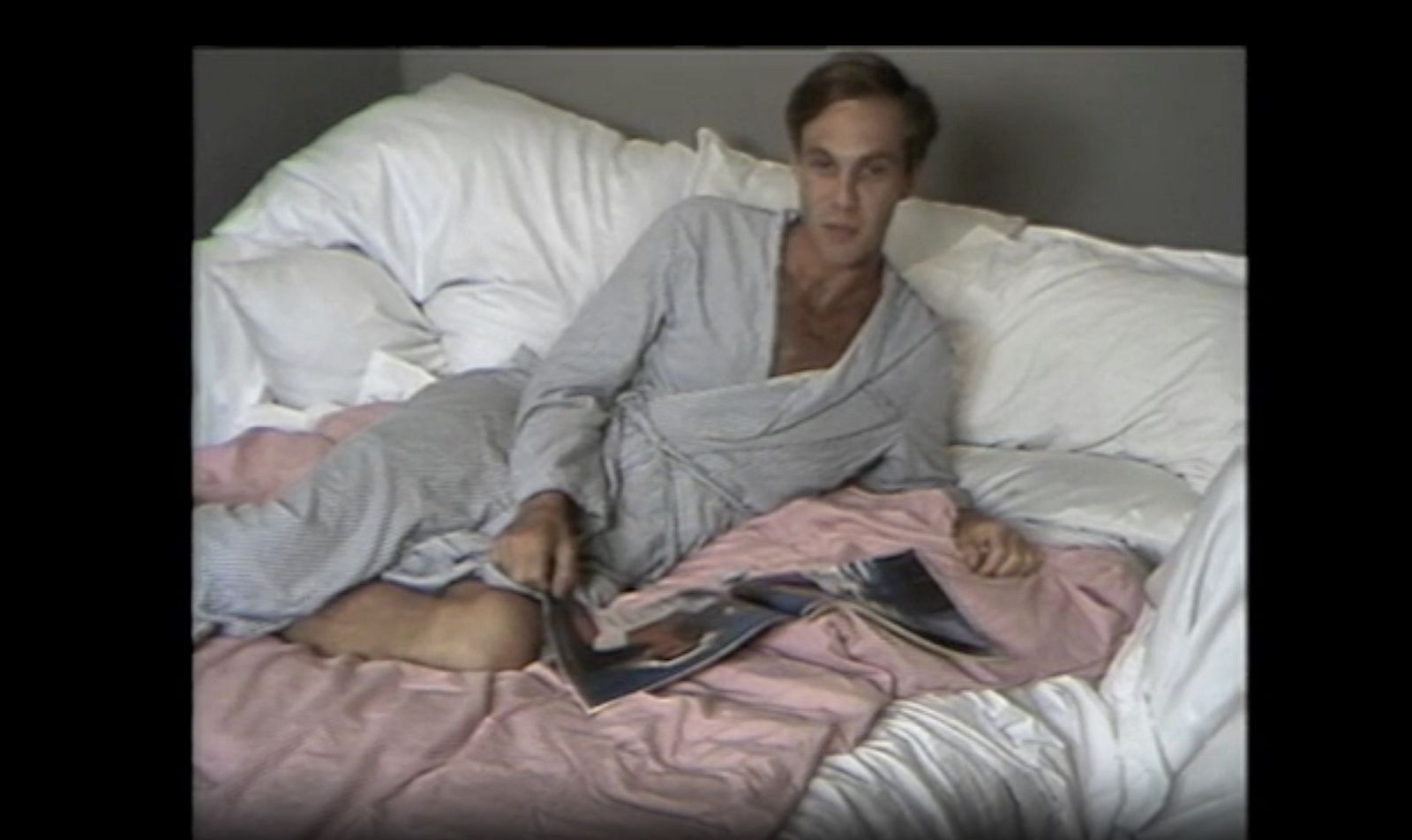
Directed by Lyn Blumenthal
1985, 8 min.
In Doublecross, Blumenthal constructs a loose narrative around the sexual evolution of a woman (played by Yvonne Rainer) through a stunning collage of images appropriated from TV and film. Certain images come to dominate this effusive stream—tall buildings, sex scenes, an Elvis movie, the courtroom, fireworks. Doublecross pits the indeterminate, disruptive power of the erotic against the rigid, normalizing structures of family, law, marriage, popular culture, movies, and music—societal institutions that codify sexual relations. The "doublecross" is that in a society that equates sex with pleasure, the definition of what is permissible and what pleasures are off limits, catches individuals in a double bind of sanctioned pleasures. More information at VDB.org.
Measures of Distance
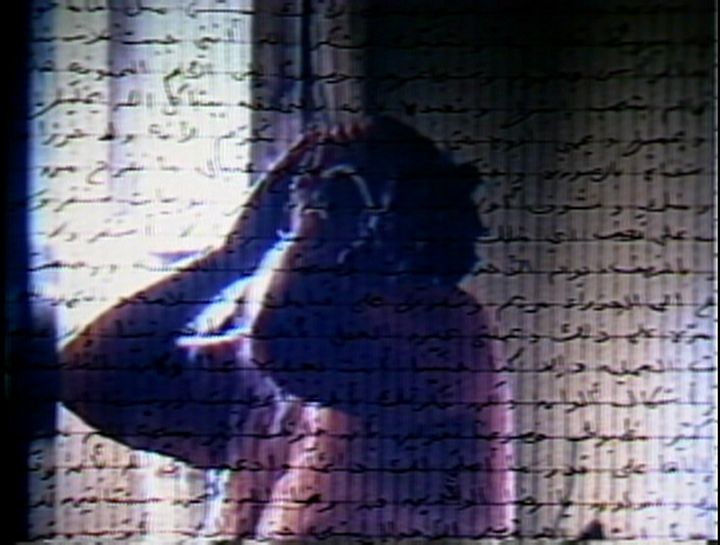
Directed by Mona Hatoum
1988, 16 min.
In this resonant work, Palestinian-born video and performance artist Mona Hatoum explores the renewal of friendship between mother and daughter during a brief family reunion in war-torn Lebanon in 1981. Through letters read in voice-over and Arabic script overlaying the images, the viewer experiences the silence and isolation imposed by war. The politics of the family and the exile of the Palestinian people are inseparable in this forceful, moving film. With gratitude to the Moving Image Archiving and Preservation program at NYU, a digital preservation copy of this film is now available for exhibition. More information at Women Make Movies.
Cycles
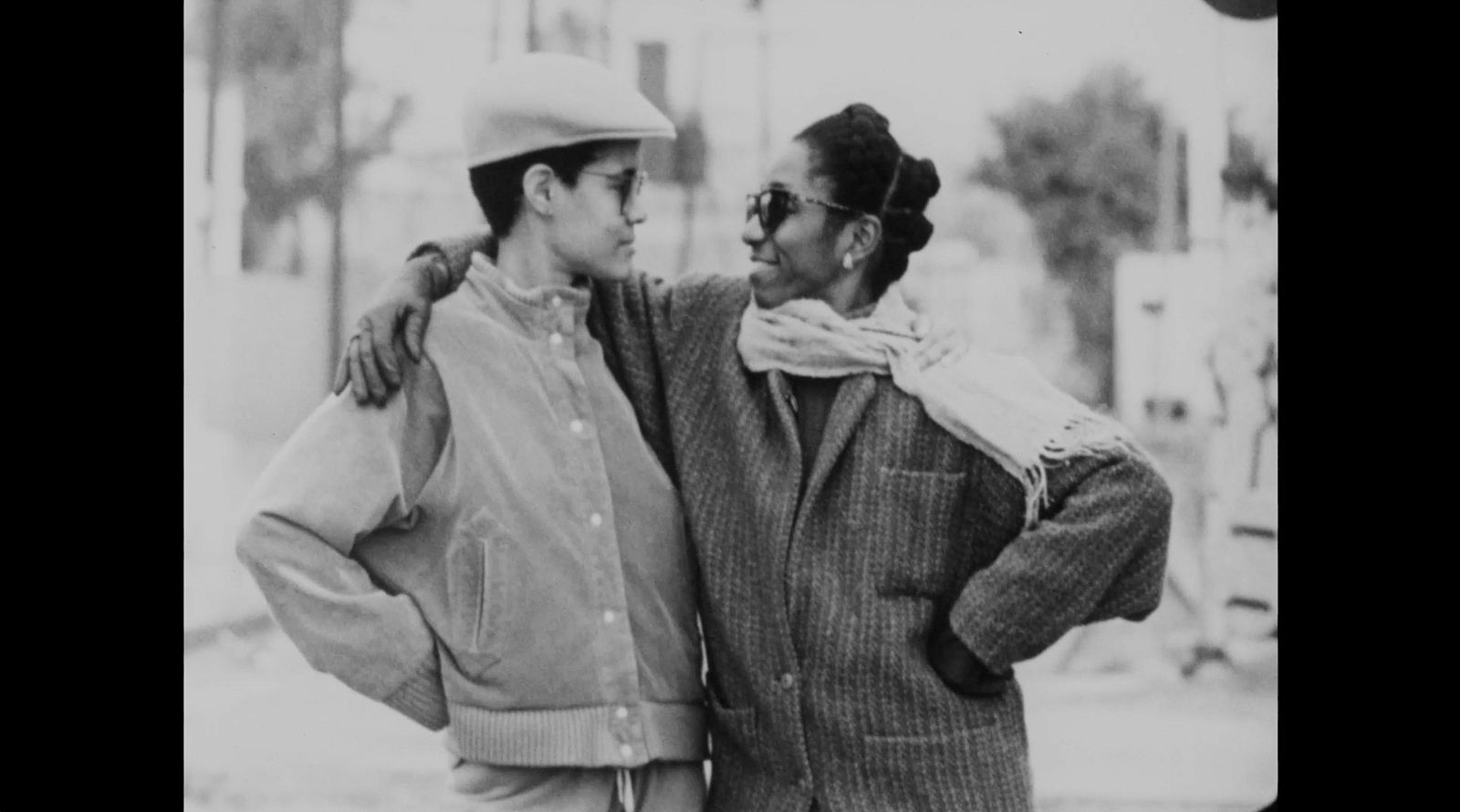
Directed by Zeinabu irene Davis
1989, 17 min.
Rasheeda Allen is waiting for her period, a state of anticipation familiar to many women. Drawing on Caribbean folklore, this exuberant experimental drama uses animation and live action to discover a film language unique to African American women. The multilayered soundtrack combines a chorus of women's voices with the music of Africa and the diaspora including Miriam Makeba, a cappella singers from Haiti, and trumpetiste Clora Bryant. More information at Women Make Movies.
Voices of the Morning
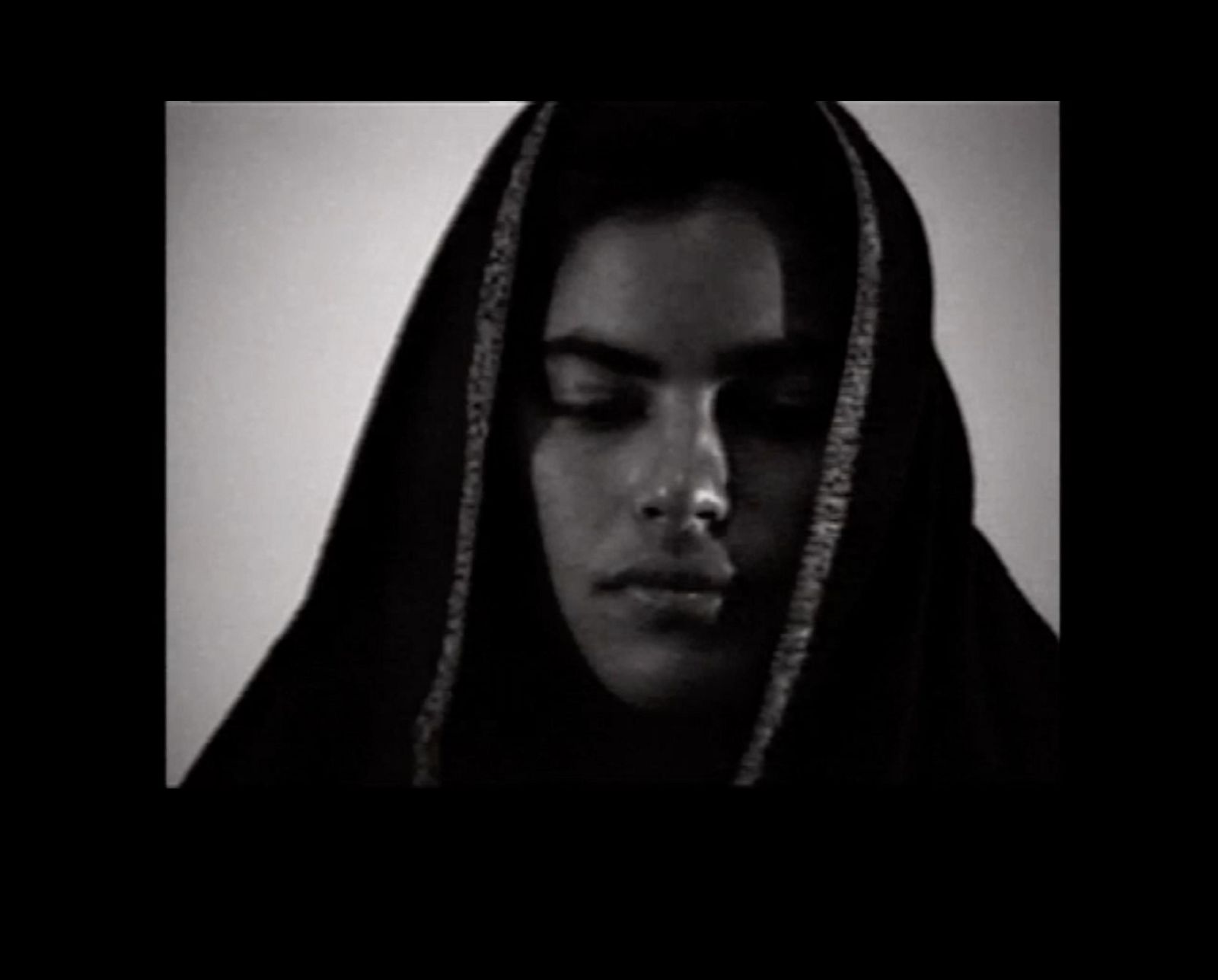
Directed by Meena Nanji
1992, 13 min.
A multiple award-winner starring Sarita Choudhury, this experimental tape explores the psychological ramifications of a woman growing up under orthodox Islamic law. Resisting traditional definitions of a woman’s role in society as first and foremost a dutiful daughter or wife, Nanji struggles to find a space amidst the web of restrictive familial and societal conventions. More information at VDB.org.
Respect is Due
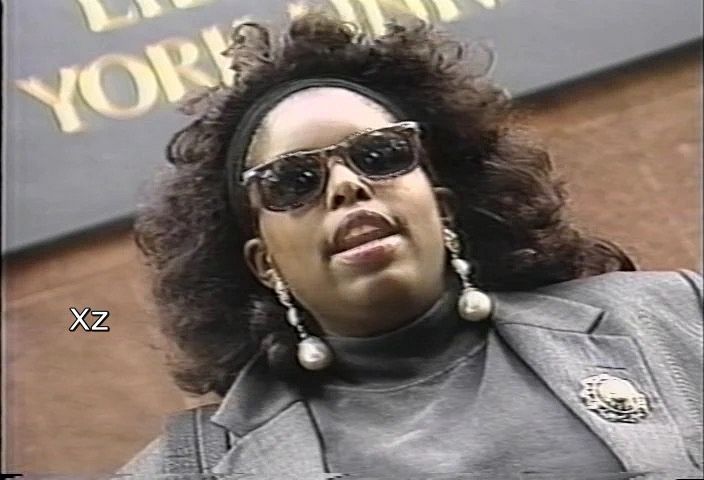
Directed by Cyrille Phipps
1991, 10 min.
In keeping with the doctrines of Wall Street and Madison Avenue, "sex sells rap music." In this video, Black youth examine the ways women of African descent are frequently portrayed in rap lyrics and music videos. Hip-hop riffs and clips from rap videos illustrate interviews with young rap enthusiasts, art critics, and activists like rapper Sister Souljah. More information at TWN.org.
30 Second Spot Reconsidered
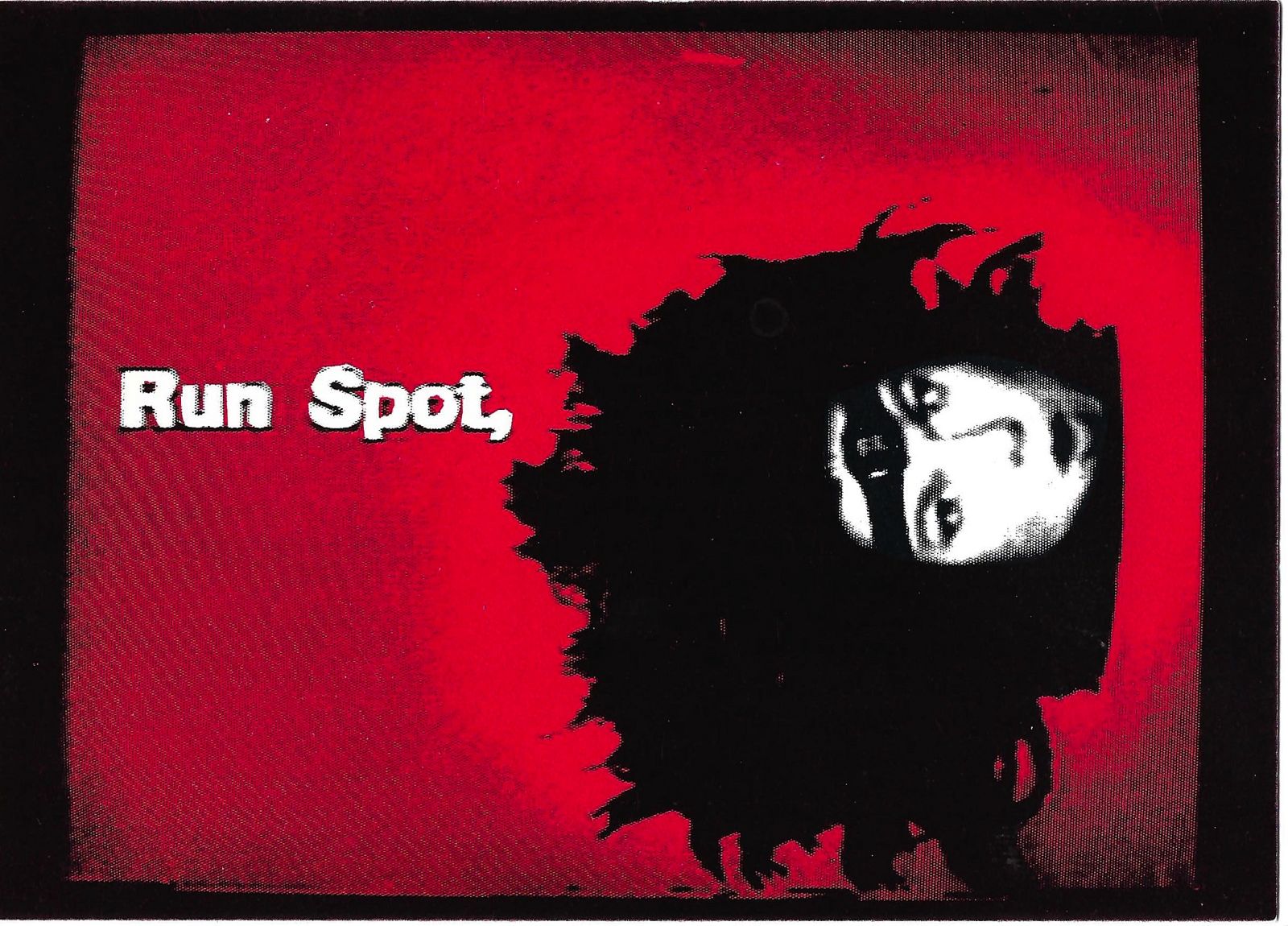
Directed by Joan Braderman
1988, 12 min.
"Made at the time of the '88 presidential election, 30 Second Spot Reconsidered is a true story told by the artist about censorship and corporate style. It is based on a true story about the adventures of the artist buying network time for a TV spot (an ad for counter-bicentennial activities in 1976) confronting the system of invisible, corporate censorship which runs broadcast television." —Boston Globe
THE HERETICS
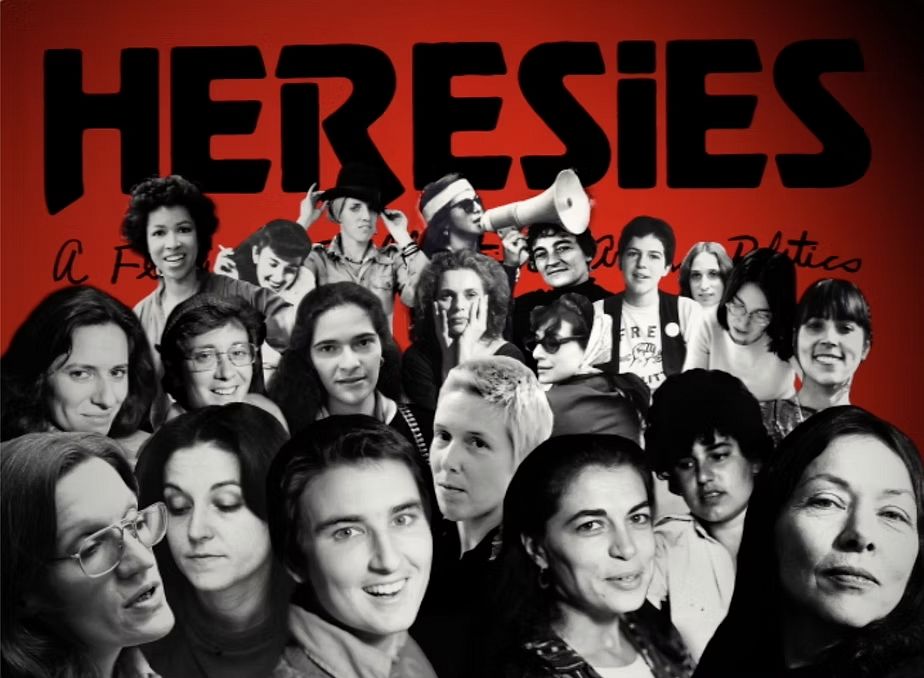
Directed by Joan Braderman
2009, 96 min.
Tracing the influence of the Women’s Movement’s Second Wave on art and life, THE HERETICS is the exhilarating inside story of the New York feminist art collective that produced Heresies: A Feminist Publication on Art and Politics (1977-92). In this feature-length documentary, cutting-edge video artist/writer/director Joan Braderman, who joined the group in 1975 as an aspiring filmmaker, charts the collective’s challenges to terms of gender and power and its history as a microcosm of the period’s broader transformations.
On the road with her camera crew from New Mexico to Italy, Braderman reconnects with 28 other group members, including writer and critic Lucy Lippard, architect Susanna Torre, filmmaker Su Friedrich, and artists Ida Applebroog, Mary Miss, Miriam Schapiro, and Cecilia Vicuña. Still funny, smart and sexy, the geographically dispersed participants revisit how and why they came together and the extraordinary times they shared—supporting and exploring women’s art and demanding the right to be heard.
Enlivened by striking digital motion graphics, THE HERETICS intercuts interviews with archival film clips, video and stills from the period, texts and images from “Heresies” magazines, and footage of completed artworks and works-in-progress. An exuberant, multi-layered collage, the film brings the Heresies collective—and its strategies for unlocking the potential in women’s lives—vividly to the screen. More information at heresiesfilmproject.org.
Explore