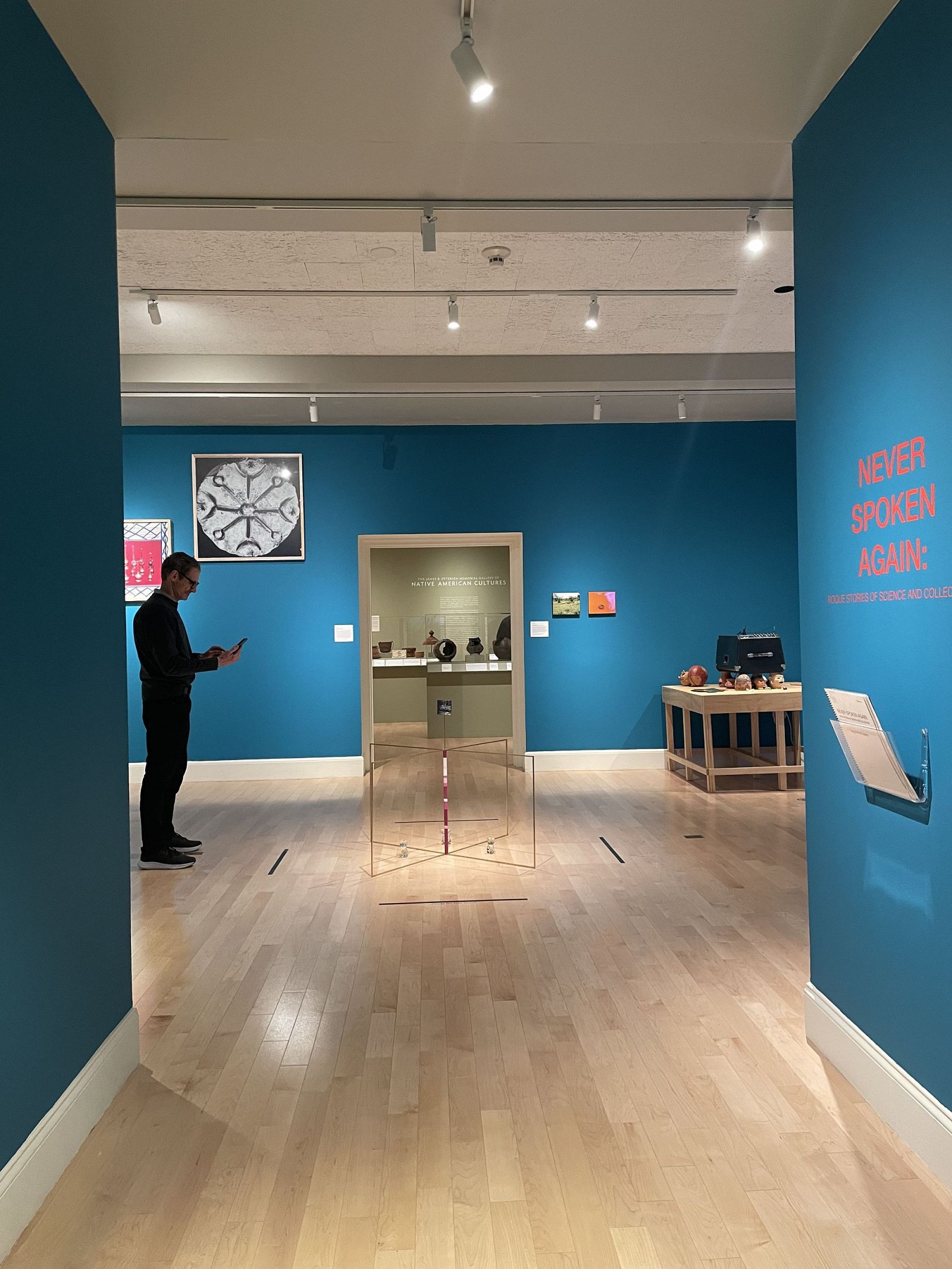
ARB: Never Spoken Again takes an anti-colonial approach, critiquing museum structure, acquisition of knowledge, and presentation of knowledge. Being an independent curator, how has that refined your work or redefined the way that you work as an individual, critiquing larger institutions like museums?
DAA: I think the possibility of being in an institution allows you to engage in deep thought about something that's very specific, and that's fantastic, that kind of deep thought is extremely important. But when you move around different spaces, you get an understanding of how diverse display practices can depend on the resources, geographical spaces, or mandates of these institutions. A natural history museum in the UK has a very different mandate and resources than one in South America.
[As an independent curator] you can create connections between those spaces, their realities and the politics that shape them, then you can go across disciplines. Because I'm not in an institution, I don't have a mission to advance a specific knowledge: If I get interested in gardens, I just study gardens. If I get interested in mineralogy, then I go for it. All of those things I can see, because I move around. I can understand that beyond the institutional mandate, people have interests in these topics that are not related to how much they fulfill that mandate, or how much they're aligned with an institutional language. I think that possibility of connecting different worlds is important for me as an independent.
ARB: And you get, I can imagine, more freedom from doing so.
DAA: But there's a price, right? And the price is instability. I think that's what was very important for me about working with ICI on Never Spoken Again. They would create those connections, so I could amplify my idea into something that travels around for a number of years.
ARB: Never Spoken Again will be wrapping up its tour in spring 2026. Since the tour started in 2020, almost six years ago, have you noticed anything changing in the landscape of museum practices, collections, or anything like that?
DAA: Very much. When the show was originally conceived, if you think of the conversations that were taking place at the time, [the theme of this exhibition] was probably something interesting and fresh. And then, COVID-19 happened, and many of these ideas sifted into the institutional conversations, and I think they're very normal now, right? I think there's a danger to that normalization, which is taking something very present about the nature of an institution and its collecting practice, and just transforming it simply into a topic. If you see the topic of Never Spoken Again, and you think about it and you're like, "Oh yeah, I've seen a few exhibitions about the same things." I think it's important that those exist, but the underpinnings, the shift still needs some work, and that’s what I’m trying to achieve. It’s also important to think about the aftermath of the show, how it's going to be written about, how it will be rated as an experience, as a process, as a project, but also what these last public programs and educational programs will be. So I think my ideas have evolved as I see the show iterating once again.
I'm thinking a lot about this word “discomfort” lately. It is true that some of these topics have been integrated into institutions’ conversations lately, but I think they have been integrated in a way that doesn’t take away the comfort or change the status quo of the institutional frameworks and peoples. In essence, the institutions have not changed, and I think for these institutions to even be relevant in the coming years, there is an urgency around these questions demanding a meaningful change that is obscured by the prevalence of the topic. That’s why I want to do more, push it further, and why I want to create a very meaningful educational program for this last iteration in Minnesota.
ARB: Especially having gone through its first presentation under COVID, the institution's reactions may have been stifled by their response to COVID or their practices in conformity to governmental standards or other institutions. What are some things you've taken into your own practice from its time on view?
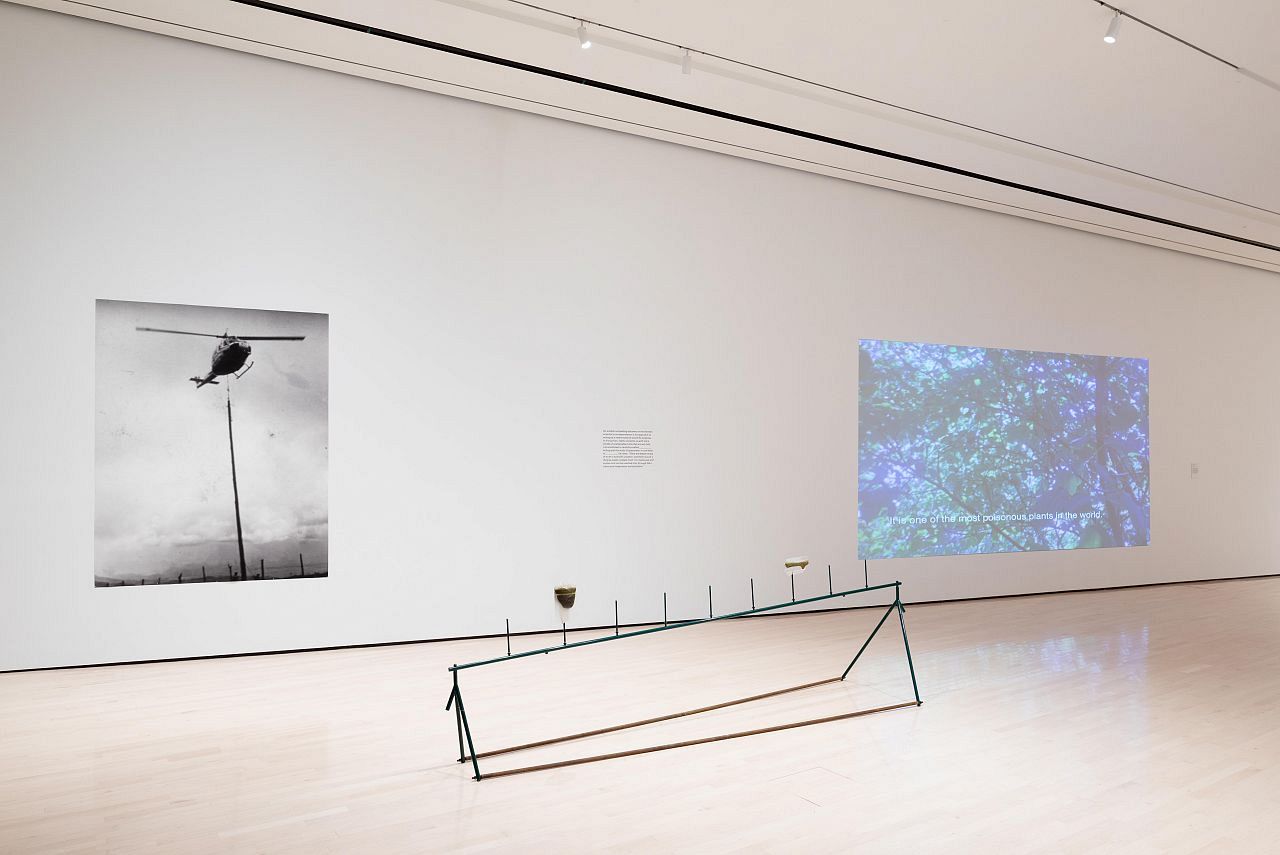
DAA: One thing that’s very important for my work now is this idea of iteration, of a recurring practice. Being able to see an exhibition, to witness the reality of your thinking in five, six different institutional settings installed differently, seeing how beautifully it happened in some places, really makes you think about museum design, curatorial practice, and the exhibition practice itself. Now, because of Never Spoken Again, I think a lot about display technologies. It really became that thinking artifact that I was envisioning, it sparked a number of future practices and present practices for me.